International Programmes 2026/2027

Game Technologies (MSc) Game Technologies (MSc)

Hochschule Bonn-Rhein-Sieg • Sankt Augustin

Degree
Master of Science
Course location
Sankt Augustin
Teaching language
  • English
Languages

The main teaching language is English, though examinations can also be taken in German.

Full-time / part-time
  • full-time
Programme duration
4 semesters
Beginning
Winter semester
Application periods

Applicants with a visa requirement can apply from 15 November to 15 February via uni-assist. For Germans, applicants without a visa requirement and applicants with a visa, applications are possible from 15 November to 15 September via Apollo.

More information on application periods
Please find more details on this website.
Combined Master's degree / PhD programme
No
Joint degree / double degree programme
Yes
Description/content

Have you always wanted to know how computer games are created and what technical and scientific principles are required for this? Then the Master's degree programme in "Game Technologies" (MGT) at Bonn-Rhein-Sieg University of Applied Sciences is just right for you!

The programme provides in-depth basic knowledge and practical skills for developing computer games and underlying game technologies. Topics such as user experience, computer vision and scientific visualisation are also covered. The programme is suitable for part-time study.

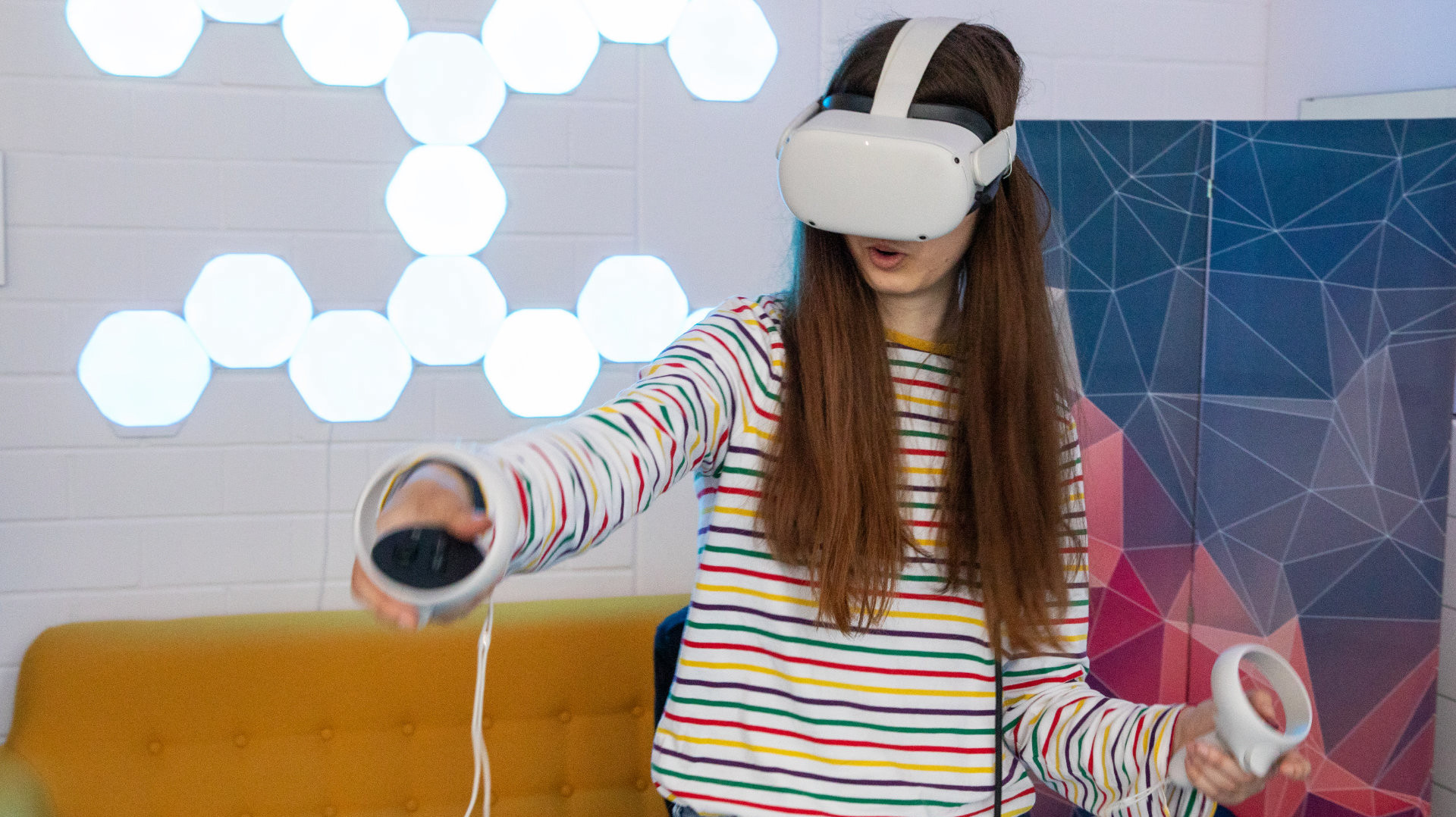
There is a strong focus on current topics and emerging technologies from research and practice, such as extended reality (virtual/augmented reality), deep learning/AI, serious games, software and hardware prototyping and design, rendering/game engine optimisation or motion capturing and character animation. These topics are integrated in lectures and additional talks and workshops, e.g. by industry experts. Some of the highlights of the Master's programme are the continuous project work over three semesters (e.g. for the development of games or other complex systems) and the mobility window in the third semester.

What we offer

  • Long-standing experience in teaching and research in the field of game technologies 
  • Expertise in game development since 2006 (over 100 games developed in our Bachelor's and Master's courses)
  • Regular game events ("Zock'n Friday"), game jams, e-sports events (in collaboration with the TESSA team), workshops and presentation of the results at our own booth at Gamescom
  • Collaboration with partner universities in the region, e.g. in the Games Technology Network project
  • Guest lectures from the industry by renowned speakers from Germany and abroad (game.impulse lecture series)
  • State-of-the-art laboratories and an award-winning game studio (Hochschulperle 2022)
  • Our own game development team
  • Opportunity to work on research projects (jobs), supported by the internationally renowned HBRS research institute (Institute for Visual Computing)
  • Numerous opportunities for semesters abroad in the excellent partner network, e.g. in Japan and Canada
  • The opportunity to do a doctorate at the university after completing the Master's degree

Part-time suitability: We will support you on an individual basis if you work alongside your studies.

Course organisation

The programme covers four semesters (two years), during which a total of 120 ECTS (European Credit Transfer System) points are accumulated. Individual mentoring characterises the programme, in which students are guided through independent scientific work and through interdisciplinary cooperation in research and development projects.

Students take a number of core courses in the first and second semester, covering basic game technologies such as user interaction, computer graphics and storytelling. Alongside this, throughout three semesters, a continuous project in which teams of students cooperate on designing, implementing and evaluating game technologies will take place. The third semester contains the seminar and creating innovation courses, and also offers a mobility window in which students are motivated to study abroad. The courses are complemented by elective courses students can select. In the fourth semester, students research and write their Master's theses. A final defence of the thesis completes the 120-credit requirement. A more detailed view of the modules can be found in the module matrix.

A Diploma supplement will be issued
Yes
International elements
  • Projects with partners in Germany and abroad
  • International guest lecturers
  • Integrated/optional study abroad unit(s)
Integrated/optional study abroad unit(s)

Students can use the mobility window in the third semester to study abroad. Contacts exist with partner universities in, among others, Canada and Japan. In part, courses at H-BRS can be attended abroad, in part students can use the elective courses to earn credits from courses attended abroad. Accreditation of credits requires approval from the examination committee.

Course-specific, integrated German language courses
No
Course-specific, integrated English language courses
No
Tuition fees per semester
None
Semester contribution

Each semester, contribution fees of around 300 EUR are due. These fees are mandatory and include a student administration office fee, a student union fee, and a public transport fee that allows for free use of the public transport system in the Bonn metropolitan area and the entire state of North Rhine-Westphalia. Please check our homepage for the exact amount, as it varies slightly from one semester to another.

Costs of living

Living expenses for university students in Germany will be about 850 to 1,000 EUR per month. This includes accommodation/rent (student dormitory), meals, medical insurance, social welfare, registration fee, transport, books, stationary, and so on.

Funding opportunities within the university
Yes
Description of the above-mentioned funding opportunities within the university

Scholarships and Funding Programmes

Financing your studies with a scholarship offers a number of advantages. The financial support included in a scholarship usually does not have to be repaid. In addition, many scholarships include further support that goes beyond purely financial support.

All information: https://www.h-brs.de/en/scholarships_and_funding_programmes

Academic admission requirements

As the degree programme is currently in the accreditation phase, there may be changes. Please note the latest information on enrolment and the start of the semester on our website: https://www.h-brs.de/en/inf.

For admission to the programme, a professional academic degree (Bachelor's or equivalent) is required in the areas of computer science, mathematics, natural sciences, or engineering. Another requirement is sufficient knowledge of concepts, methods and tools in the field of computer science. Such knowledge is usually acquired in a four-year computer science course with at least 65% computer science content. Programme applicants who have already graduated from a first-level degree course in mathematical/scientific subjects or engineering can be admitted to the programme provided that the course had a computer science content of, as a rule, at least 50% (with a grade of 2.5) or 67% (with a grade of 3.0).

Admission is based on credentials and academic excellence, to be provided through a motivation letter and CV.

German language skills
No minimum language level required
English language skills
B2 required/recommended, no proof required
Application periods

Applicants with a visa requirement can apply from 15 November to 15 February via uni-assist. For Germans, applicants without a visa requirement and applicants with a visa, applications are possible from 15 November to 15 September via Apollo.

More information on application periods
Please find more details on this website.
Submit application via
Please apply via uni-assist.
Possibility of finding part-time employment

Are you looking for a part time job? You might find what you are looking for in our job fair for students. After clicking on the link, you will be redirected to the pages of the Deutsche Hochschulwerbung. They manage the job fair of the Studierendenwerk Bonn. More information: https://www.studierendenwerk-bonn.de/en/jobbing/

Additionally, the Institute of Visual Computing (closely tied to the study programme) frequently offers jobs.

Support for international students and doctoral candidates
  • Welcome event
  • Tutors
  • Buddy programme
General services and support for international students and doctoral candidates

Admitted students receive a welcome pack, which includes information on the programme, the university, and the region as well as guidance for a smooth move to Germany. The study buddy initiative pairs volunteers from the programme's student body with incoming candidates. They also offer their help and advice in finding accommodation, answering questions about the programme, and so on. The university's International Office provides assistance in all matters concerning immigration and/or local authorities. The orientation course, which includes an intensive German language course, helps prepare students for the lectures and allows them time to settle in and get acquainted with their new surroundings. The welcome event at the start of lectures introduces them to the faculty and staff. Once enrolled, students receive guidance and counselling from their faculty advisers (mentoring programme).

Hochschule Bonn-Rhein-Sieg

Content Bild
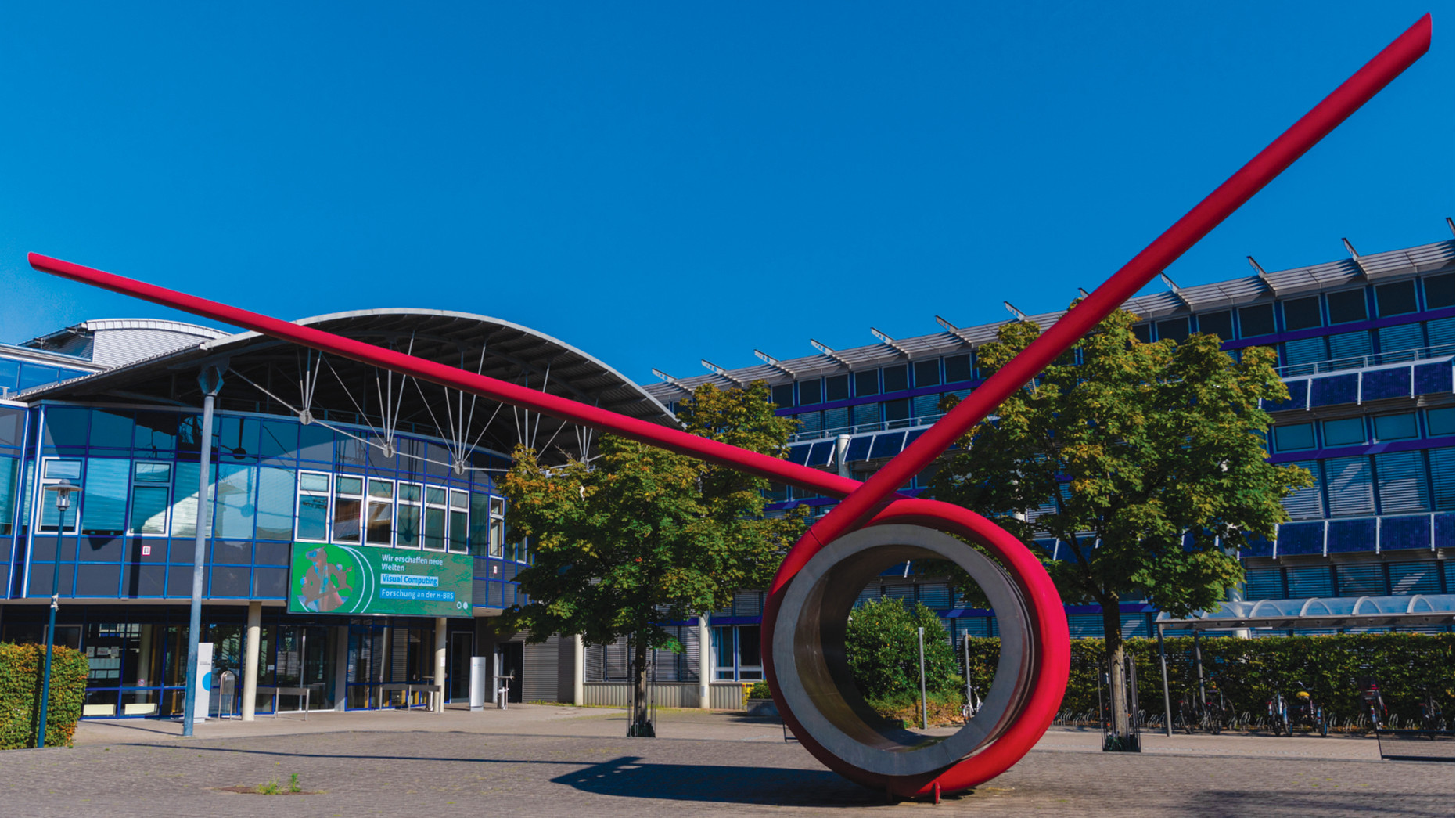
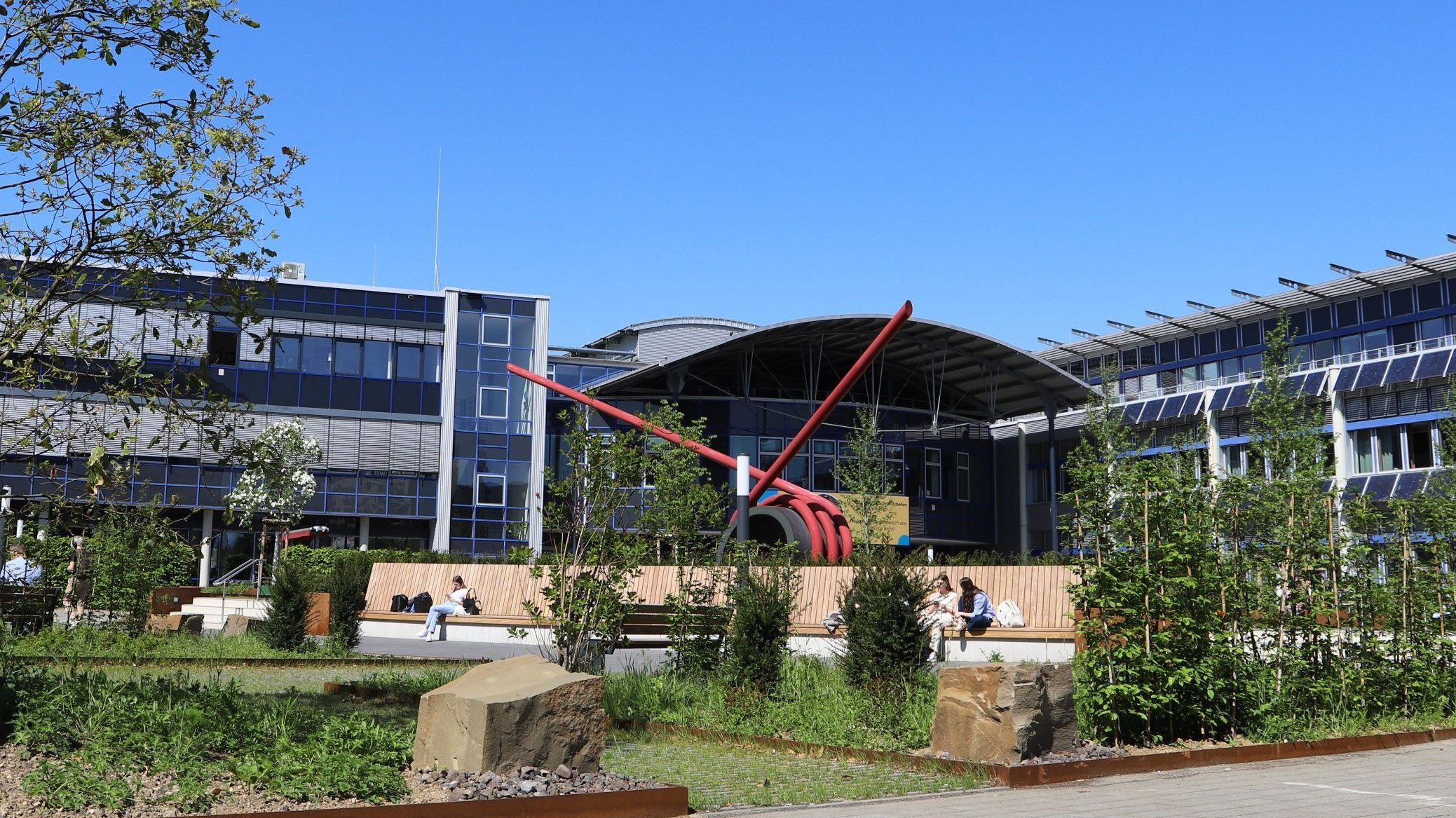
Campus Sankt Augustin © H-BRS/Juri Küstenmacher

H-BRS – simply excellent!

A number of excellent rankings and achievement awards, and above all, the feedback received from satisfied students and alumni prove that the university is already one of the top universities in many respects.

At Hochschule Bonn-Rhein-Sieg, you can currently choose from 38 practically-oriented study programmes on the basis of the latest research findings (21 Bachelor's and 17 Master's programmes).

The university's professors have professional experience of both business and academia. Our excellent infrastructure and our well-equipped laboratories are just as integral to our offer as our numerous PC workstations, our university-wide W-LAN, our modern university and district library and our active campus life.

University location

The Bonn-Rhein-Sieg University of Applied Sciences, founded on 1 January 1995, is a dynamic and research-intensive university. Located in the middle of the liveable Rhineland, it offers around 9,500 students ideal opportunities for learning and research, supervised by about 1,000 employees, 150 of whom are professors.

The university is located in Hennef, Rheinbach and Sankt Augustin. In Bonn, the University of Applied Sciences runs the B-IT (Bonn-Aachen International Center for Information Technology) jointly with Bonn University and Aachen Technical University (RWTH).

Activate map

To activate the map, click on the "Show map" button. We would like to point out that data will be transmitted to OpenStreetMap after activation. You can find out more in our privacy policy. You can revoke your consent to the transmission of data at any time.