International Programmes 2026/2027

Applied Geosciences – Computational Geology and Geophysics (CGG) (MSc) Applied Geosciences – Computational Geology and Geophysics (MSc)

RWTH Aachen University • Aachen

Degree
Master of Science
Course location
Aachen
Teaching language
  • English
Languages

All of the courses and the Master's thesis of the CGG stream are offered in English.

Although German is not necessary, we strongly advise students to obtain basic knowledge of the language for everyday use. Therefore, we offer German language courses at the RWTH Language Center. At the moment, those courses are fully funded for international students of the Department of Earth Science and Geography.

Full-time / part-time
  • full-time
Programme duration
4 semesters
Beginning
Winter and summer semester
Application periods
The following is valid for applicants from:
  • EU countries
  • Iceland
  • Norway
  • Liechtenstein
For the summer semester:
until 15 January
The following is valid for applicants from: non-EU countries
For the summer semester:
until 1 September
The following is valid for applicants from:
  • EU countries
  • Iceland
  • Norway
  • Liechtenstein
For the winter semester:
until 15 July
The following is valid for applicants from: non-EU countries
For the winter semester:
until 1 March
Combined Master's degree / PhD programme
No
Joint degree / double degree programme
No
Description/content

Our MSc programme Applied Geosciences is offered in five specialisations:

  • Applied Mineralogy and Crystallography (AMC)
  • Computational Geology & Geophysics (CGG)
  • Energy and Mineral Resources (EMR)
  • Field-Based Geosciences (FBG)
  • Geoengineering (GIN)

Computational Geology & Geophysics (CGG)

The specialisation in Computational Geology and Geophysics provides training in the broader field of computational geosciences. This specialisation offers an interdisciplinary approach to understanding the Earth through advanced computational techniques and geophysical methods. The programme equips students with the skills necessary to analyse complex geological data and processes, model subsurface structures, and interpret geophysical data. With a strong emphasis on both theoretical foundations and practical applications, students will engage in hands-on projects that address real-world challenges in sustainable resource exploration, renewable energy, and geodata science. By integrating cutting-edge technology with traditional geosciences, this Master's specialisation prepares graduates for successful careers in academia, industry, and research institutions and for collaborating across disciplines.

The specialisation features compulsory modules that cover fundamental concepts, alongside a variety of elective modules that enable the development of a personalised professional profile. The curriculum encompasses courses on basic geoscientific knowledge, geothermics, applied geophysics, programming, computer-aided analysis and visualisation of data with a focus on spatial data, statistics, numerical modelling, and artificial intelligence. The programme concludes in a Master's thesis that the students select based on their interests.

Course organisation

It's possible to download the current course curriculum at the end of the following page: https://www.fgeo.rwth-aachen.de/cms/geowissenschaften-und-geographie/Studium/Studiengaenge/Master-courses-of-study/Angewandte-Geowissenschaften/~cajo/Kurzprofil-des-Studiengangs/lidx/1/.

A Diploma supplement will be issued
Yes
International elements
  • Language training provided
  • Projects with partners in Germany and abroad
  • International guest lecturers
  • Integrated/optional study abroad unit(s)
  • Specialist literature in other languages
  • Courses are led with foreign partners
Description of other international elements

Please find further information here: https://www.fgeo.rwth-aachen.de/cms/geowissenschaften-und-geographie/studium/~lft/internationales/?lidx=1.

Integrated/optional study abroad unit(s)

It's possible to spend one or two semesters abroad at one of our partner universities: https://www.fgeo.rwth-aachen.de/cms/geowissenschaften-und-geographie/Studium/Internationales/Outgoings/Auslandsstudium/~zafjd/Partnerhochschulen/lidx/1/.

Course-specific, integrated German language courses
No
Course-specific, integrated English language courses
No
Tuition fees per semester
None
Semester contribution

Approx. 350 EUR per semester (including semester ticket for public transport)
There is no special fee for international students.

Costs of living

https://www.rwth-aachen.de/cms/root/studium/vor-dem-studium/internationale-studieninteressierte/organisation-des-studienaufenthaltes/internationale-studierende/~bqmo/kosten/?lidx=1

Funding opportunities within the university
Yes
Description of the above-mentioned funding opportunities within the university

http://www.rwth-aachen.de/cms/root/Studium/Im-Studium/~ehg/Stipendien-Foerderung/?lidx=1

Academic admission requirements

The professional requirements differ for the various specialisations.

The following two requirement profiles are assumed for the CGG specialisation:

1.) Profile in Geosciences

Bachelor's graduates with the following geoscientific competence profile (e.g. Bachelor's degrees in the fields of geosciences, earth sciences, geology, mineralogy, crystallography, etc.) can be admitted to the specialisation CGG:

Bachelor of Science or Engineering with at least 180 ECTS and

  • at least 20 ECTS from natural sciences (biology, chemistry, mathematics and/or physics)
  • at least 80 ECTS from geosciences (e.g. geology, mineralogy, geochemistry, crystallography, geoengineering)
  • at least 5 ECTS from geoscientific field education

2.) Profile in Physics or Data Sciences

Bachelor's graduates with the following physical or data science profile (e.g. Bachelor's degrees in physics and data science, etc.) can also be admitted to the Computational Geology and Geophysics (CGG) specialisation:

Bachelor of Science or Engineering with at least 180 ECTS and

  • a total of at least 20 ECTS from mathematics in the fields of algebra, analysis, stochastics, mathematical logic
  • a total of at least 30 ECTS from physics and/or data science in the fields of theoretical physics, solid state physics, quantum mechanics, programming, data structures & algorithms, databases & information systems, computer engineering, computability & complexity, formal systems, automata & processes
German language skills
No minimum language level required
English language skills
B2 required, please provide an official language certificate, e.g.:
  • IELTS Academic: 6
  • Cambridge English Qualifications: B2 First
  • TOEFL iBT (since 2026): 4
  • Reading: 4
  • Listening: 4
  • Speaking: 4
  • Writing: 4
  • UNIcert® English: UNIcert® II
Application periods
The following is valid for applicants from:
  • EU countries
  • Iceland
  • Norway
  • Liechtenstein
For the summer semester:
until 15 January
The following is valid for applicants from: non-EU countries
For the summer semester:
until 1 September
The following is valid for applicants from:
  • EU countries
  • Iceland
  • Norway
  • Liechtenstein
For the winter semester:
until 15 July
The following is valid for applicants from: non-EU countries
For the winter semester:
until 1 March
Submit application via
Please check this website.
Possibility of finding part-time employment

International students may take up work in the private sector during the semester or the semester break for up to three months without having obtained a work permit. Students thus may take up full-time work for 90 days or part-time positions (up to four hours per day) for 180 days. This regulation is also stated on the residence permit. During the semester, students are allowed to take up jobs with up to 19 working hours a week. During the semester break, students may work full-time but only for a maximum of 13 consecutive weeks.

Student assistants are more flexible with regard to working hours because the full- and part-time regulations do not apply. As a student assistant, you are allowed to work up to 19 hours per week throughout the year.

Accommodation

"Studierendenwerk Aachen": https://www.studierendenwerk-aachen.de/en/housing.html

Availability of university accommodation in Aachen is limited. Participation in individual allocation procedures is therefore usually required. Because of the high demand for university accommodation, it may be necessary to resort to the private accommodation market. As apartments for families and couples are particularly high in demand, applicants interested in this type of accommodation will almost definitely need to draw on the private accommodation market like the majority of RWTH Aachen University's students. There are a number of options for finding private accommodation in and around Aachen; the International Office can provide students with information before or upon their arrival. Prices for university accommodation vary between 200 EUR and 330 EUR per month, and accommodation on the private market is priced between 290 EUR and 550 EUR per month, depending on the size and the number of rooms. For short-term accommodation, there are many hotels, a few youth hostels and a boarding house located in and around Aachen (reservation is recommended).

Career advisory services and programmes for future professionals

Career Center of RWTH Aachen University: http://www.rwth-aachen.de/cms/root/Studium/Nach-dem-Studium/~ejx/Karriere/?lidx=1

"Praxisinitiative Aachener Geowissenschaftler" (PAG): http://www.fgeo.rwth-aachen.de/cms/Geowissenschaften-und-Geographie/Studium/Studierende/Angewandte-Geowissenschaften-und-Georess/~cxve/Praxisinitiative-PAG-/?lidx=1

Support for international students and doctoral candidates
  • Welcome event
  • Buddy programme
  • Tutors
General services and support for international students and doctoral candidates

https://www.rwth-aachen.de/cms/root/studium/im-studium/~hqdb/internationales/?lidx=1

RWTH Aachen University

Content Bild
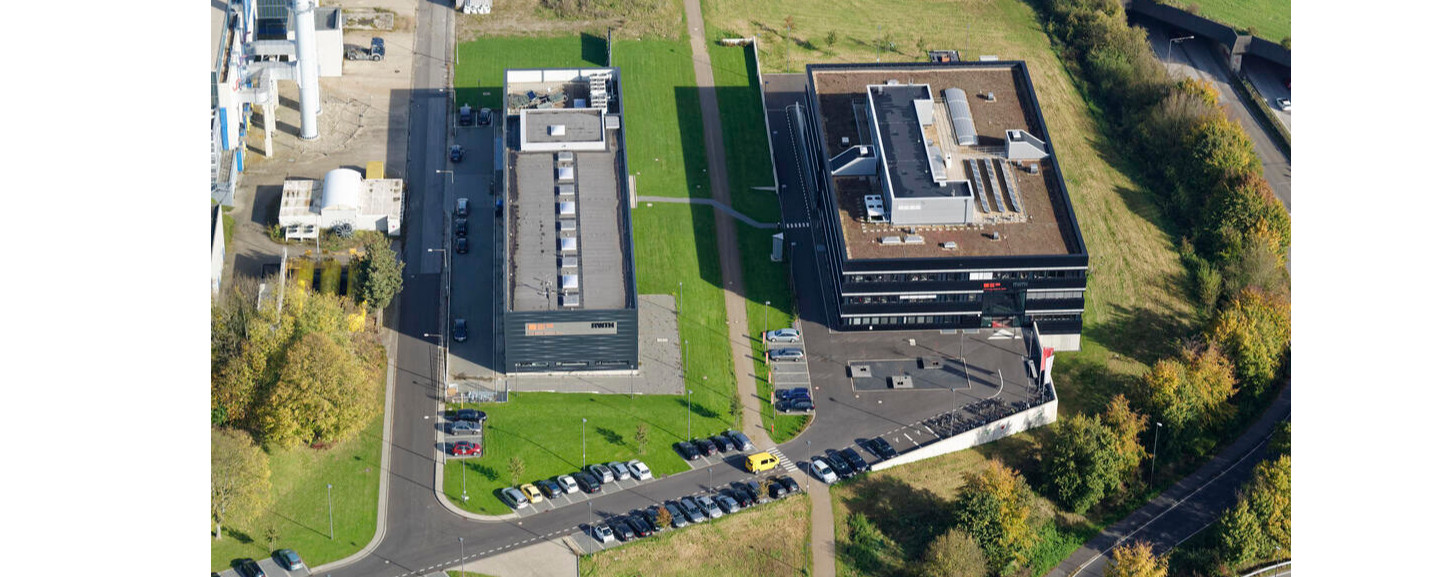
Melaten campus © Peter Winandy

With 260 institutes in nine faculties, RWTH Aachen University is one of Europe's leading institutions for science and research. Currently, more than 44,500 students are enrolled in 144 academic programmes. More than 8,500 of them are international students hailing from 130 different countries. The scientific education students receive at RWTH Aachen University is firmly rooted in real-world application. As a result, our graduates are highly sought after by businesses to work as trainees and fill executive positions. National and international rankings show that our graduates have a high aptitude for managing complex tasks, constructively solving problems in teams, and taking on leadership responsibilities. Thus, it should come as no surprise that one in five board members of German corporations is an alumnus of RWTH Aachen University.

Work conducted in the research centres at RWTH Aachen University is strongly oriented towards the current needs of industry, commerce, and the professions. This has resulted in numerous innovations, patents, and licences. The individual competence centres at RWTH Aachen University collaborate effectively across departments and faculties in interdisciplinary groups and forums, while still maintaining a strong focus on their own department specialisation. For instance, the computer science and biology departments - and even the social sciences - all have a clear connection to the school's engineering focus. This has been a crucial factor in motivating multinational corporations such as Philips, Microsoft, and Ford to locate their research institutions in the Aachen region.

Excellence in teaching and research constitutes the basis from which RWTH Aachen University works with other leading institutions and technical universities around the world.

University location

As Germany's westernmost city, Aachen is located on the borders of Belgium and the Netherlands. Its population is about 260,000. Aachen's historic centre around the distinctive cathedral (UNESCO World Heritage Site) is characterised by a student lifestyle. At the city's doorstep, the hilly Eifel landscape with its rivers, lakes, and forests offers a picturesque countryside for outdoor recreation. Aachen benefits from its central location in the heart of Europe!

Activate map

To activate the map, click on the "Show map" button. We would like to point out that data will be transmitted to OpenStreetMap after activation. You can find out more in our privacy policy. You can revoke your consent to the transmission of data at any time.