International Programmes 2026/2027

Foundations in Data Science Foundations in Data Science

Chemnitz University of Technology • Chemnitz

Degree
Bachelor of Science
Course location
Chemnitz
Teaching language
  • English
Languages

Previous knowledge of German is not required, but attending German language classes, at least up to B1 level, is part of the programme.

Optional English language classes are also offered (at C1 level only) as part of the programme.

The Bachelor's thesis may be written in English or German.

Full-time / part-time
  • full-time
  • part-time (study alongside work)
Mode of study
Less than 50% online
Programme duration
6 semesters
Beginning
Winter and summer semester
Application periods
The following is valid for applicants from: all countries
For the summer semester:
until 15 January 2027
The following is valid for applicants from: all countries
For the winter semester:
until 15 July
More information on application periods
Please find more details on this website.
Joint degree / double degree programme
No
Description/content

Data scientists are characterised not only by their sound theoretical and practical knowledge, but also by their ability to think logically and abstractly, proceed analytically, communicate precisely, show perseverance in solving complex problems, and work effectively in a team. These skills are at the heart of the Foundations in Data Science degree programme, which also stands out due to its particularly high proportion of mathematics. It is precisely these skills, combined with in-depth mathematical training and state-of-the-art data analysis methods, that open up excellent career prospects for graduates. Another core feature of the degree programme is the close link between mathematics and computer science. This combination enables students to master data-based challenges in practice and to analytically solve complex problems from various fields of application. In the age of digitalisation, in which data increasingly forms the basis for decisions and innovations, interdisciplinary collaboration between mathematics, computer science, and applied sciences is becoming increasingly important.

The degree programme therefore offers numerous options in technical, natural, and social science minor subjects to promote these links.

Course organisation

The curriculum extends over six semesters, during which students must acquire 180 ECTS credits. Throughout the programme, current topics in mathematics and data science are taught in comprehensive lecture series by internationally renowned scientists. All lecture topics are discussed in depth in tutorial classes, ensuring that students receive continuous feedback regarding their academic performance.

In the first four semesters, students obtain a thorough basic training in mathematics by attending the lecture series Mathematics for Science and Engineering, which is – as most lectures are – accompanied by practical tutorial sessions. The special classes on Mathematical Training in the first year provide an in-depth tutorial on problem solving and proofs.

A first glance at techniques from data science is provided by classes such as Computational Machine Learning (first semester), Scientific Programming (second semester), or Statistical Modelling (fourth semester). Applications are discussed, for example, in the courses Digital Systems, Microprocessor Technology, or Mathematical Modelling in Economics.

In the third year, students can select classes from a wide variety of courses depending on their own preference. They should make sure to speak with their study adviser after the fourth semester, for example, to ensure that their choice matches their intended Master’s degree programme.

In addition, students will earn up to 30 ECTS credits in language courses (5 ECTS credits each). Upon completion of the programme, they will have German proficiency of at least B1 level.

A Diploma supplement will be issued
Yes
International elements
  • Language training provided
  • Integrated/optional study abroad unit(s)
Description of other international elements
Integrated/optional study abroad unit(s)

Possibility to take part in the exchange programmes (e.g. with Erasmus+)

Course-specific, integrated German language courses
Yes
Course-specific, integrated English language courses
No
Pace of course
Mixed (e.g. fixed exam dates and duration, study content can be studied at any time)
Phase(s) of attendance in Germany (applies to the entire programme)
Yes, compulsory
Tuition fees per semester
None
Semester contribution

All students have to pay a semester contribution of approx. 340.50 EUR. This fee also covers the semester ticket, which permits you to use buses and trams in Chemnitz as well as regional trains throughout Germany during the semester. International students will receive the bank account details after admission with which they can transfer the semester contribution. However, the fee can also be paid after arrival in Chemnitz (by German bank card or transfer).

Costs of living

Approx. 970 EUR per month to cover personal expenses

Funding opportunities within the university
Yes
Description of the above-mentioned funding opportunities within the university

Incoming students can apply for different funding opportunities via the International Office of Chemnitz University of Technology: https://www.tu-chemnitz.de/international/incoming/stipendien/index.php.en.

Academic admission requirements

Admission to the Bachelor's degree programme requires a successfully completed "Abitur" (A-levels), and English language skills at a B2 level (CEFR).

German language skills
No minimum language level required
English language skills
B2 required, please provide an official language certificate, e.g.:
  • UNIcert® English: UNIcert® II
  • TOEIC: 785
  • Reading: 385
  • Listening: 400
  • Speaking: 160
  • Writing: 150
  • TOEFL iBT (since 2026): 4
  • Reading: 4
  • Listening: 4
  • Speaking: 4
  • Writing: 4
  • TOEFL iBT (before 2026): 72
  • Reading: 18
  • Listening: 17
  • Speaking: 20
  • Writing: 17
  • telc English: telc English B2
  • PTE Academic: 59
  • IELTS Academic: 5.5
  • Cambridge English Qualifications Business (BEC) : B2 Business Vantage
  • Cambridge English Qualifications: B2 First
Application periods
The following is valid for applicants from: all countries
For the summer semester:
until 15 January 2027
The following is valid for applicants from: all countries
For the winter semester:
until 15 July
More information on application periods
Please find more details on this website.
Submit application via
Please apply via uni-assist.
Possibility of finding part-time employment

Students can find offers for part-time jobs, work placements, etc. on the job portal offered by the Career Service of Chemnitz University of Technology: https://www.tu-chemnitz.de/career-service/jobboerse/.

Accommodation

The "Studentenwerk" Chemnitz-Zwickau runs several student residences. International students can apply for a single room in one of the residences. The prices depend on the size and furnishings of the room and vary between 270 EUR and 350 EUR: https://www.swcz.de/en/student-housing/our-halls-of-residence/.

Career advisory services and programmes for future professionals

The Career Service of Chemnitz University of Technology supports students during their studies as well as graduates entering their professional life. The Career Service provides a platform for companies and institutions to present themselves: https://www.tu-chemnitz.de/career-service/index.php.en.

Support for international students and doctoral candidates
  • Buddy programme
  • Welcome event

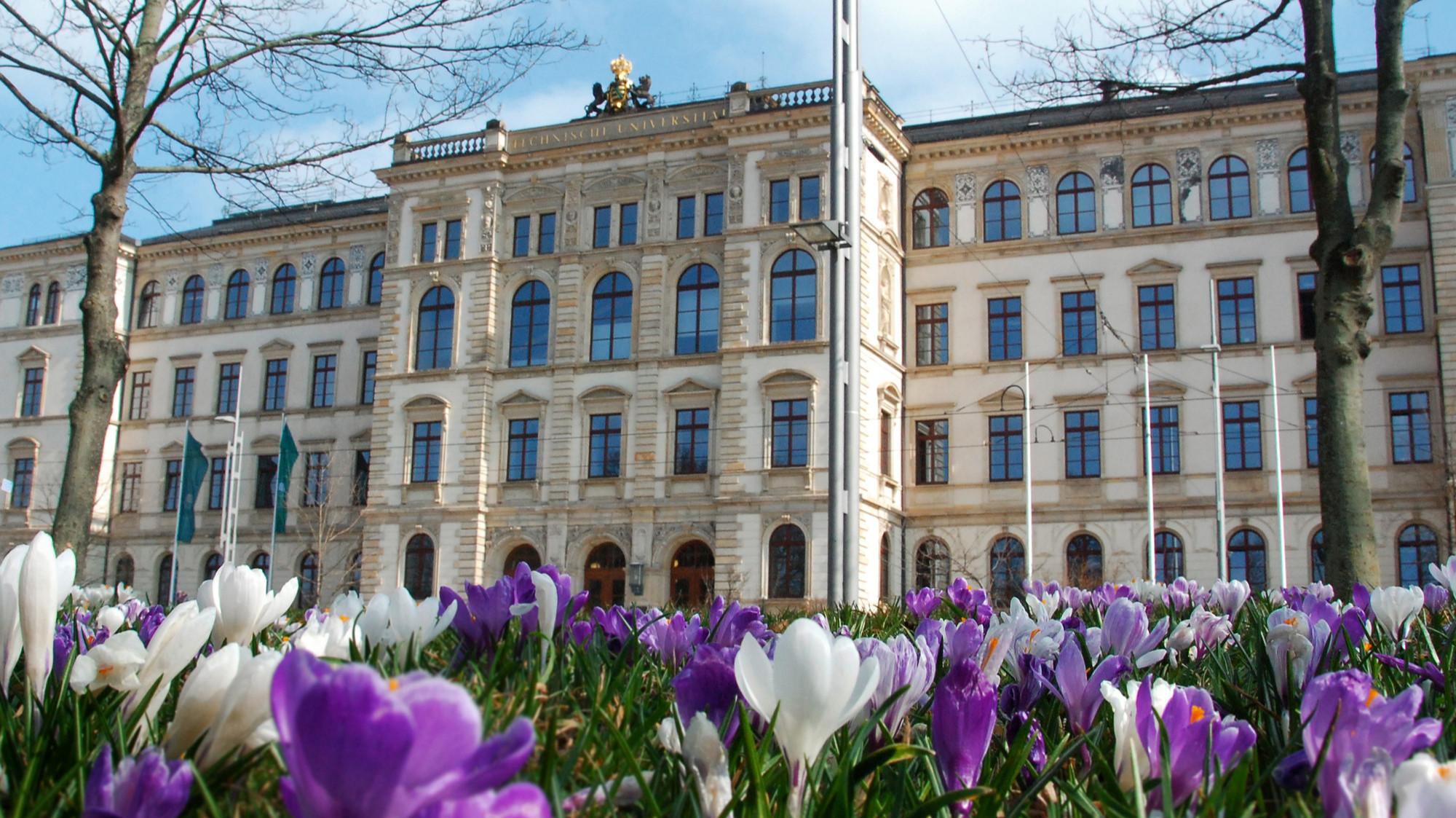
Chemnitz University of Technology

Come study in the European Capital of Culture 2025!

Approximately 8,300 students from about 94 countries study at Chemnitz University of Technology in eight faculties and at the Centre for Teacher Education. International students are supported by the International Office.

Due to the reasonably priced dormitory rooms directly on campus, the distances between accommodation, lecture buildings, cafeteria and student clubs are short. So, if you feel like studying at a cosmopolitan university, apply to study in Chemnitz.

Chemnitz University of Technology is a cosmopolitan university with strong regional, national and international networks. It is also home to about 2,400 academic and administrative employees. It is thus the third largest university in Saxony. In terms of the proportion of foreign students, Chemnitz University of Technology occupies a top position among state universities nationwide. Chemnitz, the European Capital of Culture 2025, can point to many years of positive development in gross domestic product and a high proportion of highly qualified employees. It also owes this to its university, as Chemnitz University of Technology is the intellectual heart of the city and has developed into an internationally visible research location for future value creation processes and sustainable future security.

The university combines engineering and natural sciences as well as mathematics with humanities, social sciences and economics. At the junctures, unique degree programmes are created alongside pioneering research projects. These include, for example, sensor technology and cognitive psychology, computer science for humanities and social scientists, and the degree programme MINT: Mathematics, Computer Science and Natural Sciences with Applications in Technology. As of the 2026/2027 winter semester, the university offers about 122 degree programmes. A particular hallmark is the high degree of interdisciplinarity.

Chemnitz University of Technology considers excellent teaching to be an essential basis for additional lively scientific development of the research landscape as well as for the transfer of new questions, findings and methods to the economy and society. The university has created the necessary framework for this in its "Teaching Mission Statement". Thus, teachers and students jointly shape the teaching and learning conditions at Chemnitz University of Technology in the context of internationality and regionalism. The further development of study programmes is regularly initiated by the TUCpanel student survey as well as by accreditation procedures. This makes student success factors visible, which ultimately helps more students to successfully complete their studies in the standard period of study.

With 33 percent international students and numerous international researchers with cooperative relationships with 130 universities worldwide, Chemnitz University of Technology is one of the most internationally oriented universities in Germany. The university is also part of the Across Alliance. Students can benefit from a wide catalogue of courses offered by eight partner European universities. As a result of numerous exchange programmes, you can meet students from Chemnitz all over the world. It has been pursuing this path for many years with increasing dynamism and at a professional level, as evidenced by the seal of the HRK Re-Audit Internationalisation of Universities.

University location

Chemnitz, European Capital of Culture in 2025 and the third largest city in Saxony, looks back proudly on a history of innovation with which few other cities can hope to compete. With the advent of the industrial revolution, Chemnitz quickly developed into the leading centre of mechanical engineering in Germany. This great tradition has continued uninterrupted to the present day, even through the period in which the city was known as Karl-Marx-Stadt. Today, Chemnitz (population 250,000) is well on its way to becoming one of the most important high-tech locations in Germany. But Chemnitz has much more to offer than just science and technology. Amongst other things, there is the Opera House (built in 1909), the King Albert Museum with its excellent collection of German Expressionist paintings, the Natural History Museum and the German Board Games Museum, the only one of its kind in Germany. And in the Kassberg Quarter, you can see the largest intact area of Art Nouveau architecture in Germany.

Activate map

To activate the map, click on the "Show map" button. We would like to point out that data will be transmitted to OpenStreetMap after activation. You can find out more in our privacy policy. You can revoke your consent to the transmission of data at any time.