International Programmes 2025/2026

Master of Science in Chemistry Master of Science in Chemistry

Freie Universität Berlin • Berlin

Degree
Master of Science
Course location
Berlin
Teaching language
  • English
Languages

Most of the courses are held in English. There are a few elective courses offered only in German. Thus, the programme can be completed without knowledge of German.

Participants can choose to write the Master's thesis in either German or English.

Full-time / part-time
  • full-time
Programme duration
4 semesters
Beginning
Winter and summer semester
Application deadline

Application and registration periods: 15 April – 15 August (for the winter semester) and 1 December – 15 January (for the summer semester)
Please see this link.

Tuition fees per semester in EUR
None
Combined Master's degree / PhD programme
No
Joint degree / double degree programme
No
Description/content

Students will expand and deepen their knowledge in the three topic areas: Inorganic chemistry, organic chemistry, and physical chemistry. They will strengthen their specialised knowledge in a topic area in chemistry of their own choice or gain cross-cutting qualifications by taking non-chemistry modules. They will become familiar with the terminologies and special aspects of chemistry, its strengths and limitations, and will be able to apply their knowledge to new issues and situations, even in an interdisciplinary context. They will gain knowledge and practical skills relating to the current state of research in selected fields. They will be able to analyse chemical issues and assess them critically, to develop independent solution strategies, and to estimate their impacts in a wider context.
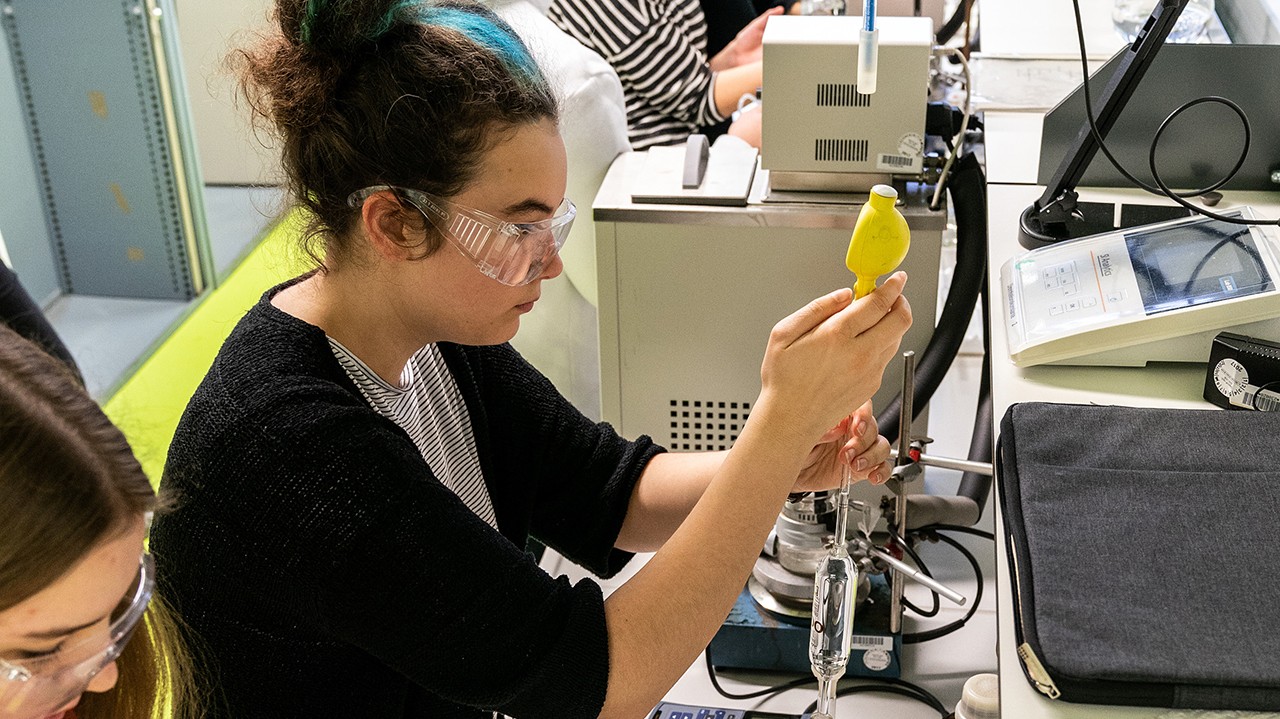
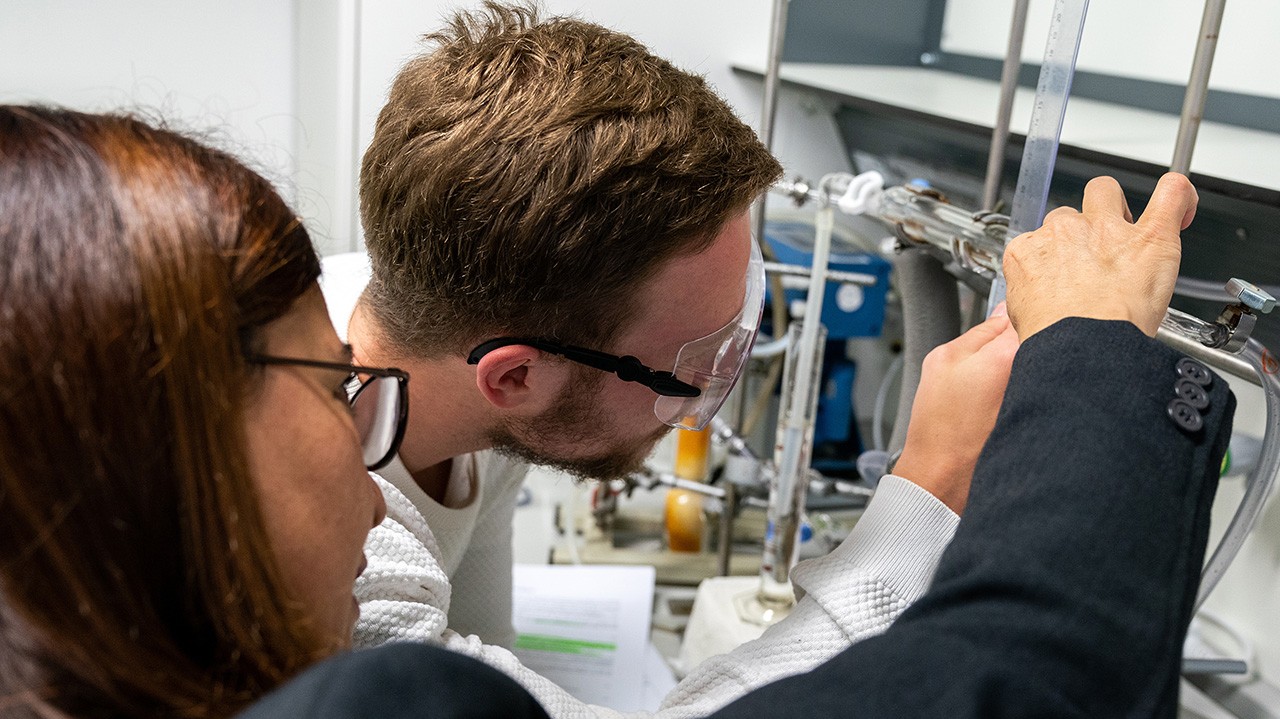
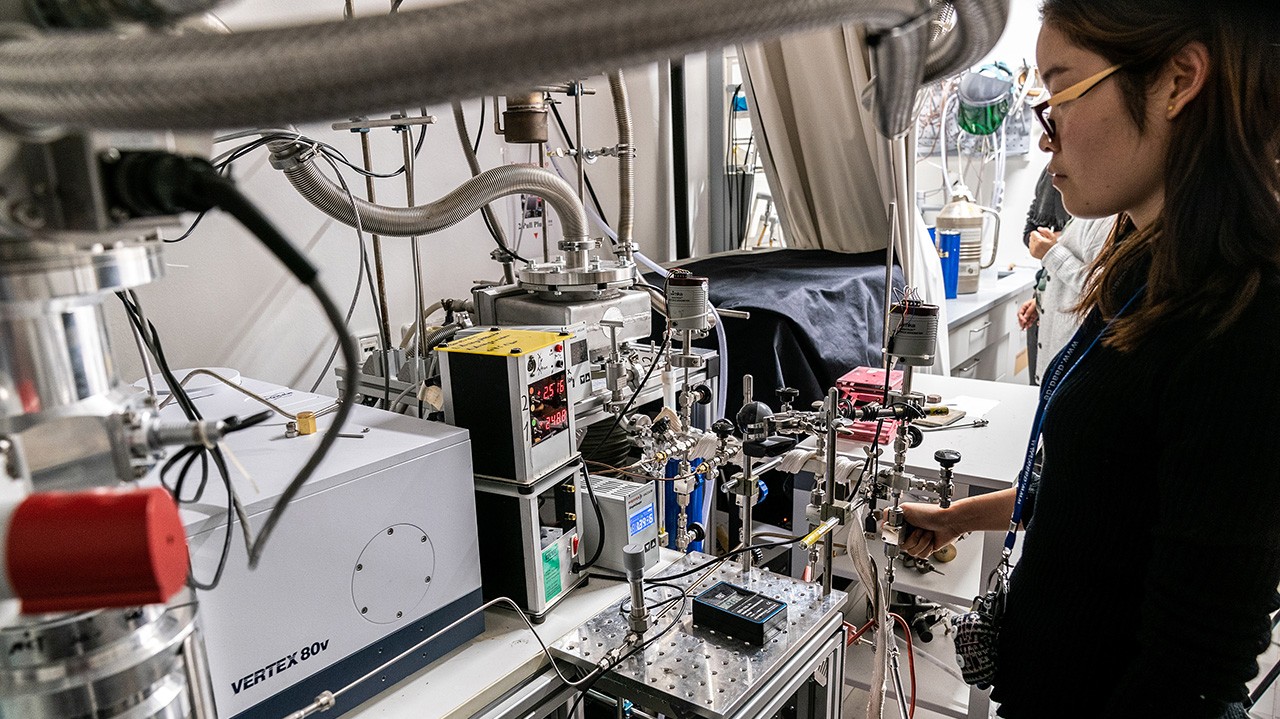
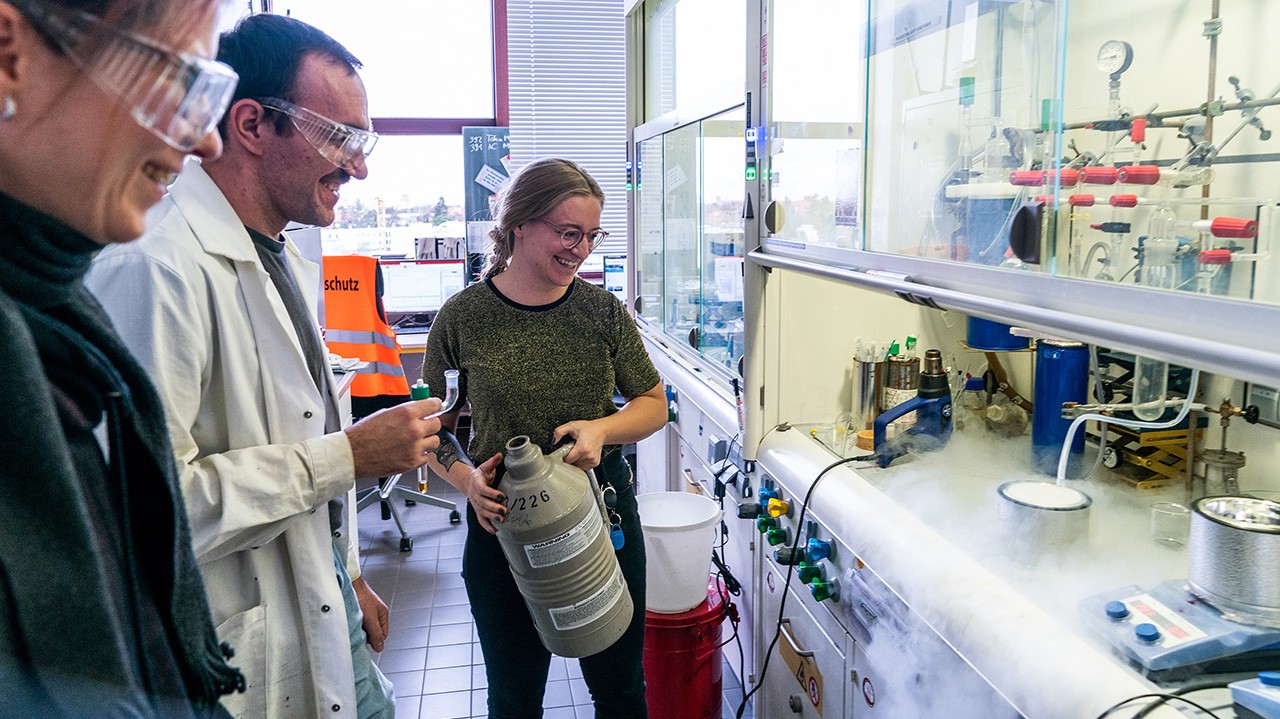
The Master's programme focuses on the current state of research on concepts and experimental and theoretical methods by which the structure and behaviour of atoms, molecules, and solids can be examined, described, and predicted, complex molecules can be synthesised, and associations of molecules analysed. The programme includes both theoretical and instrumental methods of analytical proof and explanation of structures as well as the theoretical background necessary to understand and apply them. Research projects give students the opportunity to apply the latest research methods and concepts to current research topics being examined in working groups. The programme's elective modules provide the opportunity to link chemistry with other disciplines, such as mathematics, physics, biology, medicine, or materials sciences.

Course organisation

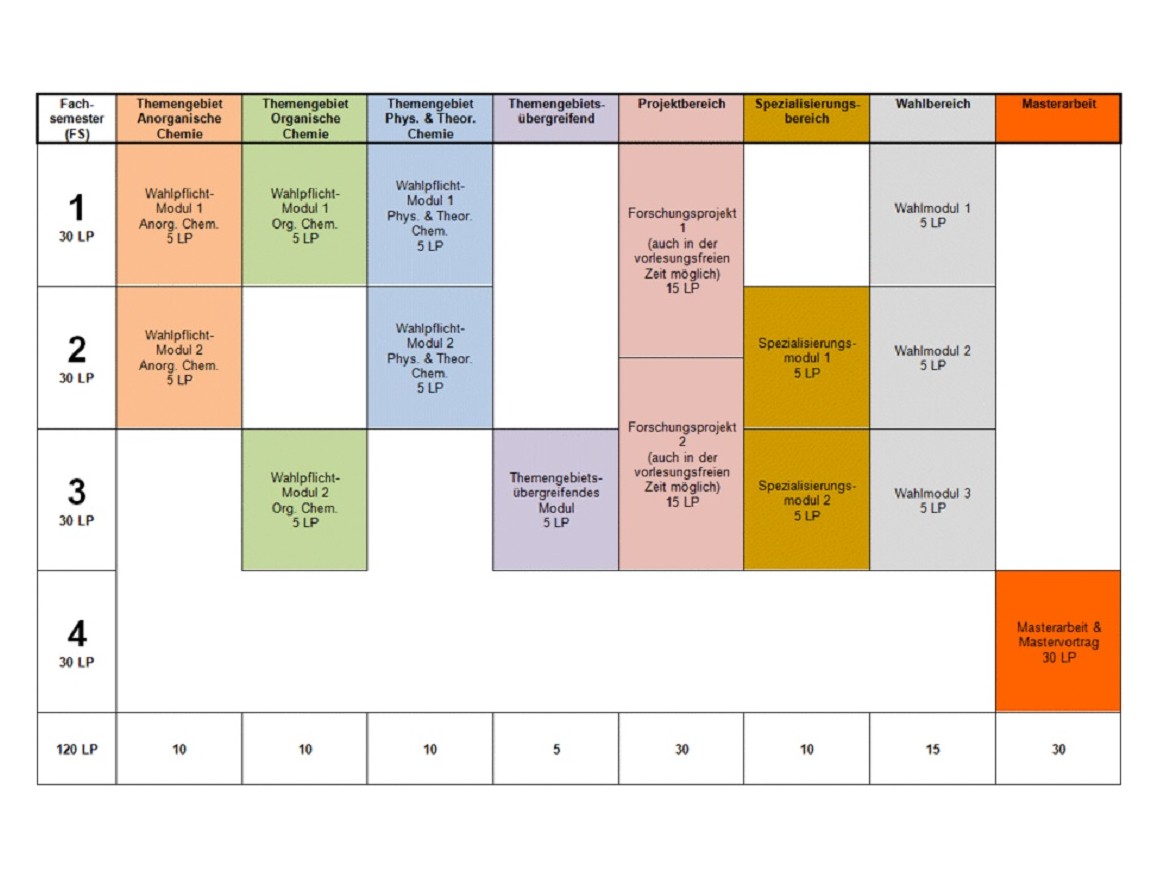
The Master's programme with an overall of 120 credit points is structured into the following:

  1. A compulsory elective area comprising 35 credit points: The modules offered in the compulsory elective area focus on the understanding of modern experimental and theoretical developments in chemistry, to give students a wide basic scientific qualification. The compulsory elective area is structured in the following three topic areas: inorganic chemistry, organic chemistry, and physical and theoretical chemistry, comprising 10 credit points each and a cross-topic area comprising 5 credit points.
  2. A project area comprising 20 to 30 credit points: In order to also gain an understanding of current experimental and theoretical developments, research projects in chemical subjects must be taken in the project area. Students must complete research projects in at least two research groups, including at least 15 credit points in the topic areas inorganic chemistry, organic chemistry, or physical and theoretical chemistry. Other research projects may also be selected from other topic areas in chemistry.
  3. A specialisation area comprising 5 to 20 credit points: In the specialisation area students deepen their knowledge and specialise in a research-oriented or application-oriented topic area in chemistry in line with their individual skills and aims.
  4. An elective area comprising 15 to 20 credit points: In the elective area, the students can either deepen their expertise in chemistry further or gain cross-cutting qualifications or professional knowledge and skills beyond the field of chemistry, depending on their interests and career aims.
  5. The Master's thesis, including presentation comprising 30 credit points: The Master's thesis comprises two components, one written and one oral. The Master's thesis is intended to demonstrate that the student is capable of working independently on an issue in the field of chemistry at an advanced scientific level using scientific methods and of presenting the findings in writing and orally in an appropriate form, to place the findings in their scientific context and to document them.
International elements
  • Projects with partners in Germany and abroad
Description of other international elements

Students have the flexibility to complete lab rotations and even their Master's thesis abroad, a practice strongly encouraged by the faculty, enabling students to gain international research experience.

Course-specific, integrated German language courses
No
Course-specific, integrated English language courses
No
Tuition fees per semester in EUR
None
Semester contribution

In total, the semester contribution amounts to 326.40 EUR. It includes a fee of 181.40 EUR for the transportation ticket contribution. This allows you to use local public transport in Berlin and nationwide for free. Other costs covered by the semester contribution include a 50 EUR enrolment fee, a 85 EUR semester contribution to the student support service ("studierendenWERK Berlin"), and a 10 EUR contribution to the student union.

Costs of living

Compared to other European countries, the cost of living in Germany is quite reasonable. However, the cost of living has also risen somewhat in Germany in recent years. The prices for food, accommodation, clothing, cultural events, etc. are slightly above the EU average. You will need around 900 to 1,300 EUR each month to cover your living expenses. The biggest expense is monthly rent, which is between 400 and 700 EUR in Berlin.

Funding opportunities within the university
Yes
Description of the above-mentioned funding opportunities within the university

The Deutschlandstipendium scholarship enables students at Freie Universität Berlin (FU Berlin) from all nations and walks of life to fully concentrate on their studies. The programme supports talented students with 300 EUR per month. To apply, you must already be enrolled and be within the standard period of time given to complete your degree during the funding period, or you must have a letter of acceptance to start a degree programme at Freie Universität Berlin.

Academic admission requirements

Academic admission requirements include a Bachelor's degree in chemistry or an equivalent degree with credits in chemistry that correspond to the Bachelor's programme in chemistry at Freie Universität Berlin. Please note that degrees in applied chemistry, chemical engineering, and other subjects, such as pharmacy or biochemistry, are generally not equivalent.

Language requirements

Proof of sufficient German (DSH2) or English skills (B2 CEFR) is required for all applicants whose first language is not German and who earned an initial degree from a university (or equivalent institution) where the language of instruction was not German. German or English skills will be necessary to understand courses and specialist literature.

Application deadline

Application and registration periods: 15 April – 15 August (for the winter semester) and 1 December – 15 January (for the summer semester)
Please see this link.

Submit application to

The application must be submitted online via uni-assist.

Possibility of finding part-time employment

There are many ways of earning money while you study, for example as waiting staff, academic assistants, or private tutors. Knowledge of German will improve your chances of finding a part-time job, but it isn’t necessarily required. However, it is important to be aware of the legal regulations.

The student support service at the university, called "studierendenWERK Berlin", and the local representative of the "Bundesagentur für Arbeit" (Federal Employment Agency) can provide information about jobs for students. When searching for a job, look at online job boards, notice boards on campus, and ads in local newspapers.

Accommodation

You have the option to stay in a public/private student dormitory or in a private (shared) apartment. Student dormitories are not administrated by the university itself, so Freie Universität Berlin does not have any on-campus housing. However, it works together with "studierendenWERK Berlin" regarding student accommodation.

If you do not wish to stay in a student dormitory, you can try to find a room or an apartment on the private housing market. Many students in Berlin live in shared apartments ("WGs"). You can find these offers online (e.g. WG-Gesucht or Kleinanzeigen) or on notice boards on campus.

Available rooms/apartments near the university are rare. Therefore, students mostly commute from other parts of the city. The commute via public transportation usually takes between 30 minutes and an hour, which is considered a normal travel time in Berlin due to the size of the city.

Career advisory services and programmes for future professionals

The Career Service of Freie Universität Berlin aims to support international students at Freie Universität by providing information, advice, and events related to career planning, internships, and job applications.

Support for international students and doctoral candidates
  • Welcome event
General services and support for international students and doctoral candidates

The International Student Support team at FU Berlin regularly offers information events that include Q&A sessions. While personal office hours are not available due to our team size, students can contact Info-Service Study for general inquiries or seek assistance from the General Academic Advisory Service or Psychological Counselling for more complex concerns. Additionally, the team continually enhances its expertise in international affairs, thereby contributing to FU Berlin's internationalisation process.

Freie Universität Berlin

Content Bild
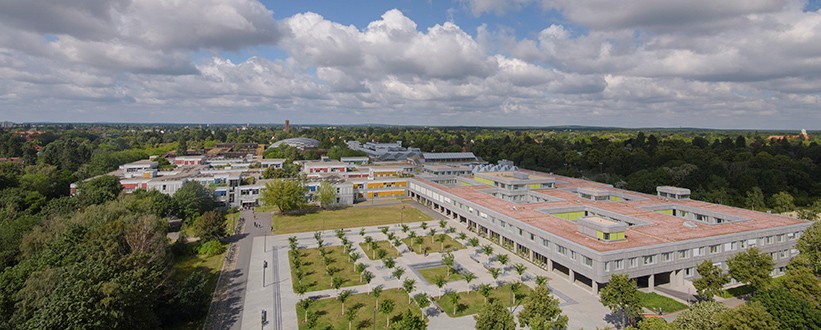
Aerial view of Freie Universität Berlin © Bernd Wannenmacher

Freie Universität Berlin is a young, modern university offering a wide range of degree programmes across all academic disciplines. Today, approximately 33,000 students are enrolled in around 170 degree programmes spanning the humanities, social sciences, natural sciences, and life sciences. Economics, Law, Global History, Physics, English Studies, Biodiversity, and Cognitive Neuroscience are just a few examples of the wide variety of subjects offered at Freie Universität Berlin.

As a leading research institution, Freie Universität Berlin has held the status of a University of Excellence awarded by the German government for almost 20 years. It is part of the only University Consortium of Excellence in Germany – the Berlin University Alliance – which includes four prestigious partners: Freie Universität Berlin, Humboldt-Universität zu Berlin, Technische Universität Berlin, and Charité – Universitätsmedizin Berlin.

Freie Universität Berlin is highly international in its outlook. It maintains partnerships with numerous universities worldwide and operates liaison offices in Cairo, Eastern Europe (Tbilisi, Georgia), New Delhi, and São Paulo. Around 22 percent of students in undergraduate and graduate programmes come from abroad, as do 42 percent of doctoral candidates. Many lecturers and professors also have international backgrounds. At Freie Universität Berlin, you will meet people from all over the world.

A variety of support services make it easier to begin your studies, especially for international students and those new to Berlin. Examples include orientation week, the mentorship programme, the peer programme, and the Student Services Center.

The university sports programme, ranging from Aikido to Zumba, is also very popular. Numerous cafeterias and dining halls across campus offer food and beverages, often including fair trade, organic, vegetarian, and vegan options.

Environmental protection and sustainability are key values at Freie Universität Berlin. There are many opportunities to get involved in related initiatives and student-led projects.

In addition, Freie Universität Berlin actively supports entrepreneurs. Through its start-up support network, students, researchers, and alumni receive guidance on turning innovative ideas into successful businesses – from the initial concept to market readiness.

University location

Freie Universität Berlin is one of the leading universities in Germany’s capital. It is located in the leafy district of Dahlem, in the southwestern part of the city. Most of the university’s facilities are situated on the Dahlem campus, making it a central hub for academic life in a uniquely green setting. No other university campus in Berlin offers as much greenery and open space.

Just step outside the university buildings to enjoy the outdoors — have lunch on one of the many terraces or rooftops, or explore the green spaces nestled between the buildings. In the summer, you can cool off after class with a swim in nearby Krumme Lanke or head to Freie Universität’s water sports centre at Wannsee.

Dahlem is also home to one of the largest botanical gardens in Europe, offering a peaceful escape just a few steps from campus life.

Thanks to excellent public transportation connections, the heart of Berlin is easily accessible. The U3 subway line directly links Dahlem with popular central neighbourhoods such as Schöneberg, Kreuzberg, and Friedrichshain, and all other districts can also be reached quickly and conveniently.

Activate map

To activate the map, click on the "Show map" button. We would like to point out that data will be transmitted to OpenStreetMap after activation. You can find out more in our privacy policy. You can revoke your consent to the transmission of data at any time.