International Programmes 2026/2027

Scientific Instrumentation — AI-Driven Design, Sensors and Optics Scientific Instrumentation

University of Applied Sciences Jena • Jena

Degree
Master of Science
Course location
Jena
Teaching language
  • English
Languages

Courses are held in English (100%).

Participants can choose to write their Master's theses in English or German.

Full-time / part-time
  • full-time
Mode of study
Less than 50% online
Programme duration
4 semesters
Beginning
Winter semester
Application periods
The following is valid for applicants from: all countries
For the winter semester:
1 December - 1 April
More information on application periods
Please find more details on this website.
Combined Master's degree / PhD programme
No
Joint degree / double degree programme
No
Description/content

The first semester includes foundation modules on advanced topics of Applied Mechanics, Electronics, Optics and Scientific Computing. For semesters two and three, students choose a major direction for their studies. Currently, the following directions for specialisation are offered:

  • "Design of Precision Instruments" with focus on mechanical design and product development
  • "Materials and Processes" with focus on functional materials and micro- & nanotechnologies
  • "Applied Optics and Photonics" with focus on optical engineering and image data processing

Semester four is dedicated to research work for the Master's thesis in a company, at a research institute, or at our university.

The language of instruction for the entire curriculum is English. As part of the curriculum, we offer German courses for all levels, which prepare students for thesis work in companies and job entry.

All modules can be checked here: Curriculum

Course organisation

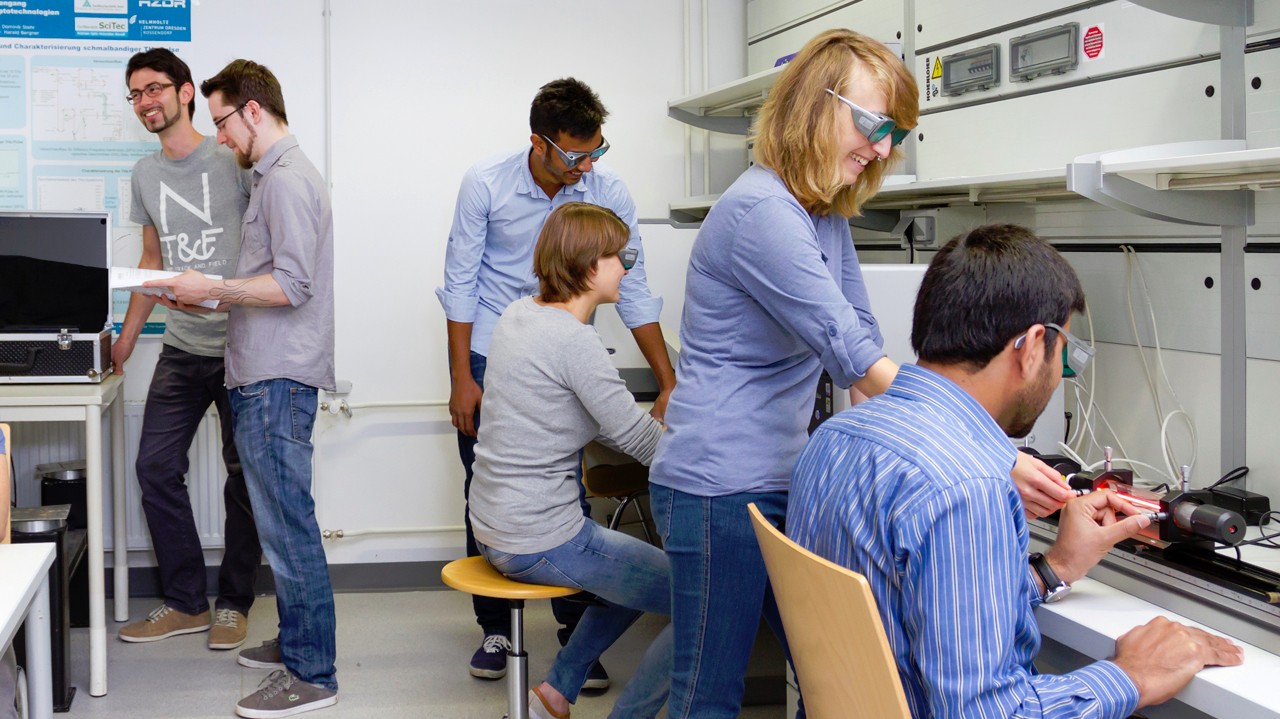
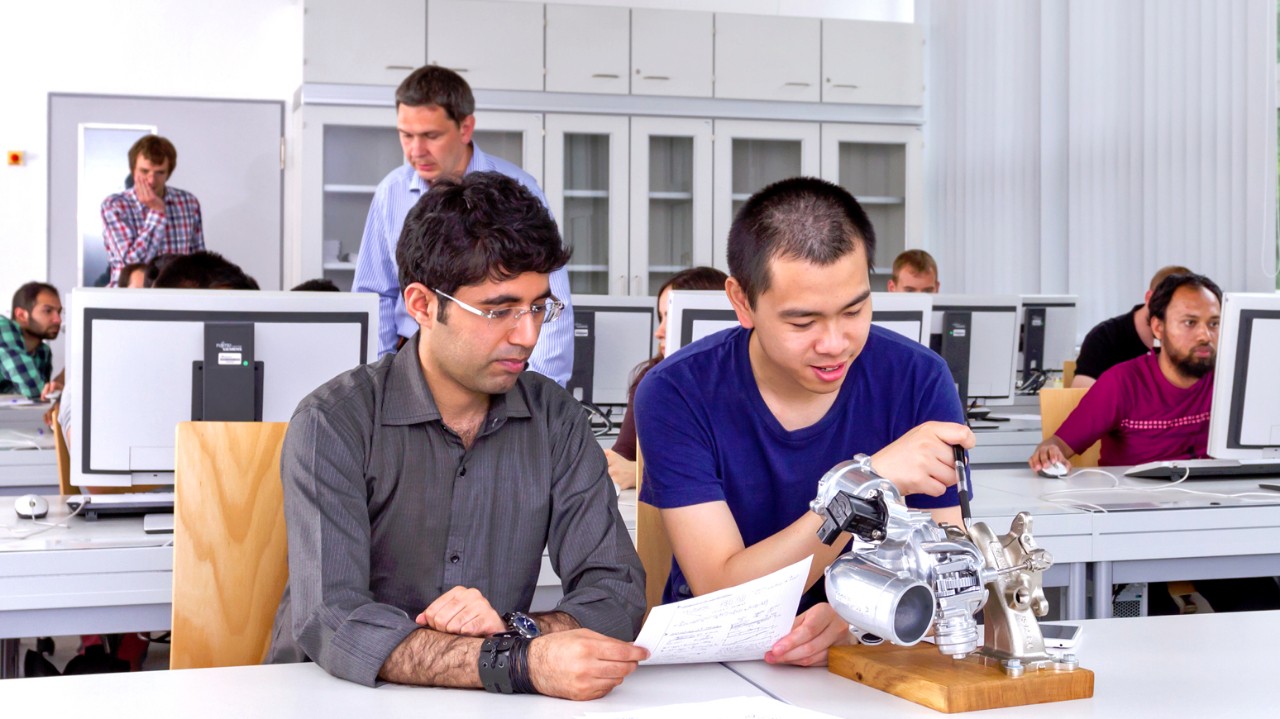
The curriculum has a modular structure. Credit points are granted according to the European Credit Transfer System (ECTS) for every successfully completed module. This system facilitates the recognition of course modules studied at different universities. The modules contain lectures, tutorials, seminars and laboratory work according to the requirements of the particular topic. Tutorials in small groups are important for learning how to apply theoretical knowledge. There is close interaction between students and professors. Various modules include laboratory work. Students, usually in groups of two, perform experiments in our well-equipped laboratories. By working in the laboratories, students gain practical skills and deepen and strengthen their theoretical knowledge. The fourth semester is dedicated to work on the Master's thesis, in which a research project or a high-tech development project is carried out. This allows students to work with state-of-the-art science and technology. The research work for the project and the Master's thesis can be carried out at our university, at one of our partner universities, at a research centre or at a research department in industry. It is supervised jointly by the respective institution and our university.

Ernst-Abbe-Hochschule Jena has several well-funded research centres and groups, e.g. in the area of manufacturing technologies, optics or applied artificial intelligence.

The university is connected with industry and external research. These contacts can be used to start the career with the Master's thesis. Companies, universities, and institutes have joined forces in the Thuringian competence network OptoNet e.V.

PDF Download
A Diploma supplement will be issued
Yes
International elements
  • Language training provided
  • Training in intercultural skills
  • Projects with partners in Germany and abroad
  • Integrated/optional study abroad unit(s)
  • Opportunities for students to work abroad
  • Content-related regional focus
Description of other international elements

Students receive training in intercultural communication, management skills and German business culture in the second semester. Students will be connected with students from different departments to improve their interdisciplinary and intercultural skills. In the third semester, students get trained in the style of scientific writing and presentation specific to German academia and in research culture.

We have curricular and extra-curricular language courses such as technical English, job-related German, Portuguese, Spanish, and Russian. All our language courses are free of charge.

Integrated/optional study abroad unit(s)

Students are allowed to complete technical modules at our partner universities in Europe or worldwide (e.g. South Korea, USA). Courses at European universities will be funded by our Erasmus+ programme. Courses at universities outside of Erasmus can be funded by Promos scholarships.

The Master's thesis can be completed abroad, funded by our Erasmus+ programme.

Course-specific, integrated German language courses
Yes
Course-specific, integrated English language courses
Yes
Pace of course
Instructor-led (Specific due dates for lectures/assignments/exams)
Phase(s) of attendance in Germany (applies to the entire programme)
Yes, compulsory
Tuition fees per semester
None
Semester contribution

The semester contribution amounts to 317.05 EUR per semester. The enrolment fee includes free public transport in Germany (Deutschlandticket).

Costs of living

Living expenses depend very much on individual lifestyle. On average, a total amount of 934 EUR per month should be sufficient to cover all expenses. The total amount should cover accommodation, health insurance, food, transport, a monthly fraction of the semester contribution and miscellaneous expenses.

Funding opportunities within the university
Yes
Description of the above-mentioned funding opportunities within the university
  1. DAAD Prize: This is awarded with 1,000 EUR, tendered once per year at the EAH Jena. The DAAD Prize honours international students who achieved excellent study results and showed remarkable social or intercultural commitment.
  2. End-Of-Study Scholarship of the DAAD: This supports international students to help them focus on the successful completion of their degree courses in the last phase of their studies.
  3. Deutschlandstipendium: This is for gifted and talented young people who also show special social commitment.
  4. Equal Opportunities Scholarship of the DAAD: The purpose of the scholarship is to provide financial support to international students at the EAH Jena who face special challenges during their studies. The scholarship holders are selected by an independent committee of the university.
Academic admission requirements

Students must have completed an undergraduate university degree programme in a natural or engineering science (usually a Bachelor's degree). Best suited are degrees in physics engineering, physics, applied physics, microtechnology, precision instrumentation, mechanical engineering, mechatronics, electronics engineering, electrical engineering, instrumentation engineering or materials sciences. Graduates of other engineering or science courses may also fulfil the entry requirements.
Good performance in the undergraduate programme is required.

German language skills
No minimum language level required
English language skills
B2 required, please provide an official language certificate, e.g.:
  • IELTS Academic: 6
Application periods
The following is valid for applicants from: all countries
For the winter semester:
1 December - 1 April
More information on application periods
Please find more details on this website.
Submit application via
Please check this website.
Possibility of finding part-time employment

It is possible to work on the weekends and during the lecture-free periods at part-time jobs in the city of Jena.

Highly talented students are welcome to apply to join our research groups. They will receive a student assistant contract with our university.

Accommodation

Student halls of residence ("Wohnanlagen") are operated by the ''Studierendenwerk Thüringen''. The ''Studierendenwerk'' is a non-profit organisation that provides various services to students.
Depending on size and standard of the accommodation, monthly rents for a room can vary from 140 to 380 EUR.

Career advisory services and programmes for future professionals

Our International Career Service provides support in preparing application documents and gives job advice, organises field trips and conducts several workshops and events to understand German and European Job Culture. We are focused on the good integration of our graduates into the German labour market. We support various extracurricular language workshops, intercultural workshops, job application trainings as well as several company visits. All of these offers are free of charge and funded by the DAAD.

Support for international students and doctoral candidates
  • Welcome event
  • Tutors
  • Specialist counselling
  • Cultural and linguistic preparation
  • Buddy programme
  • Accompanying programme
  • Visa matters
  • Pick-up service
  • Help with finding accommodation
  • Support with registration procedures
General services and support for international students and doctoral candidates

Welcome Tutor Service (buddy programme): reception at arrival in Jena (pick-up service), support with flat-hunting and during visits to authorities (registration procedure), introduction to the university procedures, campus tour and help with general questions 

Cultural programme: orientation week for national and international students

Social & psychosocial counselling and legal advice: free of charge counselling, included in the semester fee

Support available to students with disabilities

We have a diversity office that offers counselling regarding all our support services.

Our website, our documents, and our university facilities are accessible. We provide elevators in all buildings.

Our examination offices provide compensation regulations for students.

Support available to students with dependants or children

At our university childcare clubs ("Kindergärten"), children below seven years of age receive professional childcare without fees.

In cooperation with the family centre Jena ("Familienzentrum Jena"), we can also organise private childcare on an hourly basis.

Support available to students with a refugee background

Our International Office is trained and informed about possibilities and regulations for refugees and offers daily counselling and support.

University of Applied Sciences Jena

Content Bild
Ernst-Abbe-Hochschule Jena © Martin Schröck

The University of Applied Sciences Jena (Ernst-Abbe-Hochschule Jena, EAH) was founded on 1 October 1991 as one of the first institutions of higher education of its kind in the eastern German states. Short study periods and a practical orientation form a perfect complement to the education received at traditional universities and technical universities. Currently, the nine departments of University of Applied Sciences Jena offer a wide selection of Bachelor's and Master's programmes covering engineering sciences, business administration and social and health sciences. At present, approx. 4,200 students are enrolled at the EAH Jena. This number includes about 1,000 international students. The teaching staff comprises 124 professors and 29 teachers for special tasks. The EAH's total staff of approx. 500 also includes people engaged in various projects, in administration and in services as well as two apprentices. More than 26,000 m² of floor space, the EAH Jena boasts more than 124 extremely well-equipped, specialised laboratories and rooms for practical courses, seven modern lecture halls and 52 seminar rooms. The teaching rooms, labs and offices are accommodated in five campus buildings of considerable architectural interest.

In the interest of a scientifically profound and practically oriented education, the university cooperates with universities in Europe and beyond. Intensive cooperation is also maintained with industry: world-famous companies like Zeiss, JENOPTIK, Siemens, Bosch, and the industrial research institutions in Jena represent modern technology, up-to-date management and scientific innovation.


4,200 Total number of students
22% International students

University location

Located in the centre of Germany, the city of Jena has a long tradition in optics and instrumentation. In the 19th century, the physicist Ernst Abbe developed the fundamentals of optical instruments and, together with Carl Zeiss, built up Jena's world-renowned optics industry. Today, a large number of research institutes and high-tech companies are situated in and around Jena. Nearly a quarter of the 111,000 inhabitants of the city of Jena are students at the universities. There are many student clubs, cultural arrangements and sports facilities in Jena. The charming landscape around Jena is perfect for outdoor recreation at weekends and on holidays.

Activate map

To activate the map, click on the "Show map" button. We would like to point out that data will be transmitted to OpenStreetMap after activation. You can find out more in our privacy policy. You can revoke your consent to the transmission of data at any time.