International Programmes 2026/2027

Master of Science in Economics Master of Science in Economics

University of Mannheim • Mannheim

Degree
Master of Science
Course location
Mannheim
Teaching language
  • English
Languages

The programme is taught entirely in English. German language proficiency is not required.

Full-time / part-time
  • full-time
Mode of study
Fully on-site with voluntary online elements
Programme duration
4 semesters
Beginning
Winter semester
Application periods
The following is valid for applicants from: all countries
For the winter semester:
1 April - 15 May
More information on application periods
Please find more details on this website.
Combined Master's degree / PhD programme
Yes
Joint degree / double degree programme
Yes
Description/content

The Master of Science in Economics programme at the University of Mannheim is a premier offering tailored for a select group of exceptional students aspiring to develop the skills essential for thriving careers in international organisations, academia, and leadership roles across both the public and private sectors.

In the introductory phase, students acquire advanced knowledge in macroeconomics, microeconomics, and econometrics. This foundational training enables systematic engagement with theoretical and empirical research in economics and related disciplines. It also provides essential theories and methodologies for later study stages.

The further course of study depends on the specialisation chosen in the advanced phase:

ECONOMICS

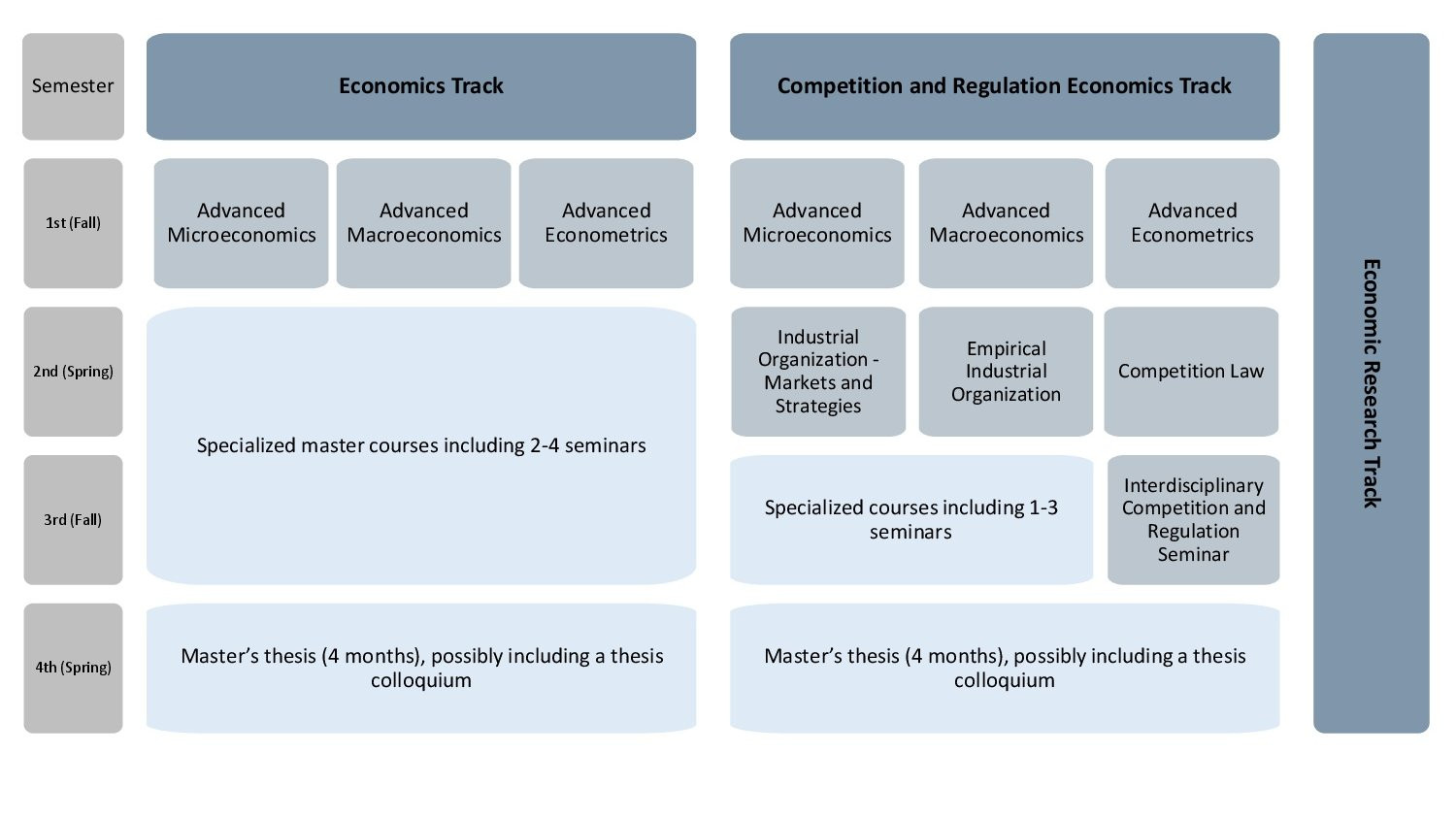
This study track offers a diverse selection of courses to build an individual academic profile. Beginning in the second semester, all courses are electives, giving students flexibility to choose areas and depth of specialisation. During the specialisation phase, students can engage in discussions with faculty members to refine their course selections, ensuring their academic journey aligns with their individual interests and strengths. In the fourth semester, students will focus on their Master’s theses, allowing them to apply their knowledge and insights to a significant research project.

COMPETITION AND REGULATION ECONOMICS

This study track students for careers in competition and regulatory economics in organisations, government institutions, regulated industries (e.g. energy and telecommunications), and consulting. During the specialisation phase, students can choose from a range of elective courses, complemented by focused modules on competition policy and regulatory economics. Additionally, the curriculum features a tailor-made lecture series that includes insights from leading industry practitioners. Practical opportunities such as internships, field trips, and collaborative projects with partners are also available. Students culminate their studies in the fourth semester by completing their Master’s theses, allowing them to apply their expertise to a significant research endeavour.

ECONOMIC RESEARCH

This study track prepares students for PhD studies and academic careers. The second semester broadens and deepens the first semester courses in microeconomics, macroeconomics, and econometrics. In the third and fourth semester, students take elective courses that introduce them to research questions in specialised areas. At the end of the second year, students prepare their thesis proposals. Upon earning their Master’s degree, graduates from this track formally enter the PhD programme at the Center for Doctoral Studies in Economics (CDSE), with scholarship support, enabling them to begin their doctoral dissertations.


Course organisation

INTRODUCTORY PHASE (first semester)

After a two-week orientation phase, students can choose between the module combinations Economics and Economic Research Preparatory Courses. The latter is compulsory for students who wish to apply for the Economic Research track at the end of the first semester.

The first semester consists of three to four compulsory core courses, depending on the chosen module combination:

Economics:

  • E600 Mathematics (preparatory course)
  • E601 Advanced Microeconomics
  • E602 Advanced Macroeconomics
  • E603 Advanced Econometrics

Economic Research Preparatory Courses:

  • E700 Mathematics for Economists (PhD level)
  • E701 Advanced Microeconomics I (PhD level)
  • E702 Advanced Macroeconomics I (PhD level)
  • E703 Advanced Econometrics I (PhD level)

ADVANCED PHASE (second and third semester)

In the Economics track, students can freely choose from a wide range of elective courses covering topics from micro- and macroeconomics, econometrics, and industrial organisation (IO) to finance, game theory, policy analysis, economic history, and international trade. Furthermore, modules from other programmes, such as Mannheim Master in Management, Business Mathematics, Political Science, and Sociology can be chosen.

In the Competition and Regulation Economics track, elective courses are complemented by tailor-made courses:

  • E505 Industrial Organisation – Markets and Strategies
  • E5046 Empirical Industrial Organisation
  • Competition Law
  • Interdisciplinary Competition and Regulation Seminar

In the Economic Research track, students attend the following compulsory modules in the second semester:

  • E801/804 Advanced Microeconomics II and III (PhD level)
  • E802/805 Advanced Macroeconomics II and III (PhD level)
  • E803/806 Advanced Econometrics II and III (PhD level)

In the third semester, students choose from the elective courses offered in the PhD programmes at the Graduate School of Economics and Social Sciences (GESS). At least four of the elective courses have to be from the CDSE course catalogue.

RESEARCH PHASE (fourth semester)

All Master's students conclude their studies by writing a Master's thesis in the fourth semester. In the Economic Research track, the Master's thesis will be written in the form of a dissertation proposal.

PDF Download
A Diploma supplement will be issued
Yes
International elements
  • Projects with partners in Germany and abroad
  • International guest lecturers
  • Integrated/optional study abroad unit(s)
  • International comparisons and thematic reference to the international context
Integrated/optional study abroad unit(s)

450 partner universities across five continents: When opting for a stay abroad, students of the University of Mannheim can choose from a variety of partner universities in cities such as New York, Singapore or Barcelona to develop their subject knowledge. You have the unique opportunity to immerse yourself in another culture, to form international friendships, and to brush up on your foreign language skills. Thanks to the exchange programmes offered by the University of Mannheim, you have the possibility to study abroad without having to pay tuition fees. Spending a semester abroad is not mandatory, but we support students who would like to make use of this opportunity at every step of the process. Suitable courses taken abroad can be recognised in the specialisation phase of the programme.

Integrated internships

An internship completed in the course of the Master's programme can be recognised for credit if it meets the requirements of the internship module. Students in the Competition and Regulation Economics track have various opportunities for internships, excursions, and other interactions with our partners, such as Bundesnetzagentur, German Monopolies Commission, Competition Commission of Singapore, Compass Lexecon, CRA, NERA Economic Consulting, Solve Economics, etc.

Special promotion / funding of the programme
  • ERASMUS+
Course-specific, integrated German language courses
No
Course-specific, integrated English language courses
No
Pace of course
Instructor-led (Specific due dates for lectures/assignments/exams)
Phase(s) of attendance in Germany (applies to the entire programme)
Yes, compulsory
Tuition fees per semester
Varied
More information on tuition fees
Please find more details on this website.
Semester contribution

The semester contribution amounts to approx. 200 EUR per semester. There are several ticket options for public transport available in the Mannheim-Heidelberg metropolitan area. Each will incur different additional costs.

Costs of living

Approx. 850 to 900 EUR per month to cover all personal expenses

Funding opportunities within the university
Yes
Description of the above-mentioned funding opportunities within the university

The University of Mannheim has one of the most differentiated scholarship systems among public higher education institutions in Germany, and it cooperates with a large network of partners and sponsors.

Academic admission requirements

A Bachelor's degree in economics ("Volkswirtschaftslehre") or an equivalent qualification is required. The final grade or the current grade average of the Bachelor's degree shall be 2.5 or better (according to the German grading system). The Bachelor's degree must correspond to at least 180 ECTS credits or have a standard period of study of at least three years. Degrees from neighbouring fields such as Business Administration, other Social Sciences (such as Political Science or Sociology), quantitative fields (such as Mathematics or Engineering), and Humanities can only be recognised as equivalent by the admissions committee if the following minimum requirements are fulfilled:

  • at least 60 ECTS credits (or equivalent) were obtained in courses related to economics, finance, mathematics, or statistics
  • and introductory modules in the following fields of economics have been successfully attended: macroeconomics, microeconomics, and econometrics.

A definite decision on your eligibility can only be made during the admissions procedure, during which all of your documents will be assessed in detail. In case of doubts, please do not hesitate to contact the programme manager for a preliminary assessment.

For further information on the admission process, please visit our website for prospective students.

German language skills
No minimum language level required
English language skills
B2 required, please provide an official language certificate, e.g.:
  • TOEFL iBT Home Edition (since 2026): 4
  • Reading: 4
  • Listening: 4
  • Speaking: 4
  • Writing: 4
  • TOEFL iBT Home Edition (before 2026): 72
  • Reading: 18
  • Listening: 17
  • Speaking: 20
  • Writing: 17
  • TOEFL iBT (since 2026): 4
  • Reading: 4
  • Listening: 4
  • Speaking: 4
  • Writing: 4
  • TOEFL iBT (before 2026): 72
  • Reading: 18
  • Listening: 17
  • Speaking: 20
  • Writing: 17
  • IELTS Academic: 6
Language requirements exemptions
Please find details on the course website.
Application periods
The following is valid for applicants from: all countries
For the winter semester:
1 April - 15 May
More information on application periods
Please find more details on this website.
Submit application via
Please check this website.
Possibility of finding part-time employment

Various student assistant positions in administration, research, and teaching are available at the university.

Accommodation

The International Office offers support in finding dorm rooms and private accommodation.
Student halls of residence are the ideal place to get to know not only German students but also fellow students from all over the world. Depending on the hall, you will live with two to eight fellow students in a shared apartment. Each student has a room, but kitchen, bathroom, and toilet are communal. Additionally, the International Office offers a very limited number of one-bedroom apartments with a small in-room kitchen and bathroom. The kitchens are fully equipped with cooking facilities and a refrigerator.

Career advisory services and programmes for future professionals

The university strives to provide international degree-seeking students with the same opportunities as their fellow German students.

There are a number of institutions within the university that offer support in job and career issues. The Career Network is the central information platform of the University of Mannheim focusing on work and career and accompanies students and graduates on their way to start their career with a diverse range of services.

Furthermore, the project "Step by Step", which is offered by the university’s International Office, aims especially to facilitate the integration of international graduates in the (German) labour market. The project seeks to increase students' career opportunities and strengthen their intention to stay in Germany.

Support for international students and doctoral candidates
  • Buddy programme
  • Specialist counselling
  • Visa matters
  • Welcome event
  • Accompanying programme

University of Mannheim

Content Bild
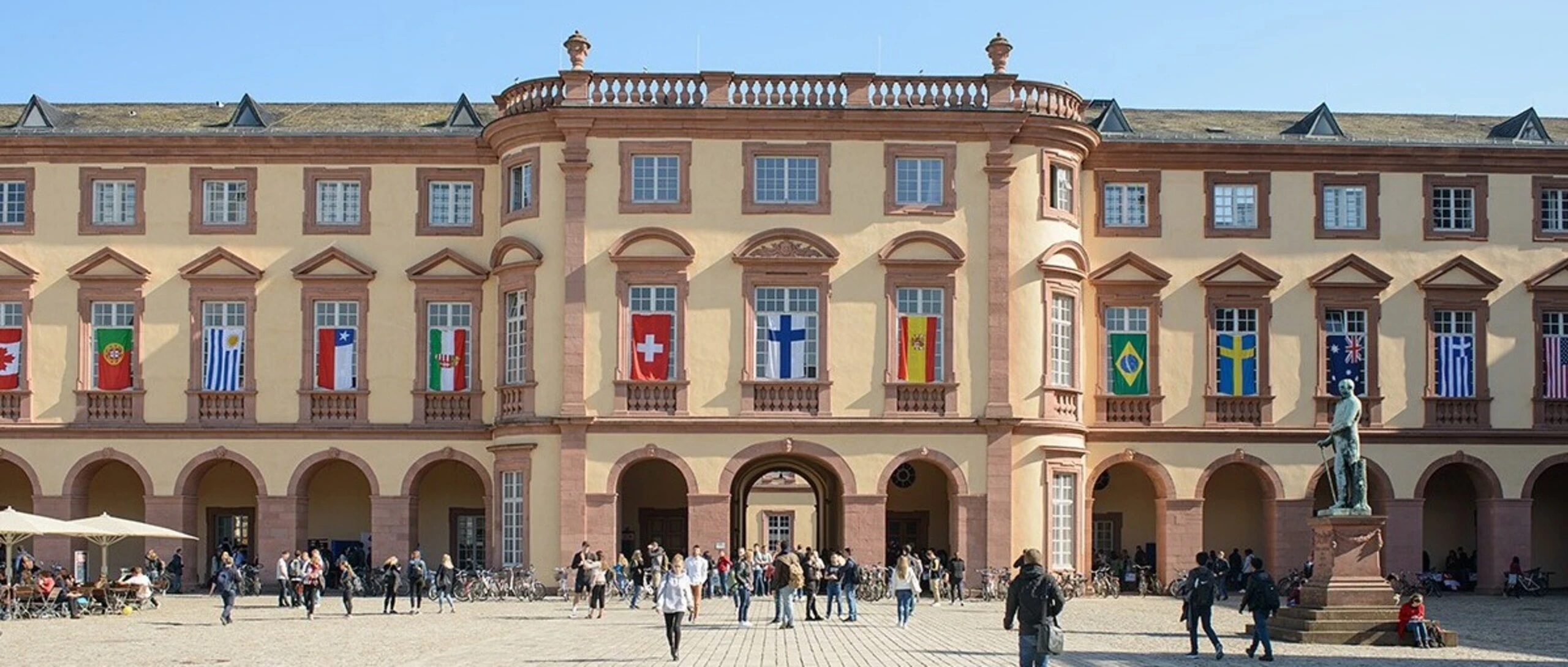
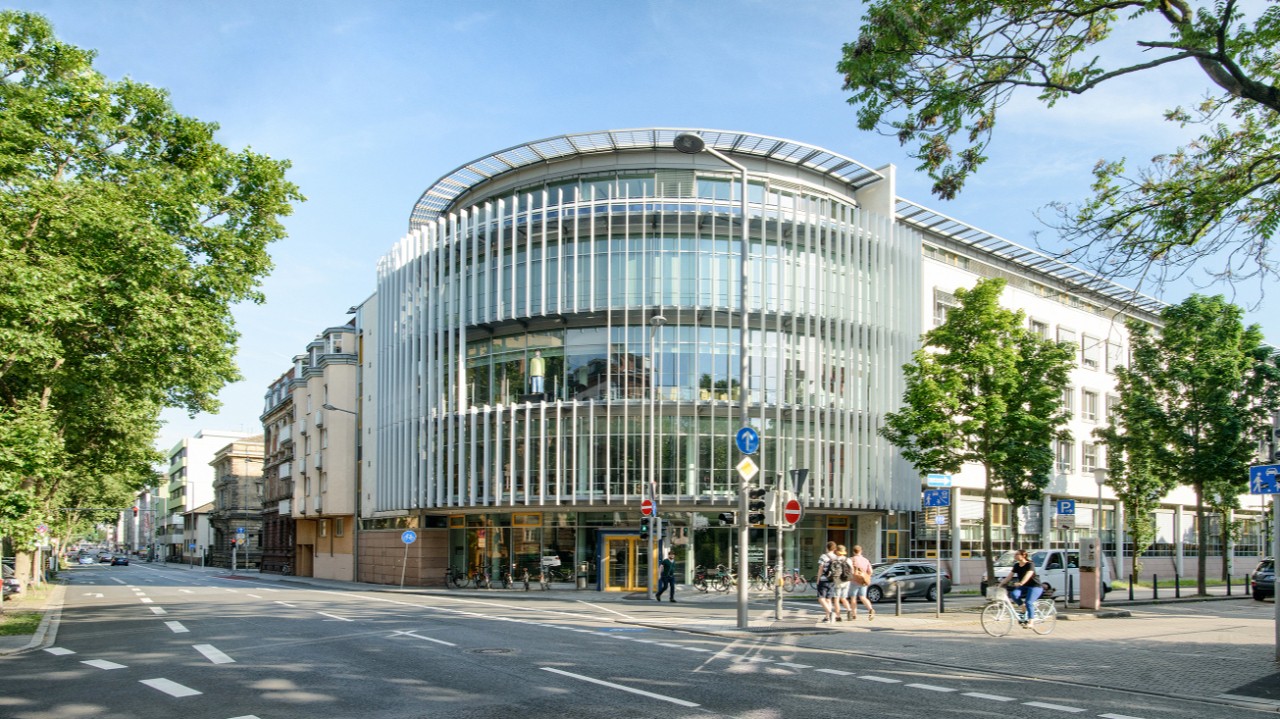
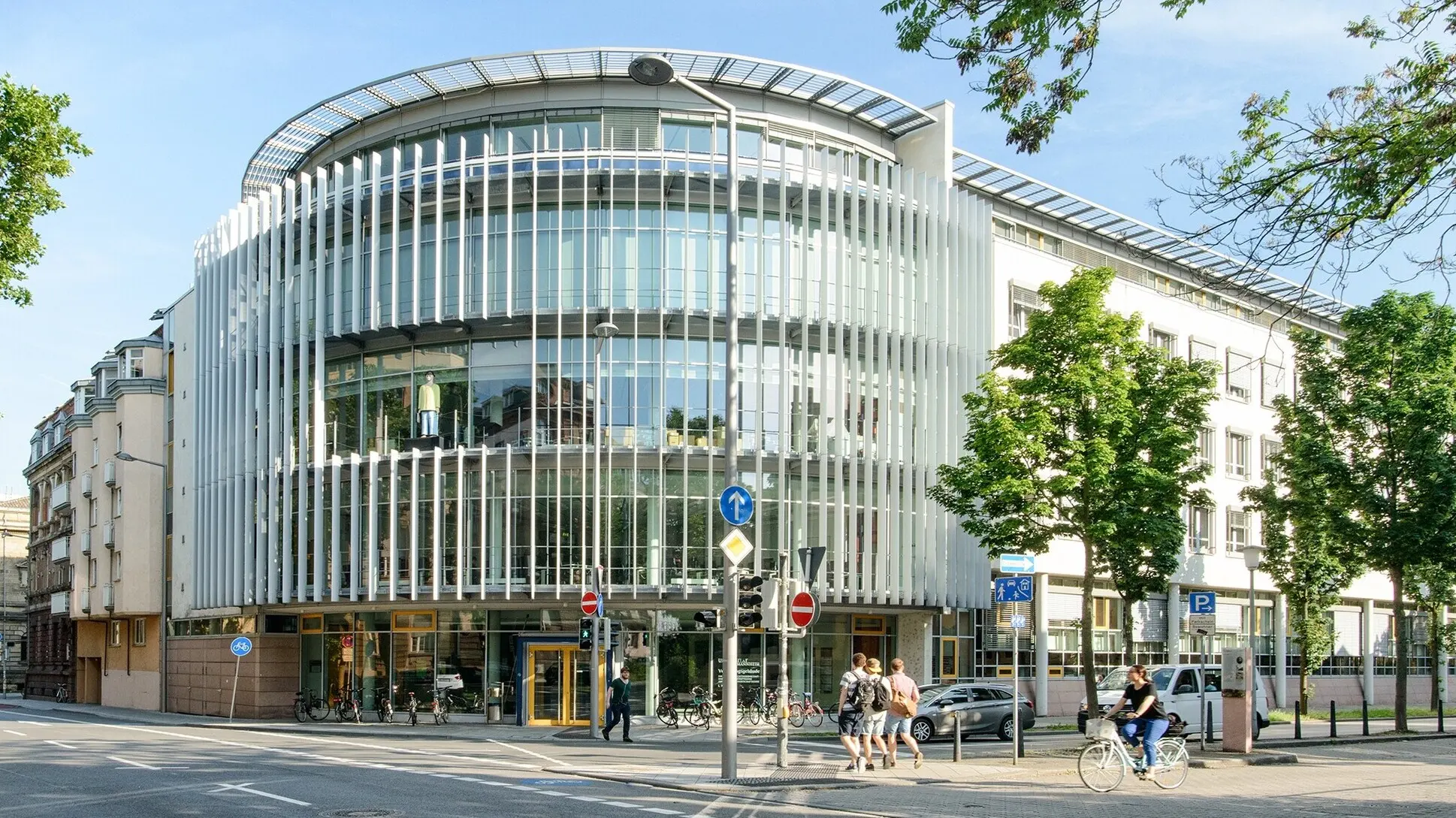
Department Building © Anna Logue

For generations, the University of Mannheim has been preparing students to take on leadership roles in business, academia, and society. One of the university's strengths in this task is its profile, which is characterised by the economic and social sciences. It is in these fields that the University of Mannheim has repeatedly been ranked as one of the top 20 European research institutions.

Staff members at six schools and departments teach and carry out research in business administration, economics, the humanities, social sciences, law, business informatics, and mathematics.

Global Network

Researchers at the university collaborate with numerous national and international partners. The university has a particularly close relationship with the ZEW – Leibniz Centre for European Economic Research, one of the leading economic research institutes in Germany, the GESIS Leibniz Institute for the Social Sciences, and the Leibniz-Institut für Deutsche Sprache (IDS). The Mannheim Centre for European Social Research (MZES) is the largest research institution for social sciences at a university in Germany, and it is one of the leading institutions of its kind on the international stage.

International Campus

The campus surrounding Mannheim's baroque palace is a place where bright minds from across the globe come together to learn, discuss, research, and prepare to make their mark on the world. Every fifth student at the university comes from abroad to pursue a Bachelor's, Master's, or doctoral degree in Mannheim. Students of the Mannheim Business School also come from overseas to obtain a management qualification at one of the top 25 MBA providers in the world.

Research that Benefits Society

The University of Mannheim is known for its practical orientation and its knowledge transfer with society. Numerous researchers are members of national or international bodies, or they work at institutes or associations that have an advisory role in business, society, and politics. Students are also active in society. The many organisations and associations on campus give them the chance to help make the world a better place.

33 Rank in THE World University Global Subject Ranking: Business and Economics
30 Percentage of international students in the MSc Economics programme

University location

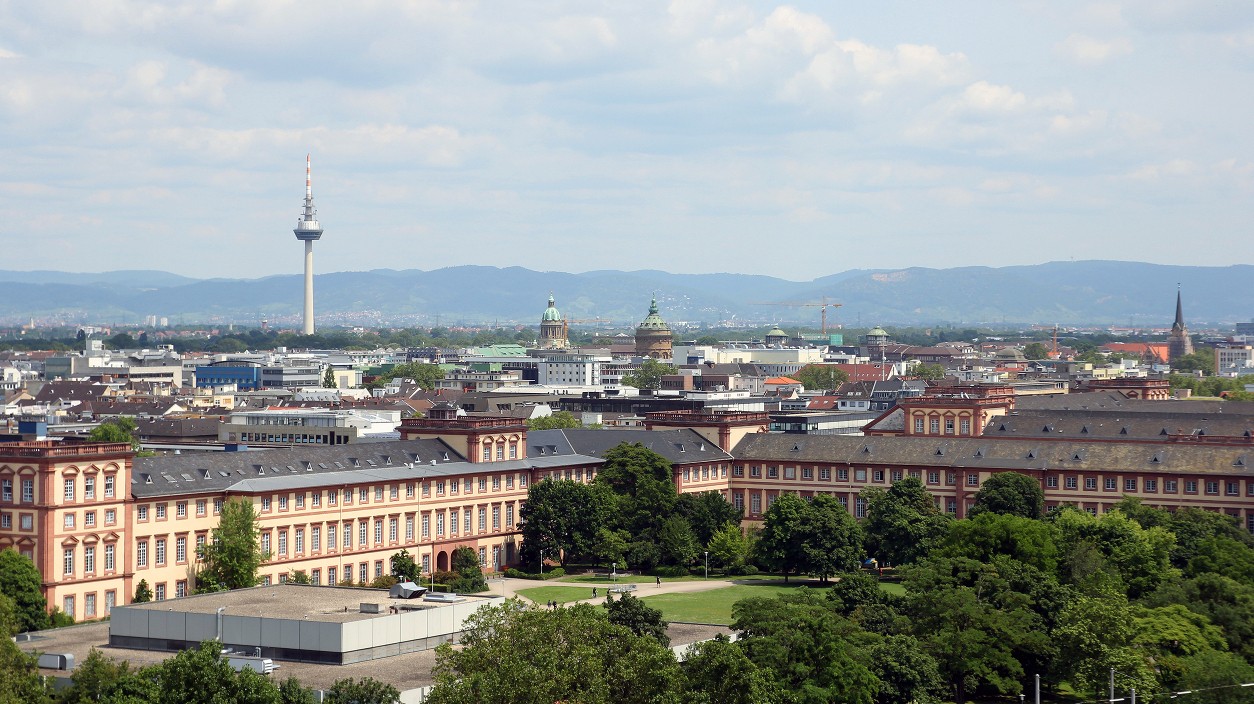
Mannheim has more than 300,000 residents and is located in Baden-Württemberg at the confluence of the rivers Rhine and Neckar. The city impresses with its diversity: a successful mixture of shopping districts, industrial and service centres, places of cultural interest, art nouveau buildings, the large baroque palace which houses the university, and several extensive recreational areas. The beautiful regions of Odenwald and Palatinate, both of which are very popular for walking and cycling, are close to Mannheim. The symbol of Mannheim is its water tower, a 60-metre-high sandstone colossus next to the city centre, which is characterised by its chessboard-style street grid that is unique in Germany.

Thanks to Mannheim's central location and extensive transport connections, a variety of charming towns are within easy reach, and France and Switzerland are only a relatively short journey away. Frankfurt airport can be reached by train within 30 minutes.

Activate map

To activate the map, click on the "Show map" button. We would like to point out that data will be transmitted to OpenStreetMap after activation. You can find out more in our privacy policy. You can revoke your consent to the transmission of data at any time.