International Programmes 2026/2027

Usability Engineering, MSc Usability Engineering, MSc

Rhine-Waal University of Applied Sciences • Kamp-Lintfort

Degree
Master of Science
Course location
Kamp-Lintfort
Teaching language
  • English
Languages

Courses are held entirely in English.

Full-time / part-time
  • full-time
Mode of study
Less than 50% online
Programme duration
3 semesters
Beginning
Winter and summer semester
Application periods
The following is valid for applicants from: all countries
For the summer semester:
until 15 January
The following is valid for applicants from: all countries
For the winter semester:
until 15 July
More information on application periods
Please find more details on this website.
Combined Master's degree / PhD programme
No
Joint degree / double degree programme
No
Description/content

Why choose Usability Engineering?
Aren't we all familiar with those situations when devices or software applications leave us annoyed because they are far more difficult to use than they should be? Luckily, times are changing. Industry is well aware of the fact that the success of their products depends now more than ever on user friendliness. There even is a catchphrase for products that work better for their users: usability.
Successful, innovative products have to be tailored to the needs of businesses and users. They have to meet their stringent demands for quality and efficiency and must adapt to ever changing work conditions, tasks and work-flows. Developing these kinds of complex products requires specialists with diverse, interdisciplinary skills who can strategically contribute to every step of the development and design process.
Our Master's degree programme is taught in English and imparts precisely that type of skill set; one which is highly prized in industry and academia as it relies not only on strategic and methodical knowledge but also equips you with the practical skills to implement your ideas across a broad range of applications. A very important part of your studies is therefore based on understanding and using interdisciplinary approaches.

Career Prospects
By putting a special emphasis on innovative problem-solving methods and incorporating interdisciplinary and international approaches, our degree programme aims to equip you for a career that matches present and future labour market needs and trends. Complementing the individual skills you have gained in your undergraduate degree, our Master's degree will strengthen your employability in all areas in which interactive systems are designed and developed. In short, you will be a sought-after expert wherever products are designed for hands-on use by people.

Course organisation

This three-semester Master's degree programme provides an interdisciplinary education in usability engineering, combining human-centred design, psychology, user research, interaction design, and strategic process knowledge. The first two semesters establish a strong foundation in analysing contexts of use, deriving user needs and requirements, designing and prototyping interactive systems, and evaluating them using qualitative and quantitative methods. You will learn to apply usability engineering methods and international standards and to integrate them into software and product development processes.

Project-based courses and interdisciplinary teamwork address real-world challenges and strengthen methodological, analytical, and communication skills. The programme also covers agile design approaches, innovation and design thinking, UX project management, and current topics in human-computer interaction such as AI, IoT and immersive technologies.

In the third semester, you will complete your Master's thesis, developing and investigating an independent research question with strong academic and practical relevance.

A Diploma supplement will be issued
Yes
International elements
  • International guest lecturers
  • Training in intercultural skills
  • International comparisons and thematic reference to the international context
  • Projects with partners in Germany and abroad
Integrated internships

None

Course-specific, integrated German language courses
No
Course-specific, integrated English language courses
No
Pace of course
Instructor-led (Specific due dates for lectures/assignments/exams)
Phase(s) of attendance in Germany (applies to the entire programme)
Yes, compulsory
Tuition fees per semester
None
Semester contribution

Enrolment fees amount to approximately 300 EUR per semester. This covers nominal administrative fees and a public transport ticket valid for the entire federal republic of Germany.

Costs of living

The average cost of living for students in Germany is around 1,150 EUR per month. This includes rent, utilities, personal expenses, and general expenses (https://www.study-in-germany.de/en/plan-your-stay/money-and-costs/cost-of-living_28220.php).

Funding opportunities within the university
Yes
Description of the above-mentioned funding opportunities within the university

The university offers a limited number of merit-based scholarships ("Deutschlandstipendium") to both current students and students who are soon to be enrolled with excellent marks. This scholarship consists of a monthly stipend of 300 EUR and applies to international students as well. Further information is available on our website: https://www.hochschule-rhein-waal.de/en/get-involved/companies/germany-scholarship.

Academic admission requirements

Our Master's degree programme has been designed for computer scientists, psychologists, and designers with experience in software application who would like to advance their subject-specific skills and knowledge by becoming experts in the field of usability engineering.

The formal entry requirements for the Usability Engineering, MSc programme are:

  • proof of a completed undergraduate degree (BSc, BA, German "Diplom" or equivalent) in a discipline closely related to psychology, computer science or design
  • an overall mark of at least 2.0 (German grading scale) in your undergraduate degree
  • a minimum of 210 credit points or ideally seven semesters of full-time study; applicants who have less than 210 credit points when starting their Master's degree programme have to achieve the missing credit points by passing suitable examinations in modules of other degree programmes
  • at least a C1 (or equivalent) level in an approved test in English
German language skills
No minimum language level required
English language skills
C1 required, please provide an official language certificate, e.g.:
  • UNIcert® English: UNIcert® III
  • telc English: telc English C1
  • TOEIC: 945
  • Reading: 455
  • Listening: 490
  • Speaking: 180
  • Writing: 180
  • PTE Academic: 76
  • Cambridge English Qualifications: C1 Advanced
  • TOEFL iBT (since 2026): 5
  • Reading: 5
  • Listening: 5
  • Speaking: 5
  • Writing: 5
  • IELTS Academic: 7
Language requirements exemptions
Please find details on the course website.
Application periods
The following is valid for applicants from: all countries
For the summer semester:
until 15 January
The following is valid for applicants from: all countries
For the winter semester:
until 15 July
More information on application periods
Please find more details on this website.
Submit application via
Please apply via uni-assist.
Possibility of finding part-time employment

Non-EU students can work up to 120 full days or 240 half days per year without requiring an additional visa. Student jobs within the university can be solely in English, but the vast majority of off-campus jobs will require at least basic proficiency in German. German courses are available for students through our International Center.

First-year students are strongly advised to focus primarily on their studies and to begin learning German. This will open up many more part-time job opportunities in later semesters.

Accommodation

Rhine-Waal University of Applied Sciences strongly urges you to arrange your accommodation before arrival. One option is accommodation at the residence halls run by student services ("Studierendenwerk Düsseldorf") with one-, two- or three-room flats and rent starting around 290 EUR per month (with a security deposit equivalent to three months' rent). Availability is limited, so register online as soon as possible. See our website for details.

Most students live in private flats shared with other students. There are a number of popular online portals for finding a flat in Germany. Contact the Welcome Centre for more information or look into social media platforms because some students might be graduating when you plan to start. Additionally, the Welcome Centre is always ready to offer advice or help with conversations or correspondence in German.

Career advisory services and programmes for future professionals

Internship, student job or first steps in a new career – Rhine-Waal’s Career Service is here to help with a broad range of useful services.

Correspondingly, we act as bridge builders between students and fresh graduates, the university and companies or organisations from industry, science, social sectors, etc. Our overall goal is to "help others help themselves" by supporting capacity development in students and fresh graduates with respect to their individual career paths.

Support for international students and doctoral candidates
  • Welcome event
  • Buddy programme
  • Tutors
  • Specialist counselling
Support available to students with disabilities

Please find all information on our website: https://www.hochschule-rhein-waal.de/en/study/before-starting-university/first-look-at-studying/personal-life-situations/studying-with-a-disability-or-illness.

Support available to students with dependants or children

Please find all information on our website: https://www.hochschule-rhein-waal.de/en/studying/before-you-start-your-degree/study-guidance/personal-circumstances/studying-with-a-child.

Rhine-Waal University of Applied Sciences

Content Bild
Hochschule Rhein-Waal © Hochschule Rhein-Waal

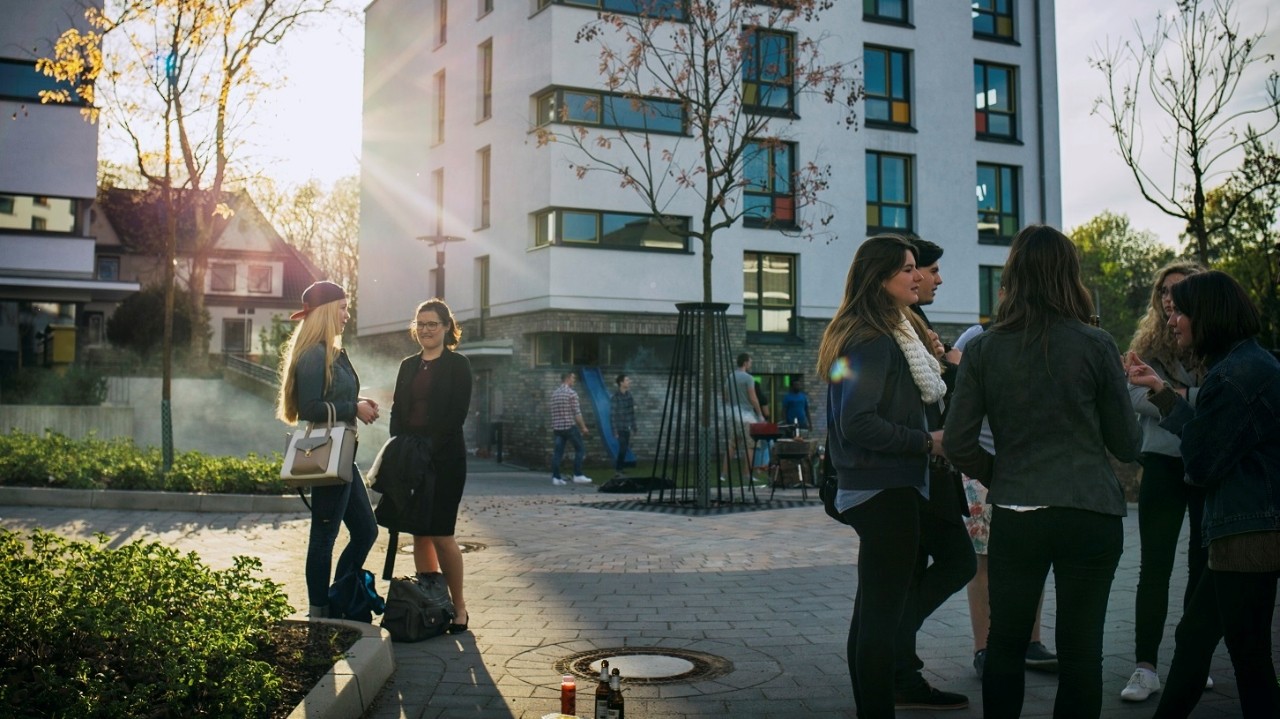
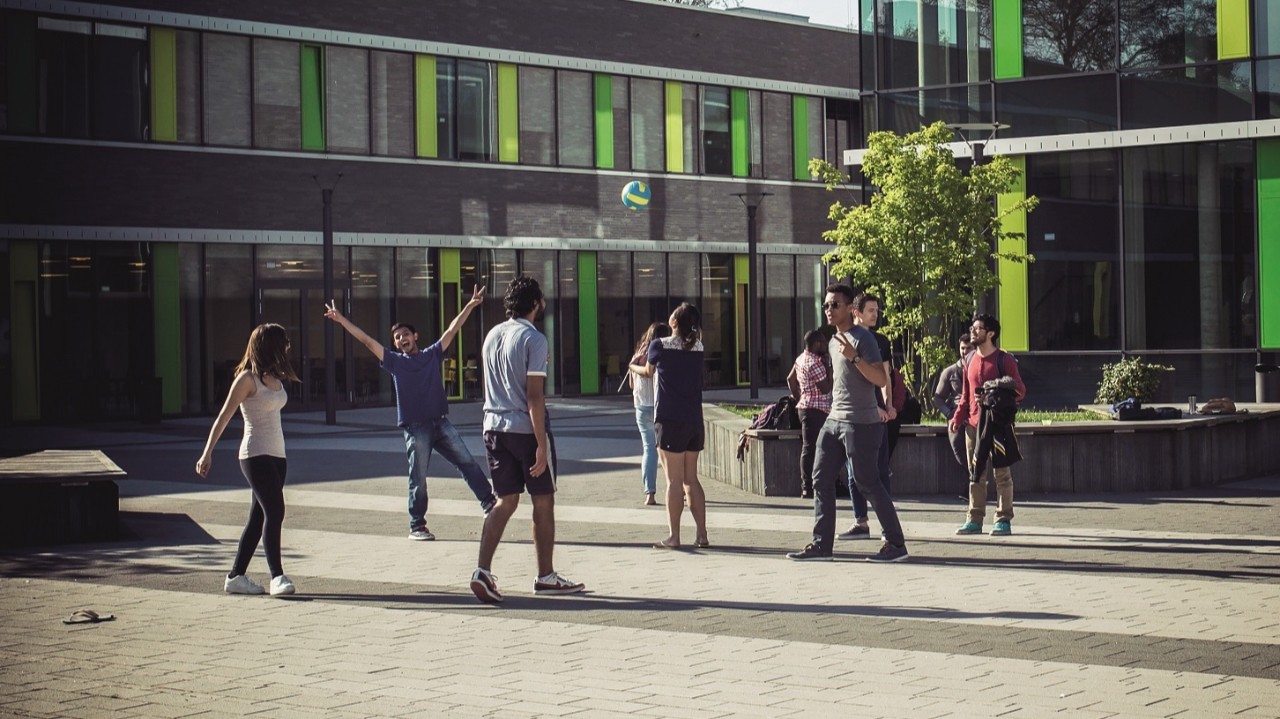
Rhine-Waal University of Applied Sciences, with two campus locations in Kleve and Kamp-Lintfort and around 6,200 students, is an innovative, interdisciplinary, and international university of applied sciences. The university currently offers over 30 undergraduate and postgraduate degree programmes in engineering, the natural and social sciences, technology, design, and more. Our programmes are geared towards your employability, addressing current and future needs of industry by giving you valuable expertise and experience in your field of study. We are unique in that some 75% of our programmes are taught exclusively in English, resulting in a vibrant campus culture and a rich, intercultural exchange of ideas, experience, and knowledge.

Rhine-Waal University of Applied Sciences prides itself on top-notch teaching, excellent research, and a strong network of international partnerships with research institutions and industry. Our team of professors bring a fresh, dynamic approach to teaching and continuously support, encourage, guide, and inspire students. Professors are often on a first-name basis with their students. Teaching takes place in a range of cutting-edge facilities, laboratories, workspaces, smart classrooms, and auditoriums.

The result is a memorable and valuable university experience, which will help you grow as a person and set you on the path to your chosen career. We look forward to welcoming you!

52 Percentage of international students
75 Percentage of study programmes in English

University location

Rhine-Waal University of Applied Sciences is centrally and conveniently located on the Lower Rhine between the Netherlands and the Rhine-Ruhr metropolis.

Kleve, where our main campus is located, is a city rich in tradition and history, and it has approximately 50,000 residents. It offers the best of both worlds: the bustle and excitement of nearby cities like Nijmegen, Düsseldorf, and Cologne with the safety, comfort, and ambience of a smaller town. The flat landscapes, mild climate, and good infrastructure of the Lower Rhine make it ideal for getting around by bicycle. Noteworthy sights include the Swan Castle, Baroque-style botanical gardens, museums, and art galleries. The town is home to large department stores and smaller boutiques, pubs, cafés, and more. Students can also participate in a range of sports offered both by the university and local clubs.

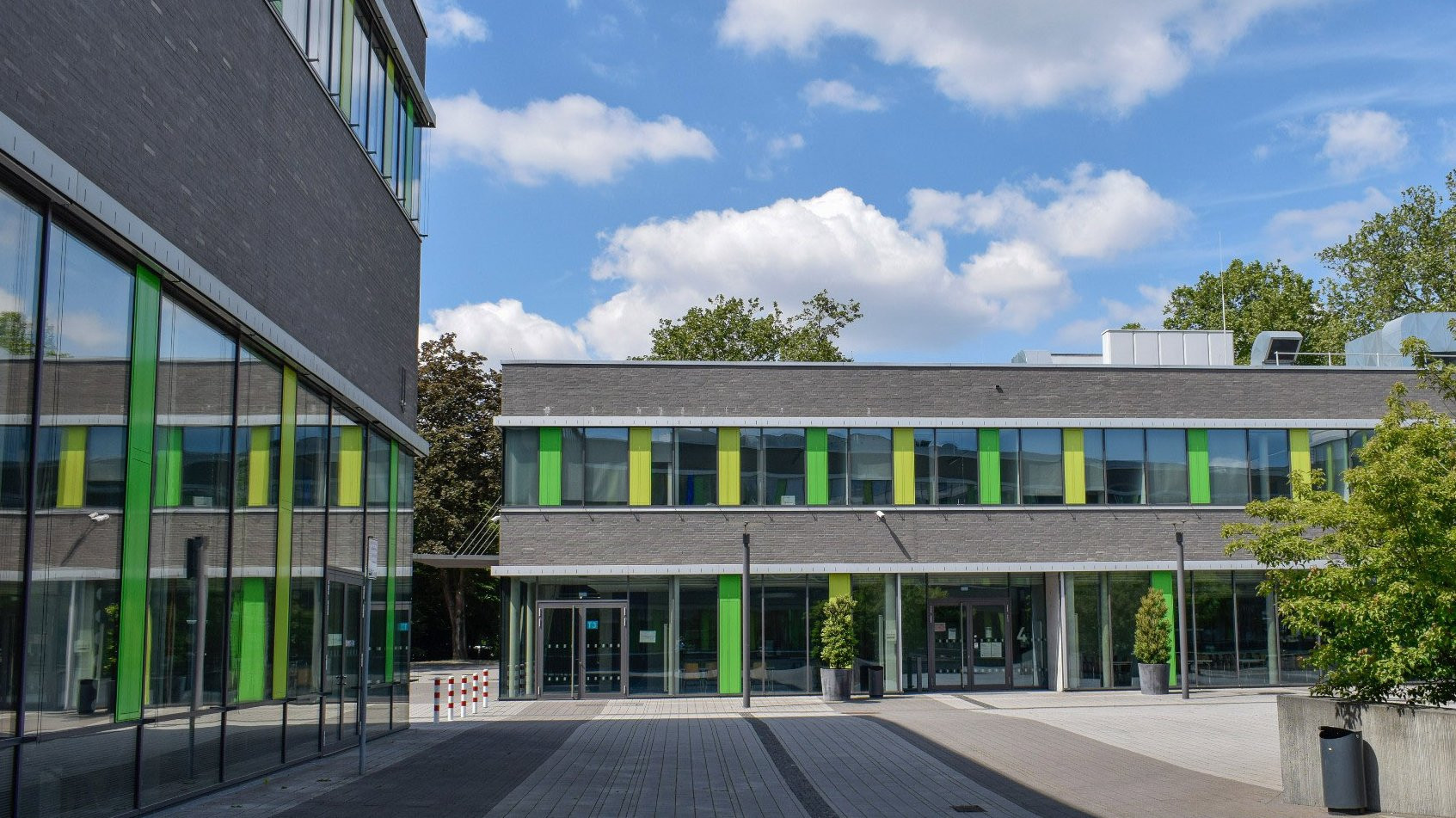
Kamp-Lintfort, our campus for the Faculty of Communication and Environment, has a current population of around 39,000 and is located 60 km (37 miles) south of Kleve. Kamp-Lintfort takes its name from a nearly 900-year-old monastery, maintained in its original style to this day. The city's proximity to the Rhine-Ruhr metropolis made it an integral part of post-WWII coal production in Germany. In recent years, Kamp-Lintfort has redefined itself as a hub of technology, innovation, and higher education. The Kamp-Lintfort campus is centrally and conveniently located in the centre of town. In addition to its historical sights, Kamp-Lintfort offers a welcoming and safe atmosphere for students with numerous shops, pubs, cafés, and sports.

Activate map

To activate the map, click on the "Show map" button. We would like to point out that data will be transmitted to OpenStreetMap after activation. You can find out more in our privacy policy. You can revoke your consent to the transmission of data at any time.