International Programmes 2026/2027

Water Engineering (WEM, MSc) Water Engineering (WEM, MSc)

Technische Hochschule Lübeck • Lübeck

Degree
Master of Science
Course location
Lübeck
In cooperation with

University of Algarve at Faro (Portugal), University of Lodz (Poland) and University of Antwerp (Belgium)

Teaching language
  • English
Languages

Courses are held in English (100%). German language courses are offered as well as English and German technical and scientific language courses.

Full-time / part-time
  • full-time
Programme duration
4 semesters
Beginning
Winter semester
Application periods

International students holding a non-European Bachelor’s degree can apply via uni-assist.de until 1 March for the winter semester of that year.

Students holding a German or European degree can apply until 15 July for the winter semester of that year.

More information on application periods
Please find more details on this website.
Combined Master's degree / PhD programme
No
Joint degree / double degree programme
Yes
Description/content

The international study programme in Water Engineering Master (WEM) provides a modern and sound postgraduate education in water-related aspects of environmental engineering. It is a consecutive international full-time course of study with a duration of four semesters, during which students earn 120 CP (ECTS). The language of instruction is English. This course offers a specialisation in water science and engineering to students who have completed a Bachelor’s degree in civil engineering, renewable energy, or environmental engineering.

The study programme in Water Engineering qualifies future experts in all water-related aspects of environmental engineering. Students will learn the design and planning of hydropower for regenerative energy generation, environmentally friendly hydraulic design of rivers, modern stormwater retention, sustainable urban drainage and sustainable water management, advanced wastewater treatment technologies, and the design of ecohydrological measures for green infrastructure to improve the water quality of terrestrial and coastal water bodies. There is a special emphasis on hydraulic, hydrological, and groundwater modelling techniques. Students learn remediation and restoration methods for surface and ground water bodies. The programme includes excellent exchange opportunities with European partner universities (ERASMUS) during the third semester.

The following five thematic areas are covered:

  1. advanced scientific methods (programming, modern monitoring, data science, machine learning)
  2. water quality (advanced water treatment, groundwater remediation and protection)
  3. societal challenges related to water with a focus on sustainable urban planning
  4. nature-based engineering of hydraulic and hydrological systems
  5. simulation and modelling of water systems

The Master's programme is composed of ten courses, including three projects, five elective courses offered with European partner universities, and the Master's thesis.

Applied projects are offered on integrated and applied water engineering solutions. Technische Hochschule Lübeck (THL) cooperates with the University of Lübeck, research centres, and regional companies. The programme offers an exchange semester with European partner universities from Portugal, Belgium, and Poland to foster international exchange in water engineering.

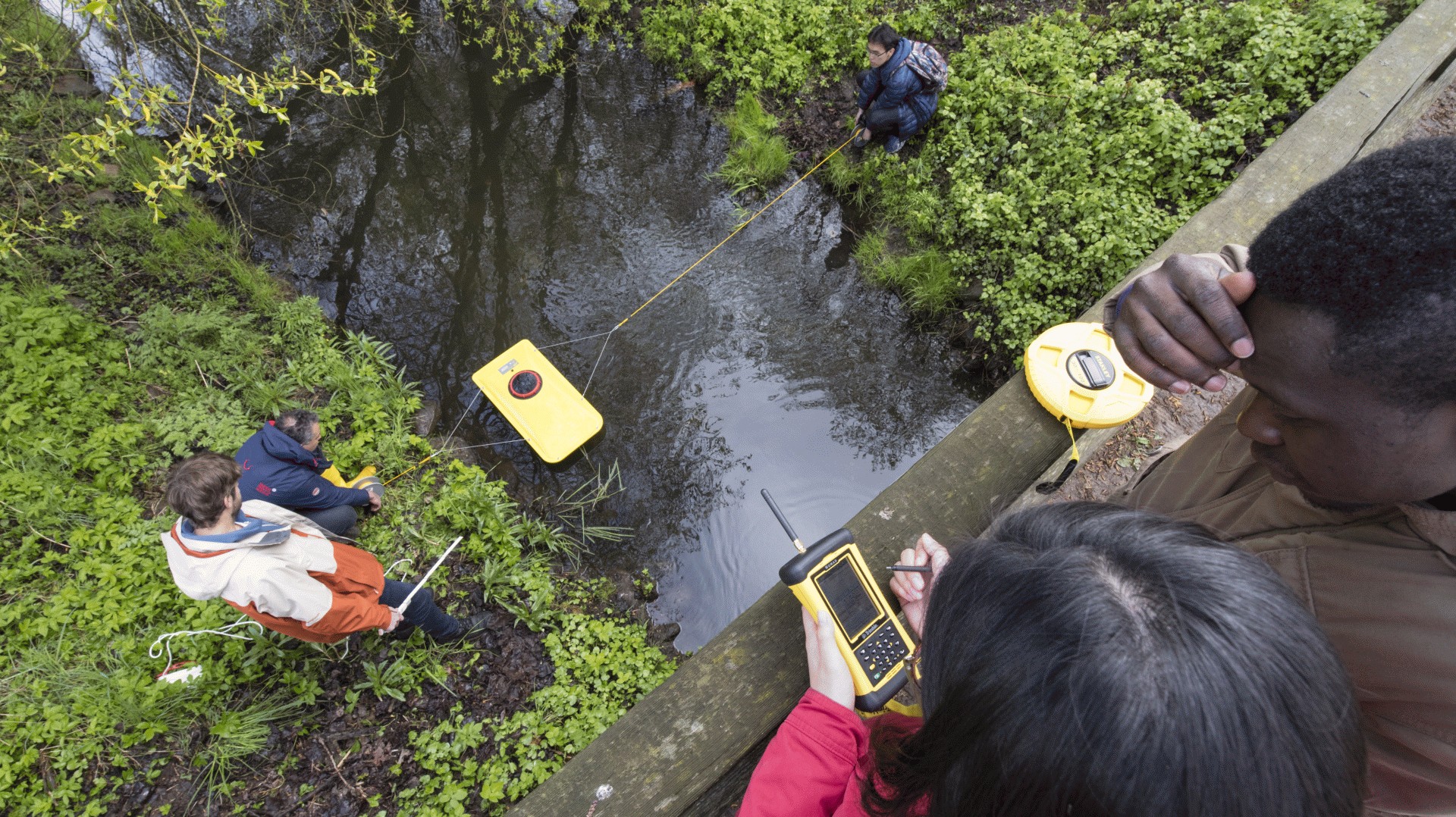
THL offers excellent laboratory facilities, such as an experimental water treatment plant and a modern hydraulic laboratory as well as laboratories for hydrology and water chemistry. Courses provide insight into ongoing projects, research and development activities in the field of international water engineering.

Course organisation

During the winter semester (beginning in October), lectures are given on the following topics:

  • Scientific Computing, Research Methods, and Modern Data Science with Machine Learning
  • Geographic Information Systems (for Water Sciences and Engineering)
  • Urban Water Protection
  • Nature-Based Hydraulic Engineering
  • Modelling and Simulation (I) of Groundwater systems

During the summer semester (starting in March/April), courses are given on the following topics:

  • Applied Freshwater Ecology
  • Advanced Wastewater Treatment
  • Water Regulation, and Sustainable Planning
  • Hydrological Engineering
  • Simulation and Modelling (II) for Nature-Based Restoration and Management of River Systems

During the third semester, students will have the opportunity to study at a partner university in Portugal, Belgium, or Poland to focus on ecohydrology, water management, or water engineering, or to specialise in a specific field of water engineering, or to do an internship. THL offers a broad range of elective courses or facilities for specialisation. We cooperate with more than 80 SME and industrial partners for practical training and internships.

Applied Master's projects in water engineering are offered jointly with companies and research institutes or as research and development projects. THL is one of the most successful universities of applied sciences in terms of raising project support for applied projects. Based on availability, we offer participation and student jobs in applied projects to WEM students after the first semester.

Students of WEM have access to German language courses given by professional language teachers at different levels, from A1 to C1 at our language centre.

PDF Download
A Diploma supplement will be issued
Yes
International elements
  • International guest lecturers
  • Language training provided
  • Projects with partners in Germany and abroad
  • International comparisons and thematic reference to the international context
Description of other international elements

The Water Engineering Master's programme (WEM) is closely coordinated with the Master's in Applied Ecohydrology (MAEH), a European Joint Master's programme. During the summer semester, WEM students will study with the international students of the MAEH programme and will be offered joint activities.

Integrated internships

THL cooperates with more than 80 companies in the region of Northern Germany and programme partners work in applied projects. We assist in finding integrated internships for practical training.

Special promotion / funding of the programme
  • ERASMUS+
  • Other (e.g. state level)
Course-specific, integrated German language courses
Yes
Course-specific, integrated English language courses
Yes
Tuition fees per semester
None
Semester contribution

Approx. 400 EUR
(The semester contribution includes a ticket for public transport.)

Funding opportunities within the university
Yes
Description of the above-mentioned funding opportunities within the university

"Deutschlandstipendium" and assistance for completion of Master's thesis

Academic admission requirements

Please refer to the WEM website to check for our pre-qualification requirements. 

Bachelor's/Master's/German "Diplom" degree:

  • minimum 180 credits
  • average grade 2.7 (German system: 1 to 5, 1 = best)

Accepted disciplines (degree):

  • civil engineering
  • environmental engineering
  • renewable energies
  • adjoining topics
German language skills
No minimum language level required
English language skills
B2 required, please provide an official language certificate, e.g.:
  • TOEFL iBT (before 2026): 80
  • Reading: 20
  • Listening: 20
  • Speaking: 20
  • Writing: 20
  • Cambridge English Qualifications: B2 First
  • IELTS Academic: 6
Language requirements exemptions
Please find details on the course website.
Application periods

International students holding a non-European Bachelor’s degree can apply via uni-assist.de until 1 March for the winter semester of that year.

Students holding a German or European degree can apply until 15 July for the winter semester of that year.

More information on application periods
Please find more details on this website.
Submit application via
Please apply via uni-assist.
Possibility of finding part-time employment

Part-time jobs not related to the course are not recommended due to the intensive nature of the study programme. As cooperation with companies forms part of the projects, job opportunities exist and are offered based on availability after the introductory semester or directly after completion of the study programme.

Accommodation

Accommodation is available through the Student Services Office or on the private market. Rent for a single room in a student residence is approx. 350 to 400 EUR. Please start looking for an apartment early, and try to register for an apartment in one of the student dorms at Studentenwerk Schleswig-Holstein.

Career advisory services and programmes for future professionals

A career advisory service is available.

Support for international students and doctoral candidates
  • Buddy programme
  • Tutors
  • Visa matters
General services and support for international students and doctoral candidates

We offer a welcome week to introduce international students to our university. We have an International Office that helps with administrative matters and an office for international students in our faculty of civil engineering.

Support available to students with disabilities

Our university provides dedicated support structures to ensure inclusion, equal opportunities, and a diversity-sensitive campus culture. Students with diversity-related matters, disabilities, neurodivergence, mental health conditions, and/or chronic illness are offered guidance on accessibility, accommodations, and individual support needs.

Support available to students with dependants or children

On campus, you will find a dedicated baby care room, a day care centre operated by the student services organisation, as well as a variety of activities for children during school holidays.

Support available to students with a refugee background

Support for students with a refugee background is provided through staff and support structures at TH Lübeck.

Technische Hochschule Lübeck

Technische Hochschule Lübeck, a university-like institution of applied sciences with its campus in the traditional town of Lübeck, a UNESCO World Heritage site, is proud of its 180-year history. Founded in 1808, it was not until 1969 that the government of Schleswig-Holstein integrated three separate colleges, the College of Technology and Seafaring, the College of Construction, and the College of Engineering, to form Lübeck University of Applied Sciences. Since 1973, it has consistently held an outstanding reputation as a technical college of higher education.

Today, TH Lübeck offers 26 study programmes. The focus, however, remains on technology, civil engineering, natural sciences, and economics. The courses on offer are highly topical. Thus, graduates are a perfect match for the demands of the job market. Skills in management, analytical thinking, languages, and social competence in groups are intrinsic parts of these courses. From a wide variety of courses, students themselves can choose any courses of interest to them and thus deepen their knowledge.

90% Of theses written in cooperation with engineering firms and industry
12% International students

University location

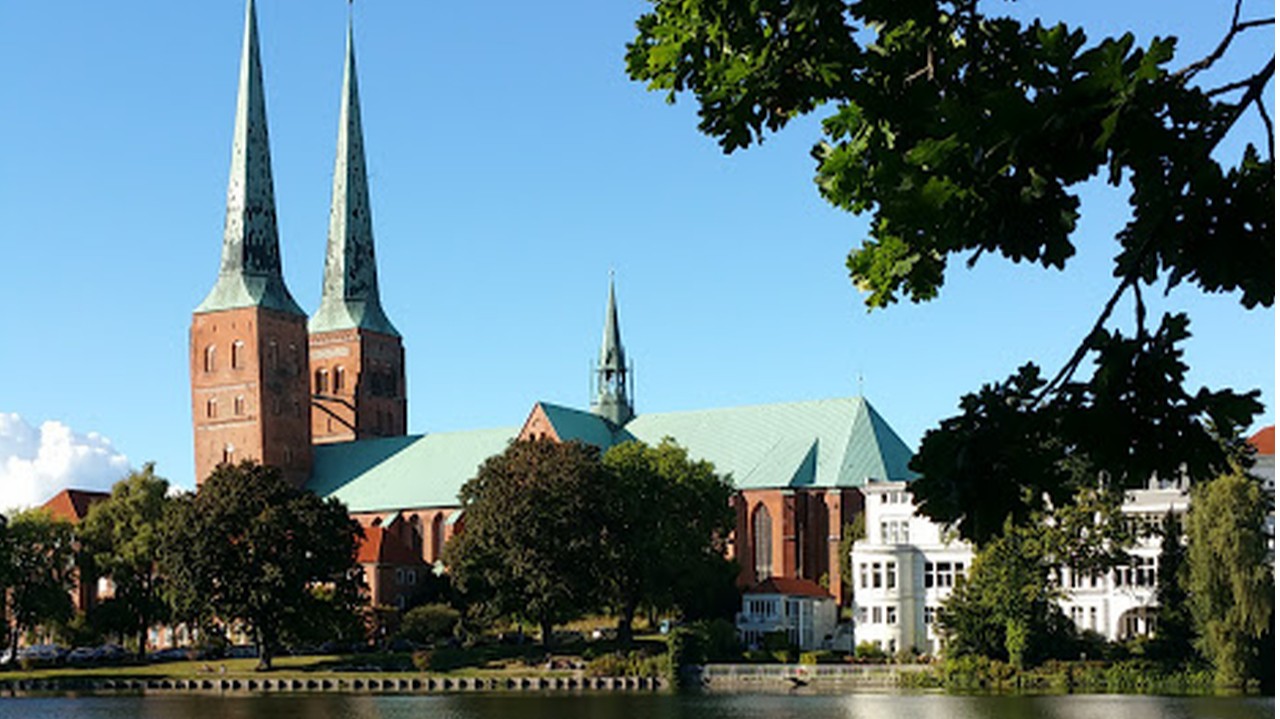
The ever-increasing number of students is an indication of the attractiveness of Lübeck as a place to study. Because of its proximity to the Baltic Sea, Lübeck offers a wide variety of cultural and sporting activities. Nearly 8,000 students in Lübeck appreciate the recreational opportunities on their doorstep. The historic old town of Lübeck (declared a UNESCO World Heritage Site in 1987) with its many restaurants, cafés, cinemas, theatres, and possibilities for sporting activities on the Baltic Sea, is reason enough for many students to study here. To those for whom that is not enough, the metropolis of Hamburg is nearby.
Lübeck's location on the Baltic Sea is also of international significance. Long-existing contacts with the Scandinavian countries expand cultural, economic, and scientific opportunities, and strengthen Lübeck as a site of higher education within the framework of indispensable international cooperation. The Hanseatic City of Lübeck is considered a well-kept secret among students, since they can live and study here in easily accessible surroundings, in contrast to cities with "mass universities".
With its connections to the universities, the regional economy offers further good reasons to study in Lübeck. The close cooperation between the universities and companies in and around Lübeck is obvious in many ways. The availability of traineeships, the cooperative formulation and implementation of diploma theses, research projects, and possible subsequent job offers make higher education in Lübeck extremely attractive. Companies in Lübeck seek and establish contacts with the universities.

Activate map

To activate the map, click on the "Show map" button. We would like to point out that data will be transmitted to OpenStreetMap after activation. You can find out more in our privacy policy. You can revoke your consent to the transmission of data at any time.