International Programmes 2026/2027

COOP Design Research MSc COOP Design Research MSc

Anhalt University of Applied Sciences • Dessau-Roßlau

Degree
Master of Science
Course location
Dessau-Roßlau
In cooperation with

Bauhaus Dessau Foundation and Humboldt-Universität zu Berlin

Teaching language
  • English
Languages

Courses are held in English.
Written thesis in English or German

Full-time / part-time
  • full-time
Programme duration
2 semesters
Beginning
Winter semester
Application periods
The following is valid for applicants from: all countries
For the winter semester:
15 December - 15 May
More information on application periods
Please find more details on this website.
Combined Master's degree / PhD programme
No
Joint degree / double degree programme
No
Description/content

What constitutes the knowledge cultures of design? How have designers' concepts of knowledge changed, and what are the consequences? Is designing a research activity? How do designers "do" research?

The one-year COOP Design Research MSc integrates design and research as transdisciplinary fields at the intersection of design, anthropology, material culture studies, architecture and design research, history and theory, as well as social sciences. It is a collaborative programme offered by the departments of Architecture and Design at Anhalt University of Applied Sciences (HSA) and the Bauhaus Dessau Foundation in cooperation with Humboldt University Berlin (Research Cluster Matters of Activity/Department of Cultural History and Theory). Courses and thesis supervision are jointly provided by professors and lecturers affiliated with the three institutions and international guests.

The programme critically engages with current concerns in design studies and architectural research, departing from the multiple modern legacies unfolding around the Bauhaus, as design's status as a clearly defined discipline has been challenged along with the notion of its power to shape an anthropocentric, man-made environment. In manifold ways, design as a knowledge culture rests on modernist ideas of “world making”, of the creation of “artificial things”. COOP Design Research interrogates this expansive cultural, political and social practice which manifests itself in objects, systems and structures of everyday life.

COOP Design Research offers a learning space for reflecting and diffracting design's theoretical and practical frameworks, the hegemonic ideologies and radical epistemological shifts affecting the practices of designers and architects, as well as the consequences for the environment and the earth. This includes a critical revision of design ideals rooted in modernity, perceiving their entanglements with (post)colonial, capitalist patterns of resource exploitation, environmental and social injustice, as well as the urgency of placing them in the context of contemporary ecological and decolonial discourses and practices.

Participants explore research methods in design and architecture, gain hands-on research experience, and nurture writing and communication skills to articulate their work and thinking in academic, professional, and cultural contexts. The programme fosters reflexive research practice, intercultural exchange, and critical awareness, enabling participants to situate their work within design history, theory, and contemporary cultural debates.

The Master of Science in Design Research opens pathways in academic research and teaching and provides a foundation for potential doctoral studies. Equally, it charts avenues towards reflexive architectural and design practice as well as for roles in the curatorial work and cultural production.

Course organisation

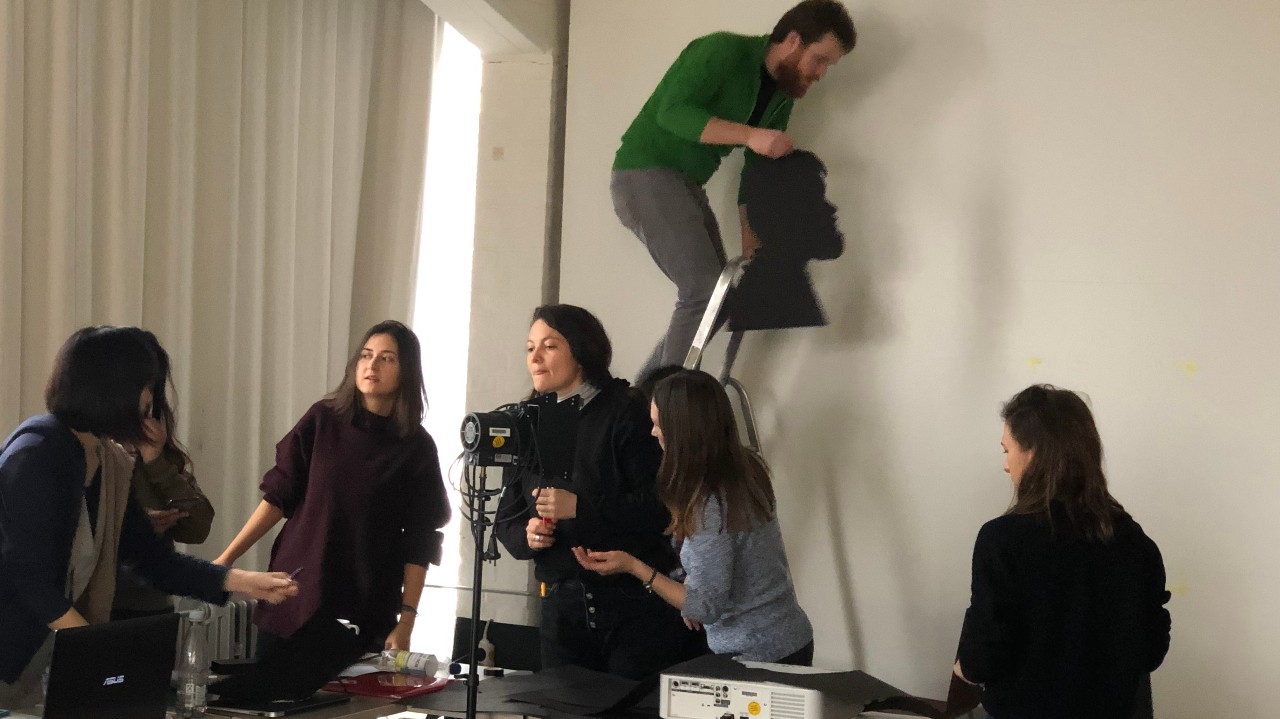
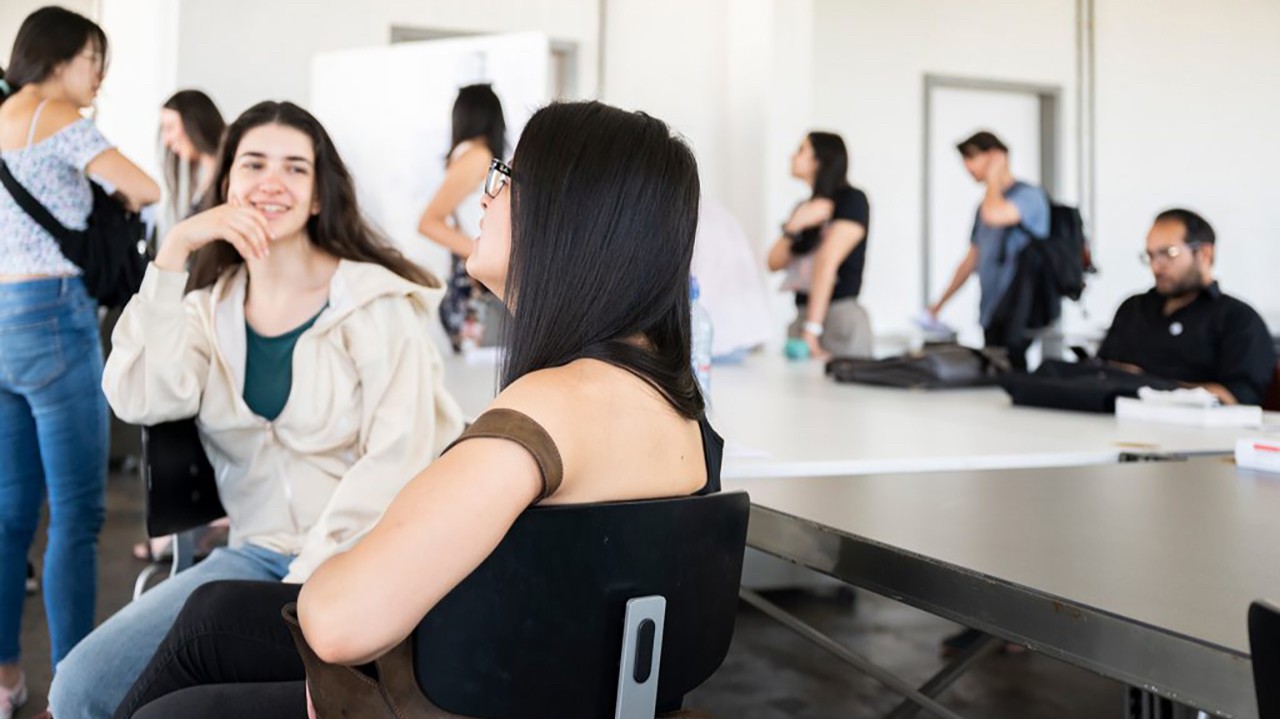
It is not only about what is studied, but also about how it is learned. The programme brings together diverse voices and perspectives, emphasising collaborative learning and research. The curriculum includes regular lectures by guest speakers from academia and design. Intensive workshops with invited researchers from COOP partner institutions form a core component of the programme, offering in-depth engagement with current design research approaches from diverse contexts.

Curriculum

The regular programme duration is two semesters (12 months).

The first semester (October to March) is built around seminars, collective learning sessions and excursions by the interdisciplinary COOP teaching team.

In the second semester (April to September), participants focus on individual research projects for their Master’s theses, supported by academic advisers and a research colloquium.

Design Research Laboratory (15 weeks, two days per week [10 ECTS])

The laboratory focuses on how processes of knowledge production in and by design can be framed, studied and analysed. In an intensive seminar sequence with excursions and hands-on workshops, three main modes of how designers contribute to produce knowledge will be explored: Design as Research, Design as Education, and Design as Projection.

Theory and Methods (15 weeks, one day per week [5 ECTS])

How do learners learn to become designers? How do designers learn to become (academic) researchers? Providing an overview of major traditions and theories in the field of design research, this course introduces such notions as research, knowledge, and creativity in the design field. It offers analytical tools for understanding creative processes and their products. A lecture series offers an overview of the history of modern design research and presents discourses, projects and concepts in the field. Seminaries introduce methods and techniques of scientific work.

Research Colloquium I & II (10 block sessions [5+5 ECTS])

A key aim of the programme is to nurture academic research and writing skills, and to train capability to engage critically with a research subject. This includes developing a reflexive practice of research and writing, leading up to an individual research-based thesis project. In the second term, the colloquium will offer a structured space for a collaborative feedback and discussion of projects in progress.

Guest Talks, Workshops (COOP elective workshops and lectures [5+5 ECTS])

International guest lecturers contribute by a series of talks situating current design research within their academic and professional contexts. Workshops with guests and researchers from partner institutions expand this perspective through practice-oriented diverse research approaches.

Final Modules: Proposal, Thesis (20 weeks) Thesis Colloquium, total 30 ECTS

A Diploma supplement will be issued
Yes
International elements
  • International guest lecturers
  • International comparisons and thematic reference to the international context
  • Content-related regional focus
  • Projects with partners in Germany and abroad
Course-specific, integrated German language courses
No
Course-specific, integrated English language courses
No
Tuition fees per semester
The following tuition fees apply for applicants from: all countries
1,250 EUR
More information on tuition fees
Please find more details on this website.
Semester contribution

322.80 EUR semester fee
(This covers a contribution to the Student Services and Student Union of 96 EUR, including a public transport semester ticket. Please see the university website for updated information.)

Costs of living

Approx. 876 EUR per month to cover living expenses (including accommodation, excluding health insurance costs)

Funding opportunities within the university
Yes
Description of the above-mentioned funding opportunities within the university

Graduation Scholarship and Scholarship for Social Commitment
https://www.hs-anhalt.de/en/international/your-stay-at-anhalt-university/funding-and-working/stibet-scholarship.html

Academic admission requirements

Bachelor's or Master's degree with 240 ECTS/four years' duration in the fields of Architecture, Design, Cultural Sciences, or the equivalent. An application on the basis of a Bachelor's degree requires one year of professional practice. An application with a Bachelor's degree of less than four years' duration requires one or two semesters of preparatory studies in order to obtain the required 240 ECTS.

The application should include a portfolio of 10 to 12 pages including CV, copies of diploma certificates and the applicant's own work.

http://www.coopdesignresearch.de

German language skills
No minimum language level required
English language skills
C1 required, please provide an official language certificate, e.g.:
  • TOEFL iBT (since 2026): 5
  • Reading: 5
  • Listening: 5
  • Speaking: 5
  • Writing: 5
  • TOEIC: 945
  • Reading: 455
  • Listening: 490
  • Speaking: 180
  • Writing: 180
  • TOEFL iBT (before 2026): 95
  • Reading: 24
  • Listening: 22
  • Speaking: 25
  • Writing: 24
  • Cambridge English Qualifications: C1 Advanced
  • IELTS Academic: 7
Language requirements exemptions
Please find details on the course website.
Application periods
The following is valid for applicants from: all countries
For the winter semester:
15 December - 15 May
More information on application periods
Please find more details on this website.
Submit application via
Please apply via uni-assist.
Possibility of finding part-time employment

Local student jobs are open to international students, as are student tutor positions at Anhalt University (depending on availability and qualification).

Accommodation

Accommodation is available through the Student Services Office (Studentenwerk Halle) or on the private market. Rent for a single room in a student residence is approx. 250 to 320 EUR.

The Student Services office runs an online application portal for student accommodation. Applications can be submitted online: https://tl1.eu/SWHAL/#home (in English)

Private accommodation can be found on the internet at: http://www.studenten-wg.de.

Career advisory services and programmes for future professionals

The university's Career Service offers our international students a wide range of tailor-made services for a successful career start in Germany. It guides students in designing a professional curriculum vitae, supports with further qualifications and helps to develop new career perspectives. The Career Service is also a contact point for companies and institutions looking for highly qualified staff with an international background and wanting to establish contact with students at an early stage. To find a job in Germany, German language skills at level B2 or better are usually needed.

Support for international students and doctoral candidates
  • Welcome event
  • Accompanying programme
  • Specialist counselling
  • Visa matters
  • Buddy programme
  • Support with registration procedures
General services and support for international students and doctoral candidates

Hochschule Anhalt International Office
https://www.hs-anhalt.de/en/international/international-office.html

Anhalt University of Applied Sciences

The COOP Design Research MSc is a collaborative programme offered by the departments of Architecture and Design at Anhalt University of Applied Sciences (HSA) and the Bauhaus Dessau Foundation, in cooperation with Humboldt University Berlin (Research Cluster Matters of Activity / Department of Cultural History and Theory). Courses and thesis supervision are jointly provided by professors and lecturers affiliated with the three institutions as well as international guests.

Situating critical research and learning at the Bauhaus in Dessau today, the programme explores how to question hegemonic paradigms of design, and how alternative architectural and design historiographies emerge from diverse trans-cultural resonances and conversations. Instead of linear narratives, we ask how stories of interconnected entanglements and ecologies can be told otherwise. Modes of co-production and co-habitation come into view, that already co-existed within the dominant narratives of design in industrial modernity.

University location

The Bauhaus legacy...

The Bauhaus building, its archives, museum, artefacts and legacies offer a highly suitable vantage point for a contemporary critical inquiry into concepts and notions of design and its theoretical and historical roots in modernity. The manifold and controversial historiographies written about the Bauhaus share the conviction that the avant-garde school was the birthplace of the idea of modern design, once considered a universal and timeless concept interwoven with industrialisation, technological progress and mass consumerism. This paradigm of design as an important building block of industrial modernity would habitually obscure its problematic fundamental reliance on colonialism and capitalist exploitation of human and natural resources.

... situated in a "post-industrial" knowledge landscape

The programme draws on the knowledge assembled by the sites, collections and scholarship of the Bauhaus and the partner institutions Anhalt University of Applied Sciences and Humboldt University Berlin. It also taps into the city and the region as special reservoirs of knowledge on industrial and "post-industrial" transformation. Different layers of the built environment, museums and landscape tell of the search to design these transformations, manifest in everyday culture, urban space and ecologies - from Enlightenment garden landscapes to abandoned or repurposed 20th century industrial plants and power stations, from open-pit mines decommissioned in a push for renewables to new logistics and technology hubs.

Questions about the knowledge(s) of designers and architects, their agency and context, their self-conception and ideas are materialised here in a cultural landscape where different temporalities of progress, innovation and ruination co-exist. This also applies to the present: In maker spaces, communal kitchens, urban gardening projects, cultural festivals, and exhibitions, designers today are searching for forms of knowledge and spaces for action that allow them to rethink their own disciplines in these contexts.

The MSc programme Coop Design Research thus situates itself in a complex knowledge landscape and takes it up as a learning space in various formats.

Activate map

To activate the map, click on the "Show map" button. We would like to point out that data will be transmitted to OpenStreetMap after activation. You can find out more in our privacy policy. You can revoke your consent to the transmission of data at any time.