International Programmes 2026/2027

International Law and Sustainability International Law and Sustainability

Leuphana University Lüneburg • Lüneburg

Degree
Master of Laws
Course location
Lüneburg
In cooperation with
  • University of Glasgow (Scotland)
  • University of the Western Cape (South Africa)
  • Università degli Studi di Milano Statale (Italy)
  • University of the West Indies (Barbados)
Teaching language
  • English
Languages

The entire programme is taught in English.

Full-time / part-time
  • full-time
Programme duration
4 semesters
Beginning
Winter semester
Application periods
The following is valid for applicants from:
  • EU countries
  • Iceland
  • Norway
  • Liechtenstein
  • Switzerland
For the winter semester:
until 1 June
The following is valid for applicants from:
  • non-EU countries
  • United Kingdom
For the winter semester:
until 1 May
Combined Master's degree / PhD programme
No
Joint degree / double degree programme
Yes
Description/content

The Master’s programme combines international law and sustainability studies to prepare lawyers for addressing some of the world’s most pressing global challenges. In a time of accelerating climate change, environmental degradation, biodiversity loss, human rights violations, and social inequality, the programme explores how legal systems can contribute to sustainable and just transformations.

In the course of two years, students examine how international and transnational legal frameworks can promote sustainability and where current legal approaches need reform. The curriculum encourages critical reflection on the role of international law in achieving environmental protection, social justice, and global equity.

Core areas of study include:

  • Public international law and international economic law

  • Law of the sea and transnational private law

  • Business and human rights

  • Theories, concepts, and methods of international sustainability law

Students gain both theoretical knowledge and practical research skills while developing intercultural competencies through studying in two academic and cultural contexts. The first year is based at Leuphana University Lüneburg (Germany), focusing on the foundations of international and sustainability law. In the second year, students specialise at one of Leuphana’s partner universities: the University of Glasgow (Scotland), University of the Western Cape (South Africa), Università degli Studi di Milano Statale (Italy), or the University of the West Indies (Barbados).

Current information

We regularly organise online "open days"; please check our website for more information.

Course organisation

International Law and Sustainability is a two-year, full-time programme offered jointly by Leuphana University Lüneburg and one of its international partner universities leading up to two LLM degrees upon successful completion. It combines academic study with a strong focus on global sustainability challenges.

In the first year at Leuphana University Lüneburg (Germany), students build a solid foundation in key areas such as international, transnational, economic, environmental, and sustainability law. Courses explore how legal frameworks influence and shape the global sustainability transformation.

The second year is spent at one of the four partner universities – the University of Glasgow (Scotland), University of the Western Cape (South Africa), Università degli Studi di Milano Statale (Italy), or the University of the West Indies (Barbados) – where students deepen their expertise according to the institution’s academic focus.

The programme concludes with a Master’s thesis written at the partner university, allowing students to apply their knowledge to a research topic in international law and sustainability.

A Diploma supplement will be issued
Yes
International elements
  • International guest lecturers
  • Training in intercultural skills
  • International comparisons and thematic reference to the international context
  • Projects with partners in Germany and abroad
  • Integrated/optional study abroad unit(s)
  • Opportunities for students to work abroad
  • Specialist literature in other languages
  • Courses are led with foreign partners
  • Content-related regional focus
Integrated/optional study abroad unit(s)

Students spend their second year at one of the four partner universities:

  • University of Glasgow (Scotland)
  • University of the Western Cape (South Africa)
  • Università degli Studi di Milano Statale (Italy)
  • University of the West Indies (Barbados)
Course-specific, integrated German language courses
No
Course-specific, integrated English language courses
No
Tuition fees per semester
Varied
Tuition fees may vary
Tuition fees may vary depending on several factors. For an exact breakdown of costs, please check the programme website.
Semester contribution

You do not have to pay tuition fees for your semesters in Lüneburg. You only have to pay a semester contribution of approx. 450 EUR per semester (subject to change). This will entitle you to receive a semester ticket, which covers public transport in all of Germany. The tuition fees for the second year are dependent on the specialisation pathway chosen. More information can be found on the programme website.

Costs of living

Approx. 900 EUR per month to cover personal expenses in Lüneburg:

  • Accommodation: 350 to 500 EUR
  • Food: 250 EUR
  • Health insurance: 120 EUR (not applicable for EU students)
  • Leisure activities, books, clothing: 80 to 250 EUR
Funding opportunities within the university
No
Academic admission requirements

For a detailed list of requirements, see: https://www.leuphana.de/master-apply.

German language skills
No minimum language level required
English language skills
C1 required, please provide an official language certificate, e.g.:
  • TOEFL iBT Home Edition (before 2026): 96
  • TOEFL iBT (before 2026): 96
  • IELTS Academic: 7
Language requirements exemptions
Please find details on the course website.
Application periods
The following is valid for applicants from:
  • EU countries
  • Iceland
  • Norway
  • Liechtenstein
  • Switzerland
For the winter semester:
until 1 June
The following is valid for applicants from:
  • non-EU countries
  • United Kingdom
For the winter semester:
until 1 May
Submit application via
Possibility of finding part-time employment

Students have the opportunity to take up part-time employment alongside their studies. Positions may be available in the city of Lüneburg, within the university itself, for example as student or research assistants, as well as in the nearby city of Hamburg, which offers a wide range of job opportunities in various sectors.

International students with a residence permit are allowed to undertake a limited amount of paid employment (a maximum of 120 days per year, or alternatively 240 days part time — up to four hours a day).

However, please note that Graduate School's Master’s programmes are designed as a full-time courses of study.

Accommodation

Websites and relevant addresses for finding accommodation in Lüneburg are listed on the website of the International Center.

Career advisory services and programmes for future professionals

Leuphana's own Career Service offers comprehensive services in various fields of activity involving career and vocational orientation linked to degree programmes as well as the possibility to connect with the labour market.

More information can be found on the website of Leuphana's Career Service.

Student Counselling Service of the Graduate School

Support for international students and doctoral candidates
  • Welcome event
  • Buddy programme
  • Specialist counselling
  • Visa matters
  • Cultural and linguistic preparation
General services and support for international students and doctoral candidates

Leuphana's International Centre offers support and advice for the following topics:

  • questions about your stay at Leuphana as an international Master's student/doctoral candidate
  • your questions as a Master's student/doctoral candidate in preparation for and during your stay abroad
  • acquiring and developing language skills as well as intercultural competencies

More information can be found on the website of Leuphana's International Center.

Support available to students with disabilities

https://www.leuphana.de/en/institutions/office-for-equal-opportunities/support-offers-and-information/study-impairment.html

Support available to students with dependants or children

https://www.leuphana.de/en/institutions/office-for-equal-opportunities/family-services.html

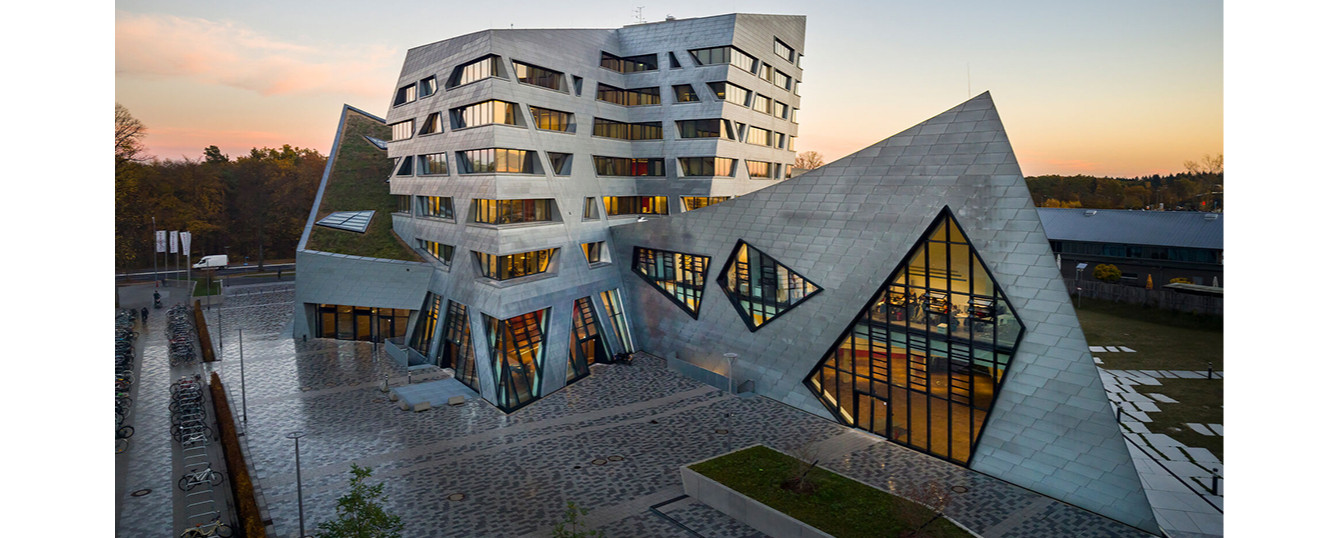
Leuphana University Lüneburg

Content Bild
© Leuphana

Leuphana University Lüneburg is one of Germany's landmark universities for higher education reform and innovation. With about 10,000 students and 160 full-time professors, the university has developed a highly respected academic profile. Today, Leuphana University Lüneburg is regarded as an institution for interdisciplinary and transdisciplinary research, academic organisation, innovation in teaching, and academic transfer.

The mission of Leuphana University Lüneburg derives from the fundamental idea of academic education as enabling an individual to live in a self-determined manner and take part in shaping society. A university for civil society in the 21st century, Leuphana follows the mission of being a humanistic, sustainable, and proactive university.

Leuphana University Lüneburg consists of three organisational units focusing on the needs of different academic constituencies: Leuphana College, which offers specialised and interdisciplinary Bachelor's programmes; Leuphana Graduate School, with its consecutive Master's and doctoral programmes; and Leuphana Professional School, focusing on continuing education and knowledge transfer.

The Leuphana Graduate School encompasses both the Master's and the doctoral programmes of all faculties. Thus, students benefit from a seamless transition between Master's and doctoral programmes as well as from close interaction with students from other programmes and faculties. The model of a discipline-independent graduate school also ensures consistently high-quality standards in study, teaching, and administration.


University location

Lüneburg is a 1,000-year-old city of about 80,000 inhabitants, located near Hamburg. Established as a salt mining community, it enjoyed great prosperity in its early years, supplying the whole Scandinavian and Baltic Sea regions with salt. Renowned for its opportunities and affluence, Lüneburg was the place to be for Germany's most wealthy inhabitants, a legacy still evident in the well-preserved city centre.

Today, Lüneburg is essentially a university town. The lavish 14th and 15th-century churches — St. John's, St. Michael's, and St. Nicolai's — the beautiful Baroque main square, and the tranquil medieval monastery attract visitors from all over the world.

The pedestrian city centre invites visitors to linger; a great number of well-assorted specialist shops in historic buildings featuring steep gables provide extensive shopping opportunities, and many cafés and pubs open their doors to visitors every day. In particular, the bars situated at the Stint and in Schröderstraße offer various options for a vibrant nightlife. Lüneburg is also a vibrant cultural hub; numerous musicians, artists, and actors are active in the clubs, studios, and theatres of the town.

Activate map

To activate the map, click on the "Show map" button. We would like to point out that data will be transmitted to OpenStreetMap after activation. You can find out more in our privacy policy. You can revoke your consent to the transmission of data at any time.