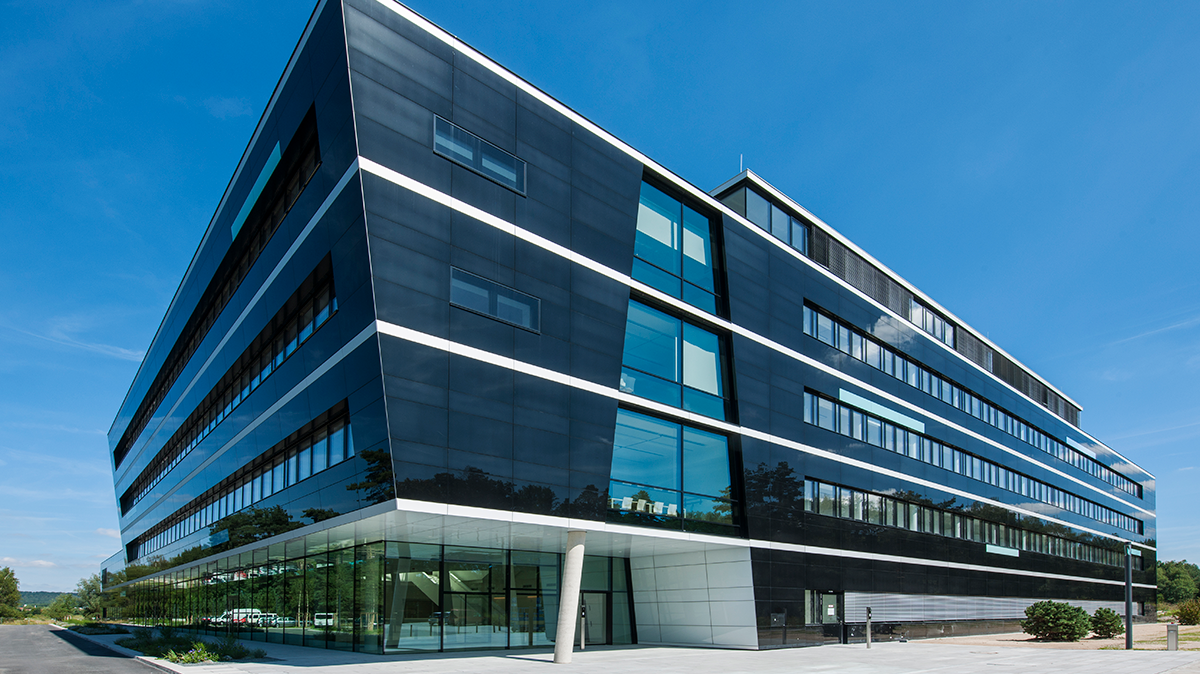
The Max Planck Institute for the Science of Light (MPL) focuses on basic research into all aspects of the interaction between light and matter, from modern optics to photonics, quantum effects and their applications in the real world. Our research aims to extend the realm of the possible in the science and technology of light.
MPL was founded in 2009 and is one of the more than 84 institutes making up the Max Planck Society (MPS).
At our institute, top scientists are provided with ideal conditions for researching the fundamentals of the physics of light and understanding its hidden complex phenomena: a hotspot of like-minded people. This unique environment of experts in their field enhances individual knowledge and fuels the creative development of novel research approaches.
To support the realisation of research projects, our institute provides excellence at every level – scientific, technical, and administrative. This ranges from the high-end equipment in our research laboratories and the highly skilled support of our technical service units to our state-of-the-art cleanroom facility and the personalised support provided to our scientists by the administrative team. What defines us is our relentless and collaborative passion for research.
Founded in 1743, Friedrich Alexander University of Erlangen-Nürnberg (FAU) is a strong research university with an international perspective and one of the largest universities in Germany, with approx. 40,000 students.
With five faculties, the university offers classes and research opportunities in a wide range of subjects. At the Master's level in particular, many subjects are taught entirely in English.
FAU is a leading academic institution with internationally recognised, interdisciplinary research in a variety of fields, including: i) new materials and processes, ii) optics and optical technologies, iii) molecular life science and medicine, iv) medical engineering, v) electronics, information, and communication, vi) energy, environment and climate, vii) language, culture, and region, and viii) cohesion, transformation, and innovation in law and economics.
The university receives special federal funding for the following high-profile research initiatives: the Cluster of Excellence "Engineering of Advanced Materials", the Erlangen Graduate School in Advanced Optical Technologies, the "Medical Valley" Leading Edge Cluster in Health Technology, and the International Consortium for Research in the Humanities "Fate, Freedom, and Prognostication". FAU offers outstanding research conditions for graduate students, doctoral candidates, and young researchers. It provides a state-of-the-art scientific infrastructure as well as intensive research mentoring and support. FAU students receive world-class training in an inspiring environment with access to exciting international exchange opportunities and excellent career prospects. The global vision of the university is exemplified by the recently established FAU Busan Campus in South Korea.
FAU benefits from collaborations with other renowned research institutions in Erlangen and Nuremberg, including the Max Planck Institute for the Science of Light, the newly founded Helmholtz Institute Erlangen-Nürnberg for Renewable Energy, and two Fraunhofer institutes. Further information can be found at http://www.fau.eu/university.