International Programmes 2026/2027

Applied Data Science and Artificial Intelligence (MSc) Applied Data Science and AI (MSc)

SRH University • Berlin

Degree
Master of Science
Course location
Berlin
Teaching language
  • English
Languages

Courses are held in English.

Programme duration
4 semesters
Beginning
Winter and summer semester
Application periods
This programme has no deadline listed.
More information on application periods
Please find more details on this website.
Combined Master's degree / PhD programme
No
Joint degree / double degree programme
No
Description/content

Location: Berlin

The Applied Data Science and Artificial Intelligence Master's programme offers a perfect mixture of the courses critical for qualifying as a business application data scientist. The programme not only focuses on technical and statistical courses that concentrate on big data architectures, data and text mining algorithms, neural networks and predictive analytics, but also on familiarising students with creative questioning techniques, visualisation, data storytelling, ethics, and international law. In order to give students the opportunity to acquire practical experience on the topics studied in the courses, the theoretical knowledge gained from the different courses is applied and enhanced in a series of three case studies that are spread across three semesters with increasing level of complexity. In the fourth semester, each student will work on the Master's thesis, ideally on a topic pertaining to the industry.

Course organisation

Structurally, the study programme adopts the theme-centred five-week blocks that are common at SRH University. It comprises a mix of case studies that become larger and more complex with each semester, and it is accompanied by classroom modules, the content of which is directly linked to the case studies. In the first semester, students are taught all the required basic knowledge and methods. The second and third semesters are self-contained units.

Every semester, a case study accompanies the technical courses to put the acquired theoretical knowledge in practical context. Repeatedly conducting complex case studies, including the Master's project, helps the students to understand the interaction between different phases in big data projects and to acquire the required competencies.

A Diploma supplement will be issued
Yes
International elements
  • International guest lecturers
  • Training in intercultural skills
  • Projects with partners in Germany and abroad
  • International comparisons and thematic reference to the international context
  • Content-related regional focus
Integrated internships

In the third semester, students can complete a mandatory internship at a company or research institution, or they can work on case studies with different companies.

The mandatory internship can be continued during the Master's thesis in the fourth semester.

Course-specific, integrated German language courses
No
Course-specific, integrated English language courses
No
Tuition fees per semester
The following tuition fees apply for applicants from: non-EU countries
5,950 EUR
The following tuition fees apply for applicants from: EU countries
4,980 EUR
Tuition fees may vary
Tuition fees may vary depending on several factors. For an exact breakdown of costs, please check the programme website.
More information on tuition fees
Please find more details on this website.
Semester contribution

None

Funding opportunities within the university
Yes
Description of the above-mentioned funding opportunities within the university

There is a special scholarship available. The "Deutschlandstipendium" is a special scholarship programme supported by the German government and private companies.

Academic admission requirements

A first professional qualification university degree in computer science, data science, information technology, artificial intelligence, data analysis, mathematics or business informatics with 180 CPs

German language skills
No minimum language level required
English language skills
B2 required, proof via placement test/interview
Language requirements exemptions
Please find details on the course website.
Application periods
This programme has no deadline listed.
More information on application periods
Please find more details on this website.
Submit application via
Please check this website.
Possibility of finding part-time employment

Working as a non-EU citizen: In possession of a valid German residence permit for study purposes, you are allowed to work for up to 120 full days (full day = eight hours per day) or 240 half days (half day = four hours) during the calendar year. However, freelance work is not permitted. Internships that are mandatory for the successful completion of your studies at SRH do not count towards the above-named 120 full days.

Employment that is considered “student part-time work” ("studentische Nebentätigkeit", e.g. employment as a student worker at a university or in a university-related organisation or "Werkstudent" activities at companies that are related to your studies) can be done without any time restrictions.

Career advisory services and programmes for future professionals

We offer individual career counselling services in our Career Development Centre. Here you will find courses on how to prepare for job applications and interviews, covering techniques such as body language and voice training, as well as continued education offerings such as our business skills certificate. In addition, you can access job listings on the university website.

Support for international students and doctoral candidates
  • Welcome event
  • Accompanying programme
  • Buddy programme
  • Tutors
  • Specialist counselling
  • Visa matters
General services and support for international students and doctoral candidates

International Cultural Club, workshops, free language courses, social and networking events

SRH University

Content Bild
SRH University Campus Heidelberg © SRH University

We are the SRH University, part of the non-profit SRH Holding based in Heidelberg.

We offer state-accredited Bachelor's, Master's, and MBA programmes in English and German. Our curricula are built around the CORE Principle, emphasising hands-on, project-based learning in five-week blocks. Our programmes focus on management and logistics, engineering and architecture, computer and data science, hospitality and therapy, design and creative industries, and music and film.

With 17 campuses across Germany, we host a diverse student body from over 140 countries, contributing to our vibrant international atmosphere.

Our approach includes practical work experiences and professional networking opportunities, preparing students for successful global careers.

100+ Number of countries represented at our university
17 Number of campuses in Germany

University location

Berlin, Germany's capital, is a hub for politics, media, science, and education. It's the country’s largest city, offering a vibrant cultural scene with rich nightlife and historical sites. Berlin's dynamic start-up scene is attractive to tech and creative industries. Despite rising costs, it remains affordable compared to other Western European capitals.

Cologne is known for its relaxed culture, famous cathedral, and rich Roman history. It offers a vibrant academic and cultural scene with excellent job opportunities in media and other industries. Cologne is well-connected, making it easy to explore nearby cities.

Dresden combines a vibrant cultural scene with affordable living costs. Known for historical sights like the Zwinger and Semperoper, it offers good job prospects in microelectronics and IT. Its scenic location and rich cultural events make it an attractive city for students and young professionals.

Hamburg, Germany's second-largest city, is a major trade and logistics hub in north-western Europe. With a high standard of living and moderate costs, it offers career opportunities in IT, media, logistics, and renewable energy sectors. Famous for its harbour and nightlife, Hamburg is a city rich in water-related and cultural activities.

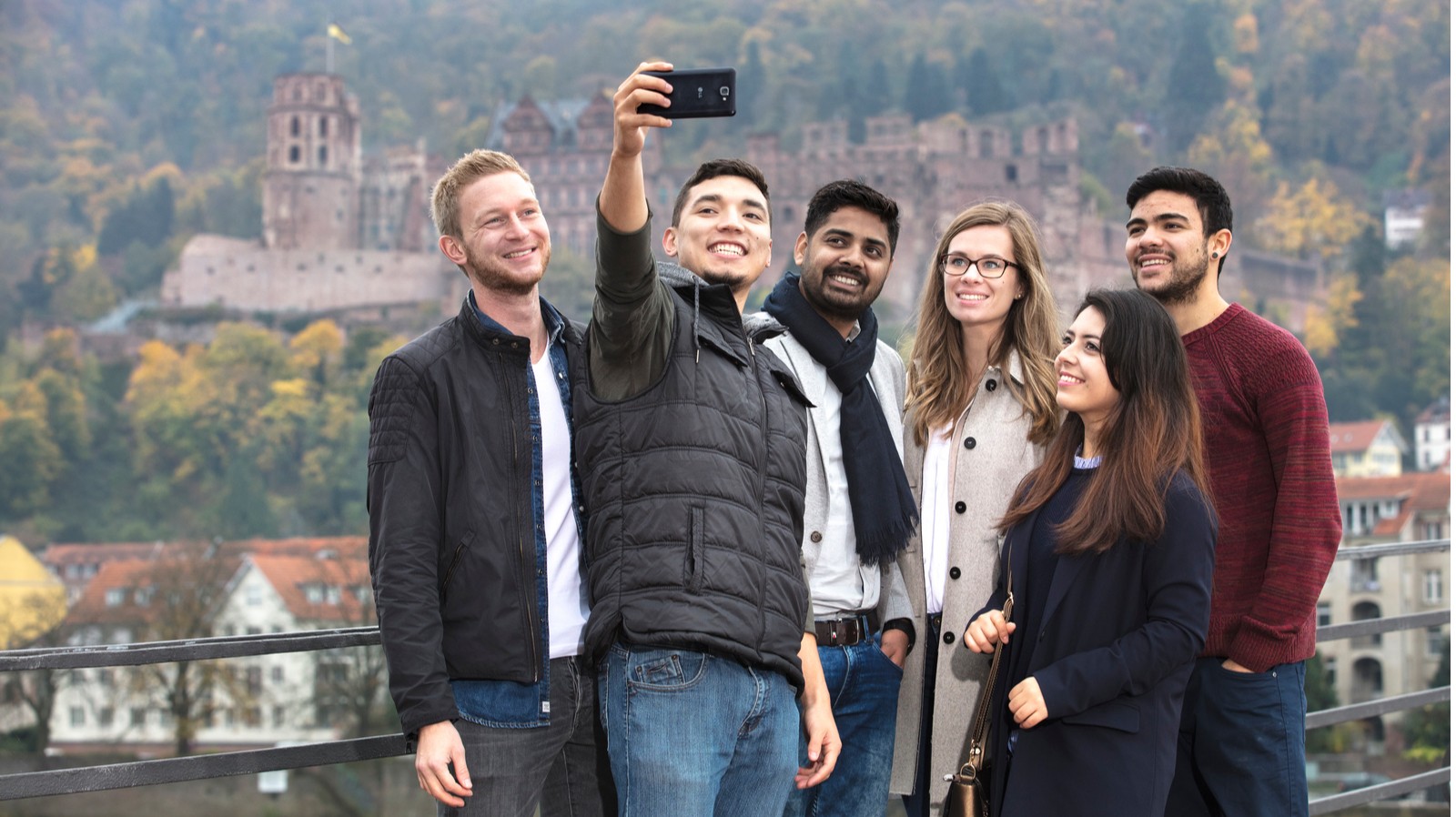
Heidelberg is known for its romantic ambiance and vibrant cultural and academic atmosphere. The city offers a picturesque landscape ideal for outdoor activities, with strong sectors in biotechnology, pharmaceuticals, and academia.

Leipzig is an economic hub with a growing population, offering career opportunities in technology, digitalisation, and life sciences. It has a vibrant music and cultural scene and remains one of Germany's more affordable major cities.

Stuttgart is a centre for technology and innovation, home to companies like Mercedes Benz and Porsche. It offers excellent educational and career prospects in engineering and sustainable technologies, supported by a vibrant cultural scene.

Munich, Bavaria's capital, is a leading German hub for economy, science, and education with high living standards. Home to top universities and research, it excels in high-tech industries, offering great careers. Near the Alps and lakes, it provides rich leisure options. Though pricier, its appeal and opportunities make it a desirable place to study and work.

Activate map

To activate the map, click on the "Show map" button. We would like to point out that data will be transmitted to OpenStreetMap after activation. You can find out more in our privacy policy. You can revoke your consent to the transmission of data at any time.