International Programmes 2026/2027

Renewable Energy and E-Mobility (REEM) Renewable Energy and E-Mobility (REEM)

Stralsund University of Applied Sciences • Stralsund

Degree
Master of Engineering
Course location
Stralsund
Teaching language
  • English
Languages

This Master's programme is offered entirely in English. The Master's thesis is to be written in English.

Full-time / part-time
  • full-time
Programme duration
3 semesters, 4 semesters
Beginning
Winter and summer semester
Application periods
The following is valid for applicants from: non-EU countries
For the summer semester:
until 30 November
The following is valid for applicants from: EU countries
For the summer semester:
until 28 February
The following is valid for applicants from: non-EU countries
For the winter semester:
until 31 May
The following is valid for applicants from: EU countries
For the winter semester:
until 31 August
Combined Master's degree / PhD programme
No
Joint degree / double degree programme
Yes
Description/content

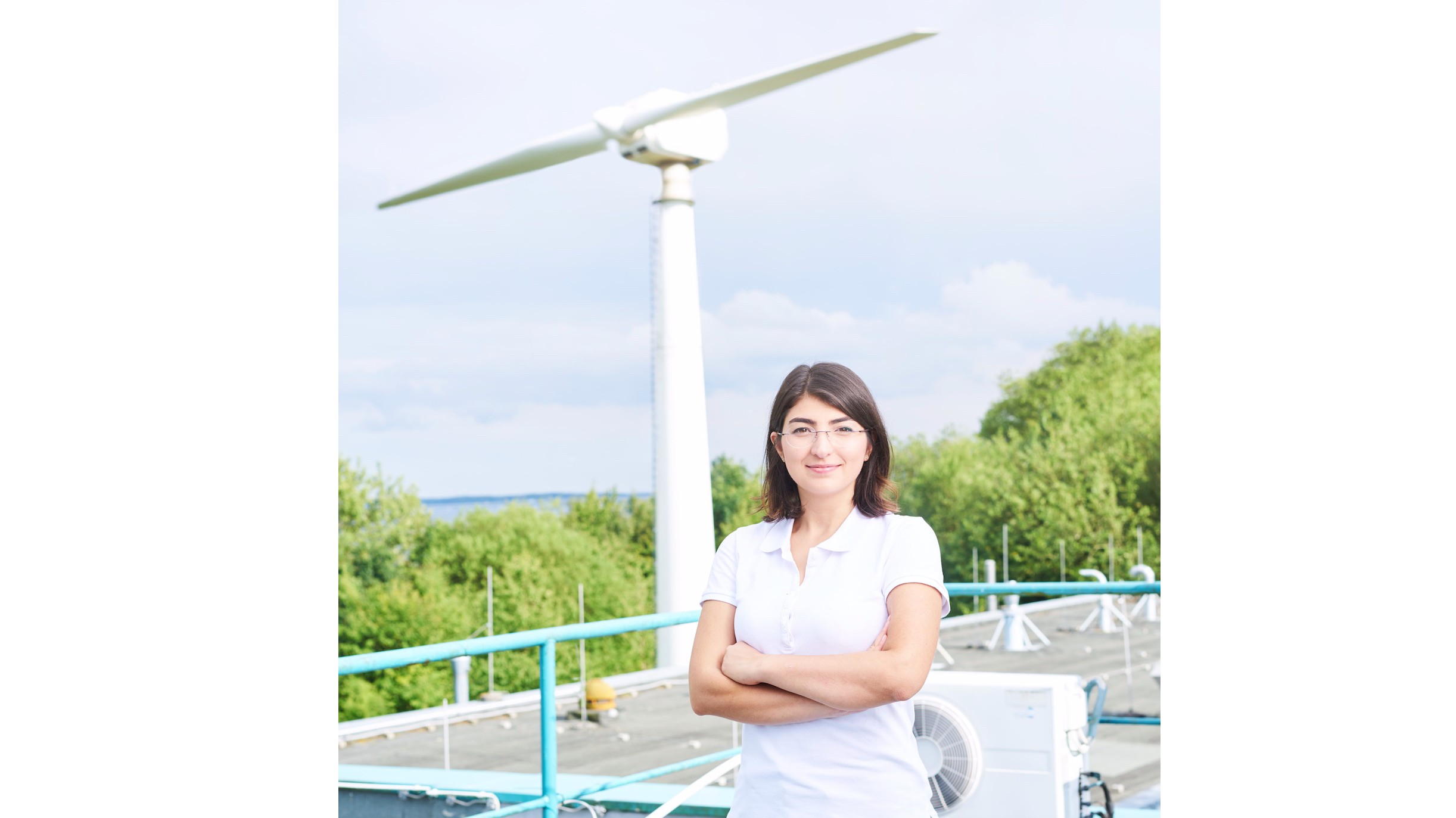
Rethinking the area of energy supply and use is indispensable in times of climate change, finite natural resources and instability of the fossil fuel supply. Particular attention is given to the use of renewable energy sources such as solar radiation in PV and solar thermal systems, biomass, wind and hydropower as well as the development of electric vehicles. The creation of electric cars can be a major step towards avoiding the consequences of climate change and at the same time towards making Germany's automotive industry more competitive in the future. The new study programme is designed to address these future topics and to help to meet the growing need for engineers. There is no equivalent offer in the north of Germany.

Our long-term international experience with a series of English lectures as a special offer for the Master of Electrical Engineering with a focus on Renewable Energies as well as the postgraduate programme in "Renewable Energy and Hydrogen Technology" have been incorporated into this Master's programme. Synergies can be used with these offers. Our faculty also has a number of cooperative relations with foreign universities, which students of this Master's programme can take advantage of.

The study programme is aimed at students who have a Bachelor's degree in electrical engineering, mechanical engineering and related degrees, and physics.

Course organisation

The Master's programme is offered in a three and four-semester variant because foreign students often come to us with a 180 ECTS Bachelor's degree. The four-semester variant includes an additional internship semester. Enrolment for the three-semester variant takes place in the winter and summer semesters. Enrolment for the four-semester variant only takes place in the summer semester.

The student can choose from a number of optional modules in the fields of renewable energies or e-mobility. Lectures are held over the course of two semesters. The third semester or fourth semester is used to work on the Master's thesis. Compulsory modules are based on mathematical and technical principles as well as interdisciplinary qualifications, such as energy and environmental management or quality management in the automotive industry. Application-specific expertise is conveyed in compulsory subject areas on various topics of the two focus areas.

The curriculum is structured as follows:

  1. Mathematical-scientific basics
    Modelling of Physical Systems, System Theory
  2. Specialised technical bases of renewable energy technology
    Regenerative Energy Systems, Methods of Power Engineering, Power Electronics
  3. Application-oriented basic knowledge
    (elective modules, a minimum of four or five modules have to be chosen)
    Current Topics of Renewable Energy Use, Solar Systems, Wind Power Plants, Hydrogen Technology, Project Renewable Energy, Sustainable Non-Fossil Mobility, Fuel Cell Systems, Control of Electrical Drives, Advanced Power Electronics, Project Seminar E-Mobility, Vehicle Management Systems, Vehicle Simulation & Test Drive
  4. Interdisciplinary qualifications (1 from 2)
    Quality in Automotive Industry, Environmental Management
  5. Internship semester or project work and three free elective modules
    (only available as part of the four-semester variant)
  6. Master's thesis
PDF Download
A Diploma supplement will be issued
Yes
Integrated internships

The four-semester Master's programme includes an additional internship semester of 21 weeks or a major project work and additional elective courses at the university.

Our online job exchange and the programme advisers support and assist students during the process of finding an internship.

Special promotion / funding of the programme
  • DAAD
  • ERASMUS+
  • Other (e.g. state level)
Name of DAAD funding programme
PROMOS
Course-specific, integrated German language courses
Yes
Course-specific, integrated English language courses
No
Tuition fees per semester
None
Semester contribution

Full-time students: 131 EUR for the first semester and 107 EUR for all subsequent semesters

Erasmus+ students: 103 EUR for each semester

Costs of living

Non-EU: As of 1 January 2020, foreign students and applicants from outside the EU must present a so-called "proof of financing" corresponding to 992 EUR per month (11,904 EUR per year). The actual cost of living in Stralsund amounts to 600 - 750 EUR per month, depending on the lifestyle.

Funding opportunities within the university
Yes
Description of the above-mentioned funding opportunities within the university

The International Office can advise you on the funding opportunities.

Academic admission requirements

General requirements:

Completed first degree in electrical engineering, energy technology, renewable energies, mechanical engineering, physics or related degrees

Proof of knowledge in the following fields (e.g. official course description as provided by the university):

  • Measurement technology of at least four hours per week for one semester or 5 ECTS points
  • Control engineering amounting to at least four hours per week for one semester or 5 ECTS points
  • Fundamentals of electrical engineering amounting to at least four hours per week for one semester or 5 ECTS points
  • Electrical machines amounting to at least two hours per week for one semester or 3 ECTS points and
  • The usual mathematical foundations underlying these fields

At least three of the four modules demonstrating the respective subject knowledge must also be completed with a grade of at least 2.7 or, in the case of another grading system, with a comparable grade (70% of the applied grading scale).

Proof of English proficiency (level B2 according to the European Framework of Reference for Languages)

An average mark of the Bachelor's degree of at least 1.8

An average mark of 1.9 to 2.3 is subject to a special individual assessment. 

Applicants with an average mark of 2.4 or lower will be rejected!

Further requirements depend on the duration of the study. Please check our homepage.

The Admission Commission considers the provided expertise and decides on admission.

More information about requirements can be found here.

German language skills
No minimum language level required
English language skills
B2 required, please provide an official language certificate, e.g.:
  • TOEFL iBT (since 2026): 4
  • Reading: 4
  • Listening: 4
  • Speaking: 4
  • Writing: 4
  • Cambridge English Qualifications: B2 First
  • Cambridge English Qualifications Business (BEC) : B2 Business Vantage
Application periods
The following is valid for applicants from: non-EU countries
For the summer semester:
until 30 November
The following is valid for applicants from: EU countries
For the summer semester:
until 28 February
The following is valid for applicants from: non-EU countries
For the winter semester:
until 31 May
The following is valid for applicants from: EU countries
For the winter semester:
until 31 August
Submit application via
Please apply via uni-assist.
Possibility of finding part-time employment

HOST regularly offers student assistant positions for which you can apply (in accordance with the regulations of your residence permit). In addition, the city and the region offer various opportunities for student jobs, especially as it is a tourist region.

Accommodation

As a campus university, HOST offers one of the most charming accommodation options: in a small village in Scandinavian look and feel, called "Holzhausen", located on campus – just a few steps from the Mensa (Cafeteria) and the faculties.

Whether in student halls of residence, a shared flat or your first own flat, this decision has to be made by you and should be made according to your own desires and available funds. Stralsund offers exceptionally good conditions and is not affected by overly expensive rental prices and a highly competitive property market like in other study locations and cities.

HOST's International Office will help you find accommodation.

Find out more >>

Support for international students and doctoral candidates
  • Welcome event
  • Buddy programme
  • Accompanying programme
  • Specialist counselling
  • Cultural and linguistic preparation

Stralsund University of Applied Sciences

Content Bild

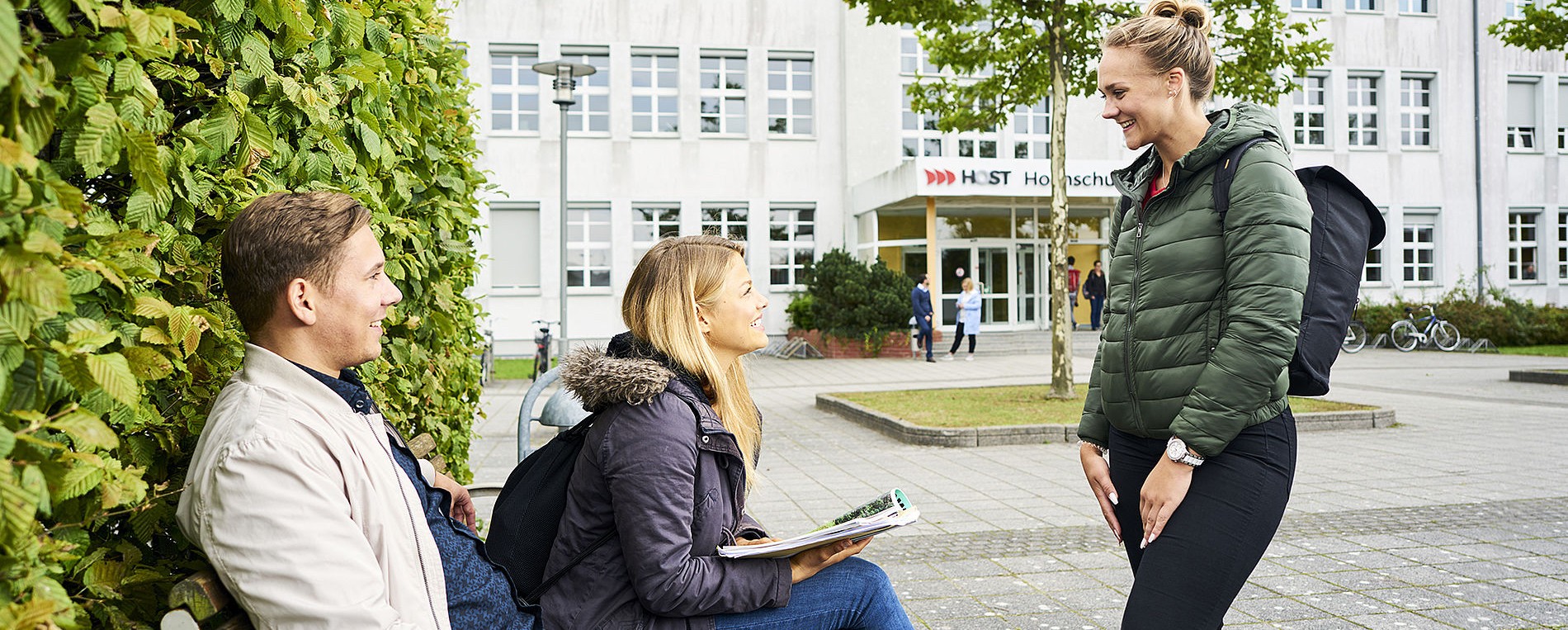
The University of Applied Sciences Stralsund (HOST) is a young and innovative campus university. With its modern facilities, an excellent supervision ratio and its top location directly on the Baltic Sea, the University of Applied Sciences Stralsund offers optimal conditions for study, research and living.

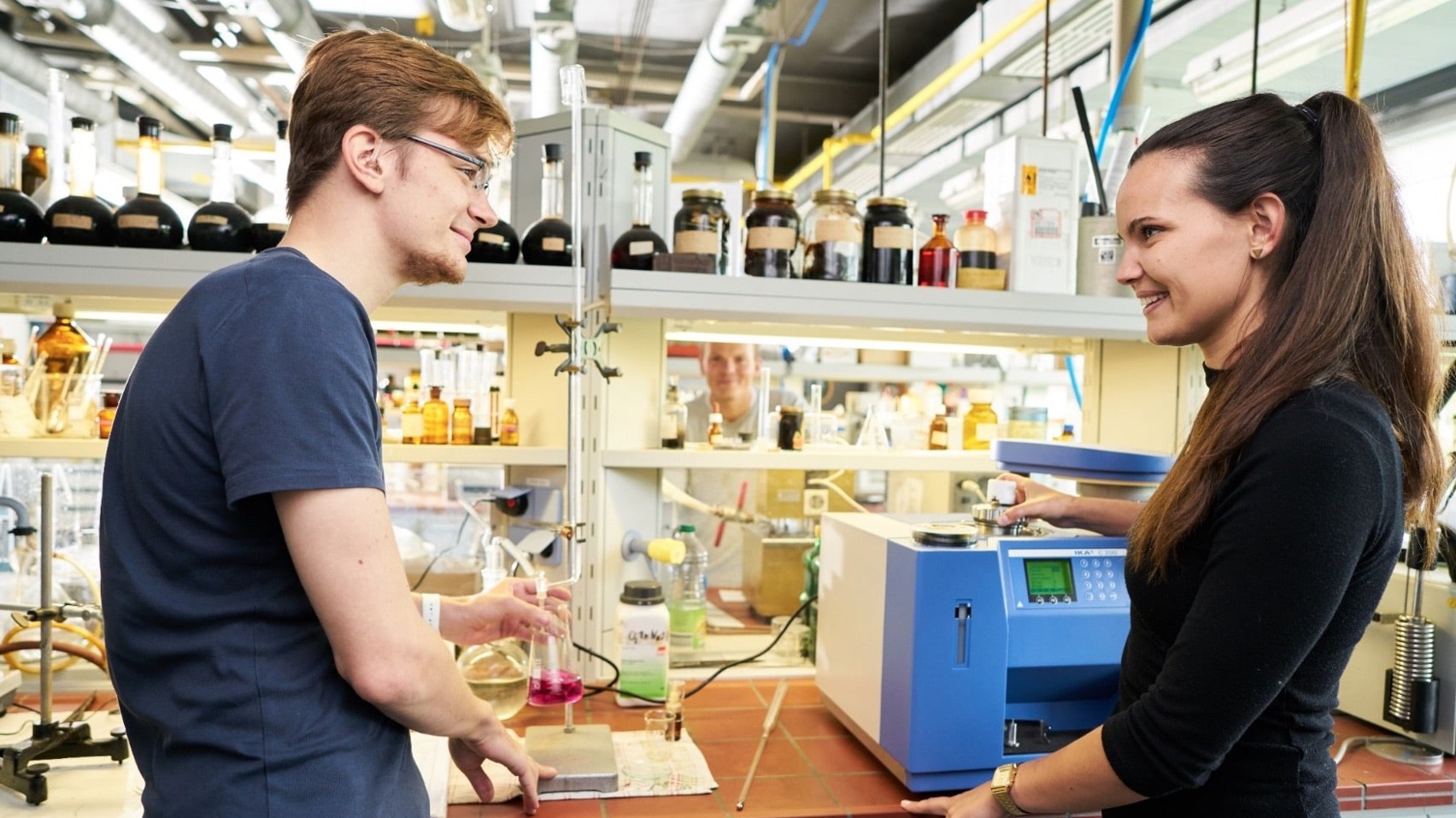
The campus university, located directly on the Baltic Sea, offers prospective students a choice of 26 accredited Bachelor's and Master's programmes and a diploma supplementary course in German or English. As a relatively young university, which was only founded in 1991, Stralsund has many modernly equipped laboratories, lecture halls and seminar rooms, which guarantee an optimal learning environment. Moreover, the university offers on-campus living for up to 270 students within sight of the Baltic Sea.

At present, around 2,000 students from 50 countries study at the three schools of Business Studies, Mechanical Engineering and Electrical Engineering & Computer Science. The range of courses include both classic subjects such as Mechanical Engineering, Electrical Engineering and Business Administration as well as new and innovative courses such as IT Security and Mobile Systems, Motorsport Engineering and Tourism Development Strategies. Nearly all courses can also be taken in the form of a dual study programme with a highly practical component. The university cooperates with numerous companies for this purpose.

Because studying is important, but it is not everything, there are various leisure activities on campus. For example, the student project teams Baltic Racing, ThaiGer-H2-Racing and MariTeam Racing develop racing cars and motorcycles at the highest level. Recently, the HOST even celebrated five European Championship titles in a row! In addition, the campus has its own gym, weight room and sports field with a wide range of sports activities, such as beach volleyball, sailing and diving.

Although the HOST is a relatively small university in north-eastern Germany, it has a broad international network. Within the framework of the Erasmus+ programme, the university has 72 partner universities throughout Europe. Those who feel that this is not enough can also spend a semester abroad at one of the many partner universities worldwide in locations such as Oman, Australia, Brazil, Argentina and many other countries.

483000 Electricity produced on campus in kWh
5 min. Distance to the beach

University location

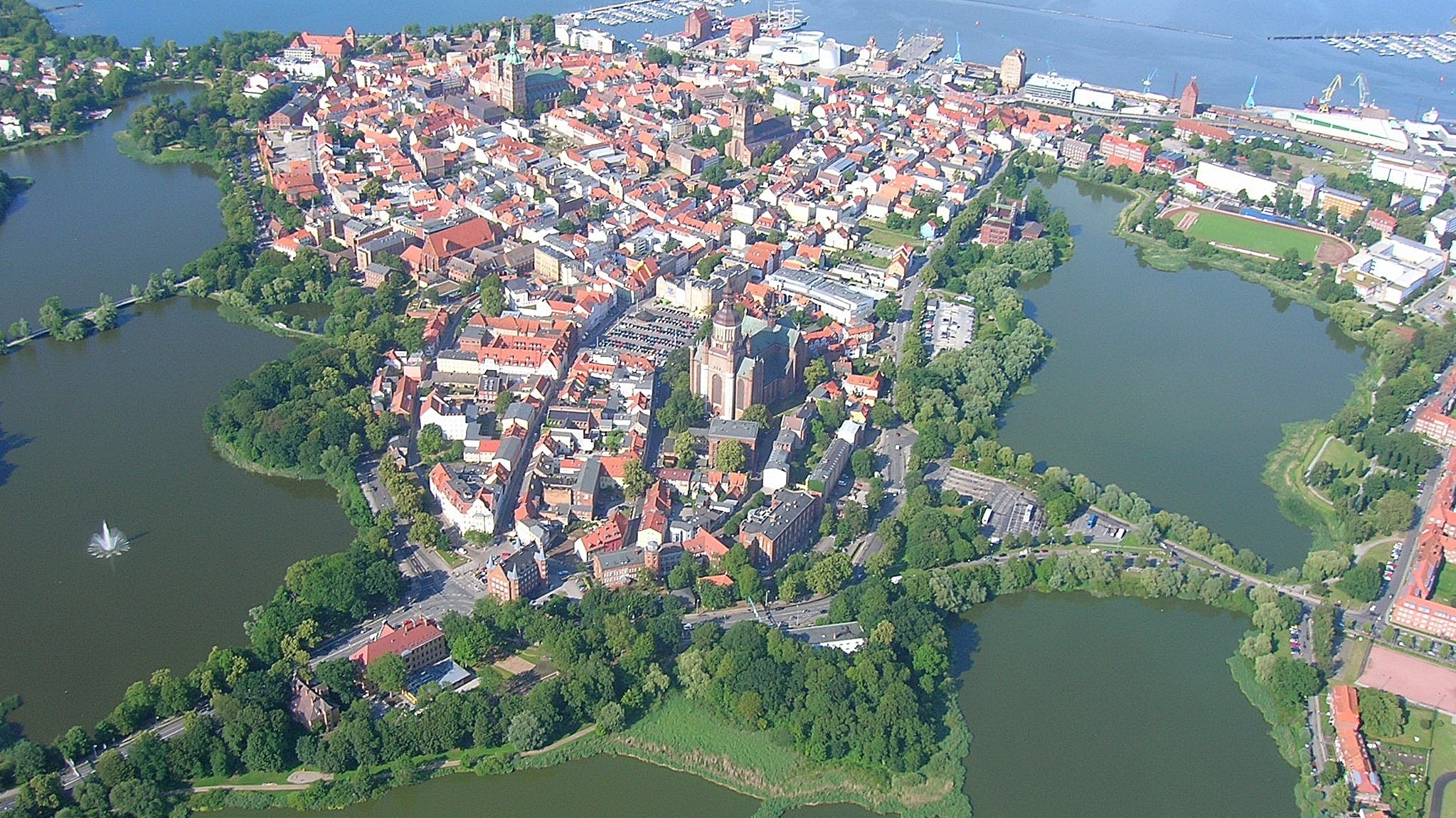
The old Hanseatic town of Stralsund, founded in 1234, is situated in the north-east of the federal state of Mecklenburg-Western Pomerania, and it has been a university town since 1991. Stralsund's 800 historical buildings, which are classified as historical monuments and were built in different historical eras, have witnessed 770 years of the town's history, particularly the Hanseatic period. The city centres of Stralsund and Wismar were recognised by UNESCO as part of the World Heritage Programme in 2002.

Activate map

To activate the map, click on the "Show map" button. We would like to point out that data will be transmitted to OpenStreetMap after activation. You can find out more in our privacy policy. You can revoke your consent to the transmission of data at any time.