International Programmes 2026/2027

MA Psychology Focusing on Organisation – Transformation Processes in Work, Society and Environment MA Psychology – Work, Society, and Environment

International Psychoanalytic University Berlin • Berlin

Degree
Master of Arts
Course location
Berlin
Teaching language
  • English
Languages

Courses are held in English (100%).

Please keep in mind that almost all extracurricular activities at the IPU Berlin are provided in German and that sufficient German language skills (B2) will strongly ease your everyday life in Berlin. All applicants of the Master of Psychology – Work, Society, and Environment programme are thus strongly encouraged to start learning German before their arrival.

Full-time / part-time
  • full-time
Programme duration
4 semesters
Beginning
Winter semester
Application periods
The following is valid for applicants from: all countries
For the winter semester:
until 30 August 2026
Combined Master's degree / PhD programme
No
Joint degree / double degree programme
No
Description/content

This multidisciplinary MA Psychology programme with an organisational focus aims to foster a reflective socio-critical stance while students scientifically explore subjects revolving around transformation processes in the context of organisational psychology, environmental psychology, health psychology, and related areas.

Changes within the work environment are unfolding in a society in which the significance of progress and growth must be rethought, given current complex global challenges such as climate change and digitalisation. Psychologists maintain decisive roles within numerous professional fields by providing support to individuals and organisations coping with transitions and the challenges of today’s society. Social change raises the question of what significance different organisations have and should have in contemporary society. This is accompanied by new forms of interpersonal relationships and dynamics between man and machine as well as the additional challenges associated with sustainable business strategies. “Work, Society, and Environment” are therefore not merely buzzwords put together in a title; much more, they are to be understood as highly intertwined concepts that systematically focus on the dynamics in animate and inanimate relationships. 

As a graduate of this MA programme, you will be equipped with theoretical and practical skills that will provide important impulses for the development of sustainable solutions through reflection on social dynamics and change processes. Moreover, the integration of knowledge acquisition and independent reflection offered by this MA programme fosters a strengthening of systemic competences surrounding the skill of recognising and assuming responsibility. This will ultimately develop one's ability to make independent decisions in leadership positions.

The target group of this MA Psychology programme is Bachelor's graduates in psychology or economics and related fields who wish to pursue a career within the field of organisational psychology while implementing a psychodynamic perspective. Whether it be NGOs, governmental agencies, environmental organisations, or something else, this MA programme will excellently prepare you for a diverse professional life and career.

The programme encourages the students' communicative competences by practising academic discussion while maintaining a reflective stance. The didactics of the degree programme are primarily oriented towards participatory forms of teaching and learning. From the first semester onwards, students learn how to research scientific questions independently, to present and discuss them, and to deal constructively with criticism. These communication skills enable the students to obtain competences associated with leadership positions.

Course organisation

All degree programmes offered at the IPU Berlin are both research-based and application-oriented and are designed to help students develop independent, socially reflective, and solution-oriented professional abilities.

The teaching itself is also characterised by variation: In addition to lectures and lecture-oriented seminars, workshop formats are implemented. Workshop formats allow students the space to reflect on their own experiences and use these insights for learning and research practice.

The programme consists of 120 ECTS credits, which can be earned during four full-time study semesters. The ECTS credits are divided evenly across three semesters, with the Master's thesis to be written during the final (fourth) one.

The programme is arranged in five overarching areas of study, consisting of 12 modules with lectures, seminars, and workshops.

The areas of study include:

  1. Reflective Psychology and Theoretical Psychology (Module 1: Psychology as a Critical Social Science)
  2. Work, Organisational, and Business Psychology (Module 2: Current Research Findings in Work and Organisational Psychology; Module 3: The Individual and the Organisation; Module 5: Work, Health, and Prevention; Module 6: Consulting; and Module 9: Strategic Communication)
  3. Health and Environmental Psychology (Psychology Module 4: Environment and Society in the Tension Field between Demand and Reality; Module 5: Work, Health, and Prevention; Module 6: Consulting)
  4. Social and Cultural Psychology (Module 2: Current Research Findings in Work and Organisational Psychology; Module 3: The Individual and Organisation; Module 4: Environment and Society in the Tension Field between Demand and Reality)
  5. Research Methods (Module 7: Research Methods; Module 8: Research and Project Workshop)

In addition to this, the

  • Elective course (Module 10)
  • Master's thesis (Module 11), and
  • Work Experience / Internship (Module 12)

are also part of the curriculum.

The reasoning behind the compulsory elective subject is to provide the students with the opportunity to focus on a scientific or academic field in line with their own interests (e.g. Social Trauma course elective).

More information including detailed module descriptions can be found under Study and Examination Regulations.

PDF Download
A Diploma supplement will be issued
Yes
International elements
  • International guest lecturers
  • Courses are led with foreign partners
  • Projects with partners in Germany and abroad
Description of other international elements

Students have the option to complete their compulsory work placement abroad and use the Erasmus+ funding for work placements within the EU and PROMOS for work placements worldwide.

Integrated internships

Students are required to complete a work placement in order to become acquainted with application areas of psychology and to acquire practical skills in the professional use of psychological working methods. The internship provides the students with an opportunity to gain valuable practical experience while implementing the theoretical knowledge already acquired via the lectures and seminars.

The work placement is to be completed before or after the third semester, either entirely during the semester break or, alternatively, throughout the semester while studying.

Students will earn a total of 15 ECTS credits through the 450 working hours. Out of these working hours, 330 hours (11 ECTS) should be spent on the actual practical work while 120 hours (four ECTS) should be set aside for writing a report.

With a full-time work placement over the semester break, the requirement of 330 working hours can be fulfilled over the course of eight weeks.

Course-specific, integrated German language courses
No
Course-specific, integrated English language courses
No
Tuition fees per semester
The following tuition fees apply for applicants from: all countries
6,500 EUR
Tuition fees may vary
Tuition fees may vary depending on several factors. For an exact breakdown of costs, please check the programme website.
Semester contribution

As at any other university in Berlin, students are required to pay a semester fee which includes contributions to the StudierendenWERK Berlin and the IPU Berlin Student Council. Visit the course page for more information.

Costs of living

Students should expect to need 900 to 1,000 EUR per month to cover their entire cost of living (rent, insurance, personal expenses, etc.).

Funding opportunities within the university
Yes
Description of the above-mentioned funding opportunities within the university

Deutschlandstipendium: Available from the second semester onwards, providing 300 EUR per month for high-achieving and committed international students who are especially talented and dedicated and who will gain or have already gained outstanding achievements in their studies or professions (link)

Academic admission requirements

Bachelor's degree in Psychology

Graduates from other disciplines (i.e. Sociology, Political Science, Economic Science) are eligible for admission if they have completed at least 40 ECTS credit points in psychology as a part of their Bachelor’s degree.

If you are a student from another discipline (other than psychology) and you are uncertain whether your degree qualifies you for the Master's programme, please contact the university at: admissions@ipu-berlin.de

German language skills
No minimum language level required
English language skills
C1 required, please provide an official language certificate, e.g.:
  • IELTS Academic: 7
  • TOEFL iBT (before 2026): 95
  • Reading: 24
  • Listening: 22
  • Speaking: 25
  • Writing: 24
  • Cambridge English Qualifications: C1 Advanced
Application periods
The following is valid for applicants from: all countries
For the winter semester:
until 30 August 2026
Submit application via
Please apply via uni-assist.
Possibility of finding part-time employment

Students have the opportunity to take up part-time or temporary student jobs with an employer of their choice, work as student assistants at the university, or take up paid internships.

Paid employment for students is subject to strict regulations, since it may prolong the period of study. If and how long-term international students are permitted to be employed in Germany depends on the type of employment and the type of residence permit the individual student holds.

For more information, please have a look at our guide for international students.

Accommodation

Finding accommodation in Berlin is a challenge. It is highly advisable to initiate your search as early as possible!

Student housing is available via the Student Union or on the private market.

Reasonably priced accommodation for a few days is available in student hotels or backpackers' hostels, usually in shared rooms.

In Berlin, student residence halls or dormitories are run mainly by the StudierendenWERK, the student welfare organisation, rather than by the university. The residence halls are located in various parts of the city. Rooms vary in standard and price, starting at approx. 350 EUR per month. Students can find more information regarding the residence halls and other housing opportunities as well as information on rent and waiting lists on the website of the StudierendenWERK.

Generally, finding accommodation in Berlin is very difficult, especially in the dormitories. The number of applications is very high at all times.

Shared accommodation in private apartments (so-called "Wohngemeinschaften" or "WG"), where all have a room of their own, are very popular, especially within the inner city districts of Prenzlauer Berg/Pankow, Friedrichshain/Kreuzberg, and Neukölln. Rooms in shared accommodation are advertised on the internet or posted at the university. For a room in a "Wohngemeinschaft", one can expect to pay approx. 400 EUR per month in Berlin.

Career advisory services and programmes for future professionals

In 2024, the IPU Berlin opened a dedicated International Career Service with funding from the DAAD.

Range of career service events

  • Career Days – A get-together with representatives from organisations on subjects related to work placements
  • Information Events by psychoanalytic training institutes in Berlin
  • Seminars focusing on preparing international students for the German job market

Professional and career preparation options integrated into the studies

  • Obligatory work placement
  • Conversations with representatives from organisations

Alumni Network

  • "Alumni Talks" with IPU graduates
  • Online alumni platform
Support for international students and doctoral candidates
  • Welcome event
  • Buddy programme
General services and support for international students and doctoral candidates

Welcome Center

Starting with the annual Welcome Week, the Welcome Center aims to support international students throughout their studies at the IPU Berlin. For more information, please refer to our international student guide.

Student Mentoring Programme

The Student Mentoring Programme serves as a study and career orientation and planning tool for Bachelor's students in psychology and for students in the English-language Master's programme in psychology.

Mentors are experienced students, mostly from the Master's programme in psychology, who are able to contribute their advisory skills. The mentors are supervised during regular counselling meetings. The mentoring programme lasts between one to two semesters, depending on the needs of the mentees.

International Psychoanalytic University Berlin

Content Bild

The IPU Berlin is a state-recognised private university with its campus and administration in Berlin. With the commencement of lectures in 2009, a gap was closed that had arisen in the one-sided natural sciences direction of academic psychology. The study courses at the IPU convey psychoanalysis as a science which maps the human as a biological, social, and culturally imprinted being and which seeks to understand the individual against the background of their history and the influence of their unconscious. All of the courses of study at the IPU are related to research and provide close contact with clinical and pedagogical practice from the first semester onwards.

The IPU Berlin was granted official state recognition on 17 April 2009 by the responsible Berlin Senate Administration. The IPU was awarded its institutional accreditation by the German Council of Science and Humanities, the Wissenschaftsrat. This was effective as of 27 November 2014, and the IPU was successfully re-accredited in April 2020.

The IPU facilitates studies, advanced studies, and further education as well as research with a psychoanalytical basis and pursues a transdisciplinary understanding of science in the fields of teaching and research. In dialogue with other sciences, the IPU contributes to the further development of psychoanalysis as an applied social science and cultural theory. The academic staff lecturing and researching at the IPU has acquired many years of experience in practice, teaching, and research. Lecturers and researchers enjoy excellent learning and working conditions with the required resources at their disposal. Analysis, discussion, and shared development – on an interdisciplinary level and beyond the limitations of any status groups – represent a defining criterion of the scientific and organisational work at the IPU. The IPU builds up networks and establishes cooperative arrangements with national and international partners in science, training, and practice, which promote mutual enrichment in terms of content and a positive perception within the general public.

Study programmes currently offered at the IPU:

  • BSc Psychology (German)
  • MA Psychology – Clinical Psychology and Psychotherapy (German)
  • MA Psychology (English Track)
  • MA Psychology Focusing on Organisation – Transformation Processes in Work, Society and Environment (English)
  • MA Interdisciplinary Psychosis Therapy (German)
  • MA Cultural Studies (German)
  • MA Leadership and Consulting (German)

The IPU Berlin runs its own outpatient research facility as well as an EEG lab, and its library has an extensive stock of printed and electronic media as well as attractive reading areas. Together with contacts at our partner universities, our International Office organises and arranges stays abroad for the students.

The Psychotherapeutic University and Research Outpatient Services offer diagnostic and psychotherapeutic services with different forms of therapy to patients, especially focusing on patients with personality disorders. Students of the IPU Berlin are able to gain their first impressions and experiences in this field of practice by participating in clinical services and diagnostic procedures.

The activities and subject areas of importance to the IPU Berlin are presented at public events, such as the university's public lecture series and conferences. Numerous specialist congresses facilitate such scientific exchanges.


30 Approx. number of students admitted annually (in this programme)

University location

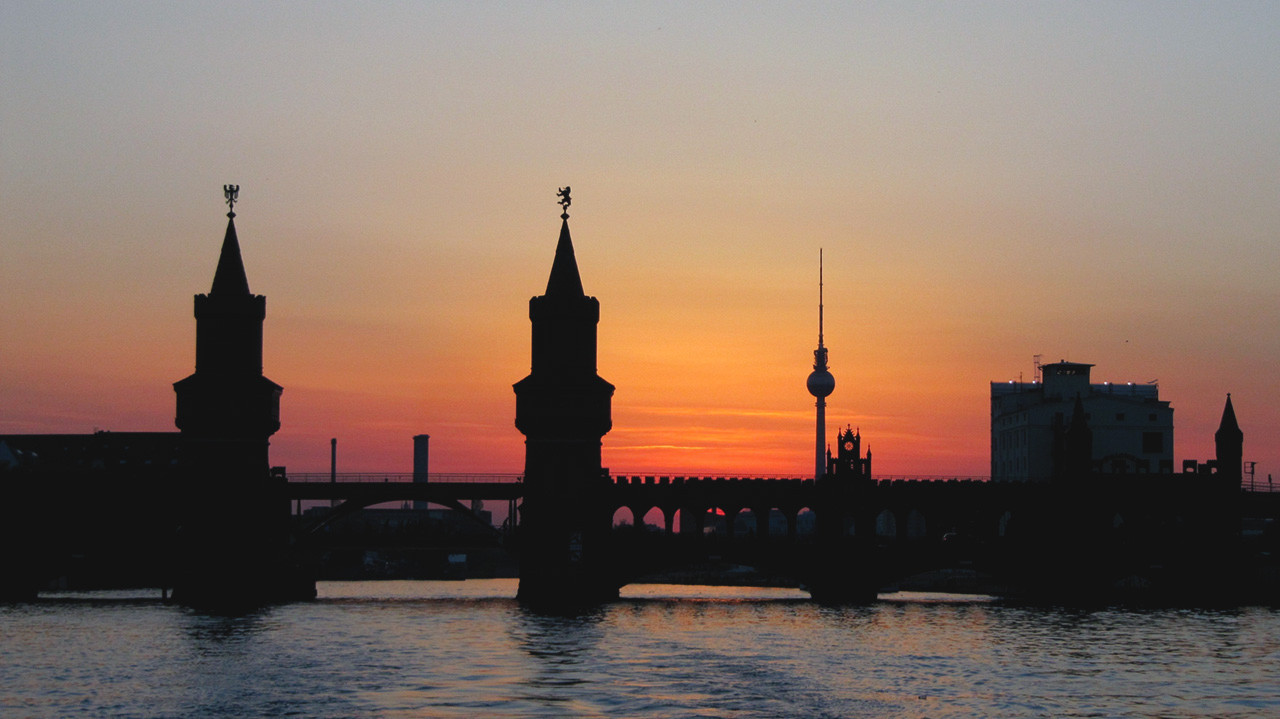
Berlin was founded in the 13th century, and despite its long history of war, the city developed into one of the most exciting cultural hot spots in Europe. Over long periods of change, Berlin established a vibrant and unique cultural scene that continually attracts people from all over the world.

The city is an urban centre of creative, colourful life and features distinctive cultural spots, like flea markets, galleries, cafés, and vintage shops. Some of the most famous sights include the Brandenburg Gate, the TV Tower, and the Reichstag parliament building. Germany's capital accentuates exceptional museums, theatres, opera houses, and concert halls. Additionally, Berlin's incomparable music, club, night life, and festival scene form its exclusive setting. Big global events like Berlin's International Film Festival, the Berlinale, and Fashion Week draw numerous visitors to the capital each year. Berlin is also home to many outstanding sports clubs and has hosted many international exemplary sporting events in the past.

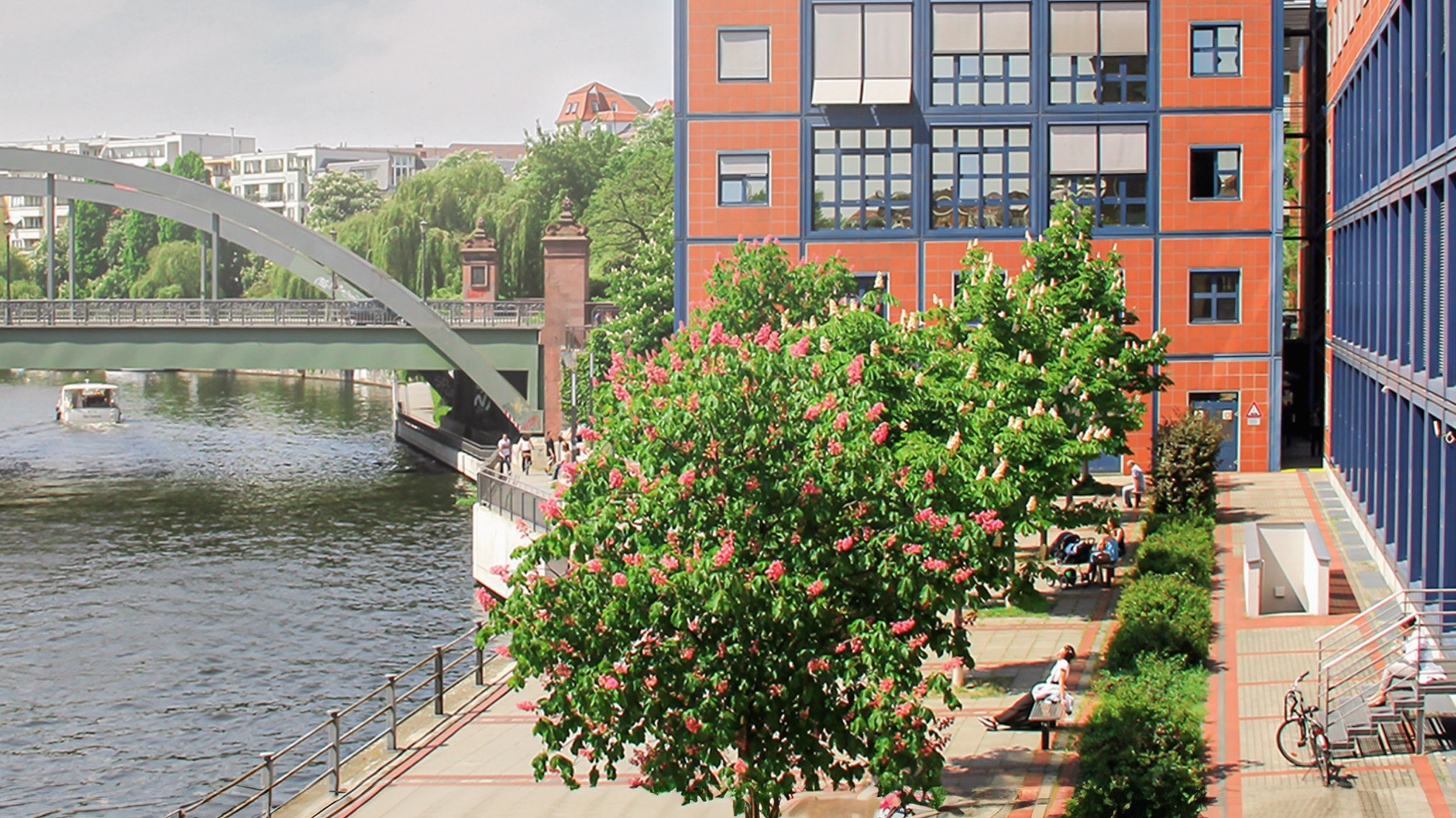
Amidst the concrete jungle, one can also find plentiful parks, such as Grunewald, Treptower Park, the Gardens of the World, or former Berlin Tempelhof Airport, which is now a public park. Besides the green beauty, Berlin also features many wonderful rivers and canals intersected by charming bridges that contribute greatly to the quality of urban life. The extensive and affordable public transportation system makes it easy to get around the city to enjoy all of Berlin's great qualities.

Activate map

To activate the map, click on the "Show map" button. We would like to point out that data will be transmitted to OpenStreetMap after activation. You can find out more in our privacy policy. You can revoke your consent to the transmission of data at any time.