International Programmes 2026/2027

International Max Planck Research School — Physics and Medicine (IMPRS-PM) IMPRS Physics and Medicine

Max-Planck-Zentrum für Physik und Medizin • Erlangen

Degree
Master of Science
Course location
Erlangen
In cooperation with
  • Friedrich-Alexander-Universität Erlangen-Nürnberg (FAU)
  • Universitätsklinikum Erlangen (UKER)
  • Max Planck Institute for the Science of Light (MPL)
Teaching language
  • English
Languages

The main language of social and scientific interaction is English. Free German classes are possible.

Full-time / part-time
  • full-time
Programme duration
4 semesters
Beginning
Winter semester
Application periods
The following is valid for applicants from: all countries
For the winter semester:
15 January - 31 May
More information on application periods
Please find more details on this website.
Combined Master's degree / PhD programme
Yes
Joint degree / double degree programme
Yes
Description/content

The IMPRS Physics and Medicine (IMPRS-PM) at the Max-Planck-Zentrum für Physik und Medizin (MPZPM) is a highly innovative graduate programme established in January 2022. IMPRS-PM educates and trains a new generation of scientists with insight into both physics and medical research.

In collaboration with the Friedrich-Alexander-Universität Erlangen-Nürnberg (FAU), the Max Planck Institute for the Science of Light (MPL) and the Universitätsklinikum Erlangen (UKER), we offer MSc stipends and PhD positions. The language of instruction and interaction of our structured graduate programme is English. Knowledge of the German language is not required, but we also offer German language classes at MPL, MPZPM and FAU.

The programme offers graduate studies in physics and medicine to students who already hold a Bachelor’s degree.

IMPRS Master's students will either be part of the "International Master's Programme Integrated Life Sciences (ILS)" or the "Master of Sciences in Physics" at the Faculty of Natural Sciences, the "Master's Programme Medical Engineering" at the Faculty of Engineering or the "Master's Programme Molecular Medicine" at the Faculty of Medicine at FAU.

More information about the programme can be found at https://mpzpm.de/imprs.

For details about the application procedure, please have a look at https://mpl.mpg.de/study-work-or-visit/graduate-programs/how-to-apply/master-fellowships.

Course organisation

The IMPRS curriculum can be found at https://mpl.mpg.de/study-work-or-visit/graduate-programs/what-we-offer/master-curriculum.

For more information about the MSc courses, please refer to FAU websites.

International elements
  • International guest lecturers
  • Specialist literature in other languages
  • Language training provided
  • Projects with partners in Germany and abroad
  • Training in intercultural skills
Integrated internships

Each Master's student needs to do an internship with an IMPRS PI during their Master's studies. Additional internships might be necessary according to the university regulations.

Special promotion / funding of the programme
  • IMPRS
Course-specific, integrated German language courses
Yes
Course-specific, integrated English language courses
Yes
Tuition fees per semester
Varied
Tuition fees may vary
Tuition fees may vary depending on several factors. For an exact breakdown of costs, please check the programme website.
Semester contribution

72 EUR at FAU

As of winter semester 2026/27, FAU will be charging a processing fee of 100 EUR per application for applicants from non-EU states.

Funding opportunities within the university
No
Academic admission requirements

Bachelor's degree (or equivalent) in physics, biology or medicine

German language skills
No minimum language level required
English language skills
B2 required, please provide an official language certificate, e.g.:
  • Cambridge English Qualifications: B2 First
  • TOEFL iBT (before 2026): 72
  • Reading: 18
  • Listening: 17
  • Speaking: 20
  • Writing: 17
  • IELTS Academic: 5.5
Language requirements exemptions
Please find details on the course website.
Application periods
The following is valid for applicants from: all countries
For the winter semester:
15 January - 31 May
More information on application periods
Please find more details on this website.
Submit application via
Please check this website.
Accommodation

Erlangen, Fürth and Nürnberg are attractive cities with historic flair and modern infrastructure. The Welcome Centre will do its best to assist new students in finding accommodation.

Career advisory services and programmes for future professionals

The IMPRS Coordination Office serves as first contact for all IMPRS students. Additional skills courses, e.g. career development workshops, are also organised within the context of IMPRS.

Support for international students and doctoral candidates
  • Buddy programme
  • Accompanying programme
  • Welcome event
  • Tutors
  • Specialist counselling
  • Visa matters
General services and support for international students and doctoral candidates

Administrative issues are solved by the welcome centres at MPL and FAU.

Max-Planck-Zentrum für Physik und Medizin

Content Bild
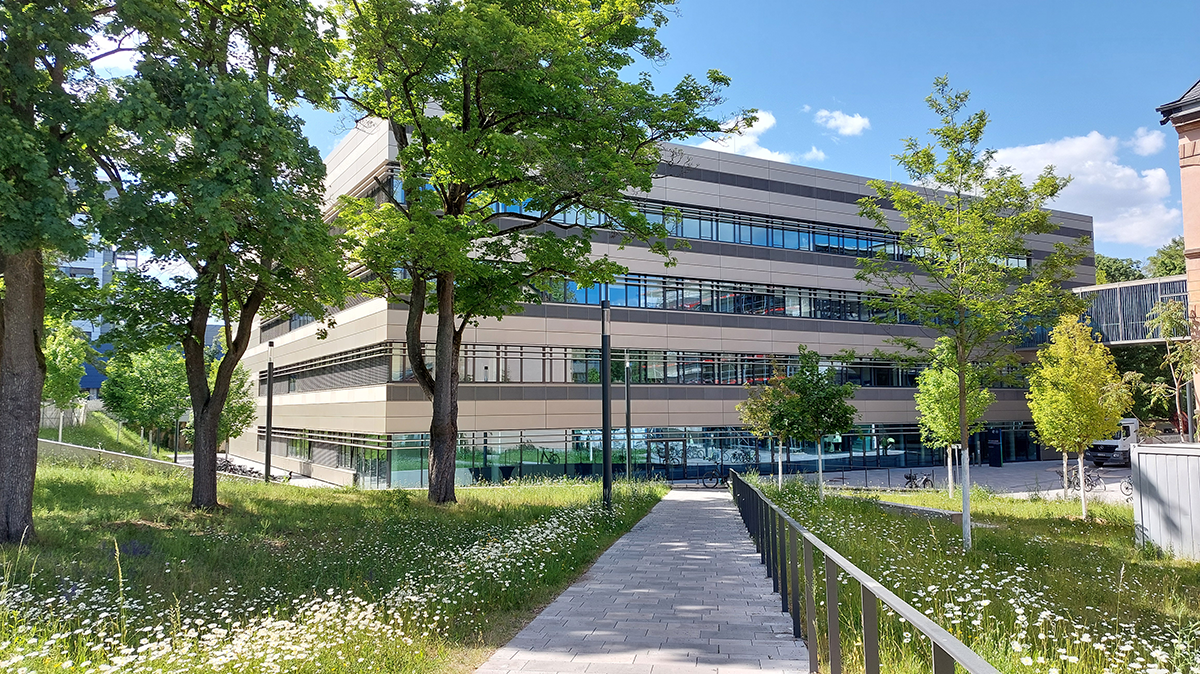
Max-Planck-Zentrum für Physik und Medizin (MPZPM) © Kimberly Baumeister

The goal of research at the Max-Planck-Zentrum für Physik und Medizin (MPZPM) is to contribute new findings to the understanding of living systems, biological processes and their pathological changes from a physical perspective, and ultimately to transfer these into diagnostic and therapeutic applications.

Physics and medicine: This combination probably makes many people think of more than a hundred years of success in medical physics with X-rays, computer tomography, ultrasound, MRI and PET, or perhaps of laser scalpels and robot-assisted surgery. In all these examples, physics has served medicine by harnessing physical phenomena to provide better tools for diagnosis and treatment. This type of collaboration is undoubtedly here to stay and will continue to improve modern medical care.

In addition to providing physical methods, physics can contribute conceptually to progress in medicine. With the founding of MPZPM in Erlangen, we have opened a whole new chapter of "physics and medicine", in which physics plays an integral role in understanding life and the phenomena which lead to anomalies and diseases. The MPZPM thus follows in the best tradition of physics contributions to fundamental knowledge in biology and medicine, as exemplified by Erwin Schrödinger in his book "What is Life?".

Founded in 1743, Friedrich-Alexander-Universität Erlangen-Nürnberg (FAU) is a strong research university with an international perspective and one of the largest universities in Germany, with approx. 40,000 students.

With five faculties, the university offers classes and research opportunities in a wide range of subjects. At the Master's level in particular, many subjects are taught entirely in English.

FAU is a leading academic institution with internationally recognised, interdisciplinary research in a variety of fields, including: i) new materials and processes, ii) optics and optical technologies, iii) molecular life science and medicine, iv) medical engineering, v) electronics, information, and communication, vi) energy, environment and climate, vii) language, culture, and region, and viii) cohesion, transformation, and innovation in law and economics.

The university receives special federal funding for the following high-profile research initiatives: the Cluster of Excellence "Engineering of Advanced Materials", the Erlangen Graduate School in Advanced Optical Technologies, the "Medical Valley" Leading Edge Cluster in Health Technology, and the International Consortium for Research in the Humanities "Fate, Freedom, and Prognostication". FAU offers outstanding research conditions for graduate students, doctoral candidates, and young researchers. It provides a state-of-the-art scientific infrastructure as well as intensive research mentoring and support. FAU students receive world-class training in an inspiring environment with access to exciting international exchange opportunities and excellent career prospects. The global vision of the university is exemplified by the recently established FAU Busan Campus in South Korea.

FAU benefits from collaborations with other renowned research institutions in Erlangen and Nuremberg, including the Max Planck Institute for the Science of Light, the newly founded Helmholtz Institute Erlangen-Nürnberg for Renewable Energy, and two Fraunhofer Institutes. Further information can be found at http://www.fau.eu/university.


Location

FAU's two main sites, the cities of Erlangen and Nuremberg, are located at the heart of the Nuremberg Metropolitan Region. It is one of Germany's most dynamic economic areas, with over 3.5 million inhabitants. As a powerhouse for innovation, the university contributes to identifying and addressing technological, social and cultural challenges.
Both Erlangen with its approx.100,000 inhabitants and Nuremberg with half a million inhabitants have their own charm and offer ample opportunities for cultural and leisure time activities as well as sports.

Especially in Erlangen, students and young researchers from all over the world as well as employees of globally operating companies create a vibrant, international atmosphere. The region's lively cultural scene and events such as the famous Erlangen beer festival ("Bergkirchweih"), the Nuremberg Christmas Market ("Christkindlesmarkt") and FAU's "Schlossgartenfest" attract visitors from near and far. While Nuremberg was the home of important artists such as Albrecht Dürer and the Nuremberg Renaissance, visitors are also attracted to its castle and the half-timbered houses in the old town. Every other year, the research institutions in Erlangen, Nuremberg, and Fürth hold the "Long Night of Sciences". Nature enthusiasts will find the Fränkische Schweiz a paradise for climbing, mountain biking, hiking, and water sports.

FAU is firmly rooted in the Nuremberg Metropolitan Region and is an important partner for companies, industry, politics, culture, and society. FAU graduates benefit from the Metropolitan Region's perfect conditions when embarking on their professional or academic careers.

The biggest strengths of the Metropolitan Region are transport and logistics, information and communication, medicine and pharmaceutics, energy, power electronics and environment, new materials, automation technology, and innovative services. Branches of all large banks and insurance companies are located in the region.

Activate map

To activate the map, click on the "Show map" button. We would like to point out that data will be transmitted to OpenStreetMap after activation. You can find out more in our privacy policy. You can revoke your consent to the transmission of data at any time.